
Europe’s role in Ukraine talks highlighted as leaders pledge increased support for Kyiv
European leaders pledge intensified backing for Ukraine while debating a formal role for Europe in peace negotiations and next steps on security and intelligence sharing.
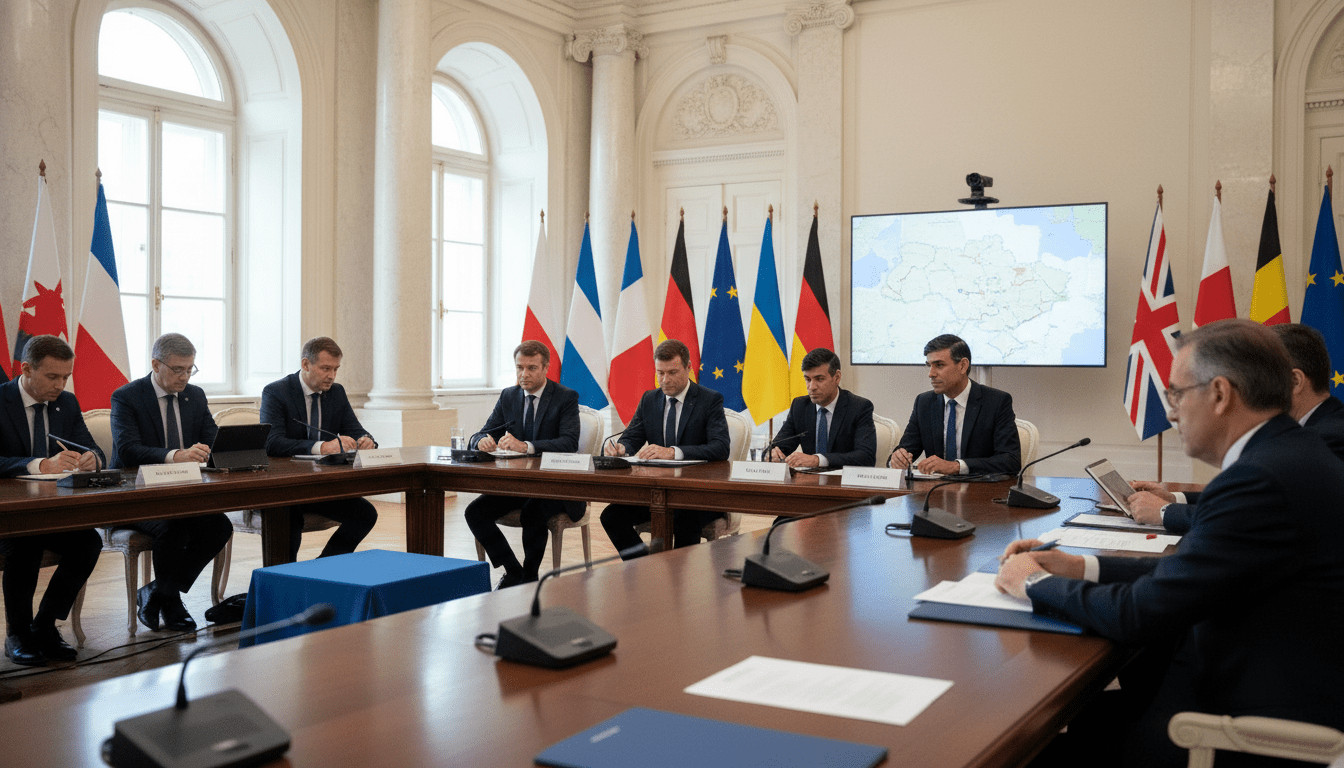
The British prime minister hosted a rare summit-style call with European leaders and Ukrainian President Volodymyr Zelensky that placed Europe’s role in Ukraine talks at the center of Western diplomacy. Participants signalled stepped-up military and political support for Kyiv in coming months, and agreed to continue high-level consultations even as questions remain about who will formally represent Europe at any future negotiations. The meeting was the first of its kind in months and comes after a pause in broader mediation efforts.
Starmer hosts leaders’ call and frames support for Ukraine
Keir Starmer convened the call, bringing together European heads of government and President Zelensky for a discussion that a Downing Street spokesperson described as centering on continued backing for Ukraine’s defense. Attendees reiterated that support would be increased “in the coming months,” and emphasised the shared view that confronting Russian aggression remains vital for European and global security. The format marked a renewed push by European capitals to coordinate policy after a period of limited multilateral engagement.
European participants framed the meeting as both a security consultation and a signal of political unity, preparing the ground for follow-up talks among national security advisers and future summit-level conversations. The British government indicated leaders had agreed to resume regular engagement, underlining the urgency of sustained collective action.
E3 to intensify direct talks with Kyiv
Germany, France and the United Kingdom—collectively referred to as the E3—were singled out to deepen direct engagement with Ukraine following the call. Officials said the E3 would continue bilateral and multilateral conversations with Kyiv and that security advisers from the four states would meet to align operational and diplomatic priorities. The arrangement is designed to give Europe a clearer and more coordinated voice while Washington’s attention remains drawn elsewhere.
The decision reflects frustration among some European capitals at their exclusion from recent U.S.-facilitated talks between Kyiv and Moscow, and a desire to shape outcomes that bear directly on European security interests. Leaders framed the E3 channel as a pragmatic step to maintain momentum and to prepare for any broader negotiation architecture that may emerge.
Putin’s proposal involving Gerhard Schröder described as problematic
One sensitive diplomatic flashpoint discussed during the call was Russian President Vladimir Putin’s recent comments about including European interlocutors in talks—paired, controversially, with the suggestion of former German chancellor Gerhard Schröder as an intermediary. Several European officials described the proposal as a “poisoned offer,” given Schröder’s longstanding personal ties to Putin and his perceived proximity to Moscow.
European leaders warned that any mediation must be acceptable to Kyiv and carry credibility with Western partners, and they signalled skepticism about interlocutors with compromised independence. The episode underscored the difficulty of building an inclusive negotiation format acceptable to all sides.
Zelensky presses for a strong European presence in negotiations
President Zelensky told leaders he wants a prominent and unified European voice in any future talks, writing on social media that it is “worth clarifying who will represent Europe concretely.” He argued that European involvement is essential to ensure security guarantees and to anchor any settlement in regional institutions. Zelensky’s intervention appeared aimed at shaping the composition and authority of prospective mediating teams.
Ukrainian officials used the call to brief partners on battlefield dynamics and broader Russian intentions, while pressing for clearer commitments on long-range capabilities and defensive materiel. Kyiv insists that European states must back both its immediate operational needs and its longer-term security architecture.
Battlefield developments and long-range strikes discussed
Leaders reviewed recent shifts on the battlefield, noting Kyiv’s strengthened posture in several sectors and the growing role of long-range operations. Ukrainian long-range drones and strike systems, officials said, have increasingly targeted infrastructure deep inside Russia, including facilities tied to the oil sector that officials argue help finance Moscow’s military campaign.
European participants expressed concern about escalation risks but acknowledged the operational logic driving Kyiv’s strategy to reduce Russia’s ability to sustain prolonged combat. Discussions included the balance between supplying Kyiv with capabilities that alter military dynamics and managing the broader strategic consequences for the region.
Intelligence sharing and next diplomatic steps agreed
The call concluded with a commitment to deepen intelligence cooperation and to exchange more detailed information at the services level. Zelensky said his team would provide allied counterparts with further intelligence on alleged Russian plans affecting Ukraine, Belarus and other parts of Europe, with the aim of clarifying threats and aligning responses. Partners agreed to follow up with meetings among security advisers and to schedule additional leader-level talks in the near term.
British officials indicated a further summit-style conversation is expected, while the E3 pledged to coordinate messages and representational proposals before any expanded participation is negotiated. The emphasis was on a pragmatic, staged approach that preserves Kyiv’s agency while broadening Europe’s diplomatic footprint.
European leaders pledged increased support for Ukraine while they debate how to formalize the continent’s role in any peace process, and agreed to regular, detailed exchanges on security, intelligence and military assistance. The next weeks will test whether the E3 channel can reconcile differing national views and present a single, credible European position in future negotiations.
