
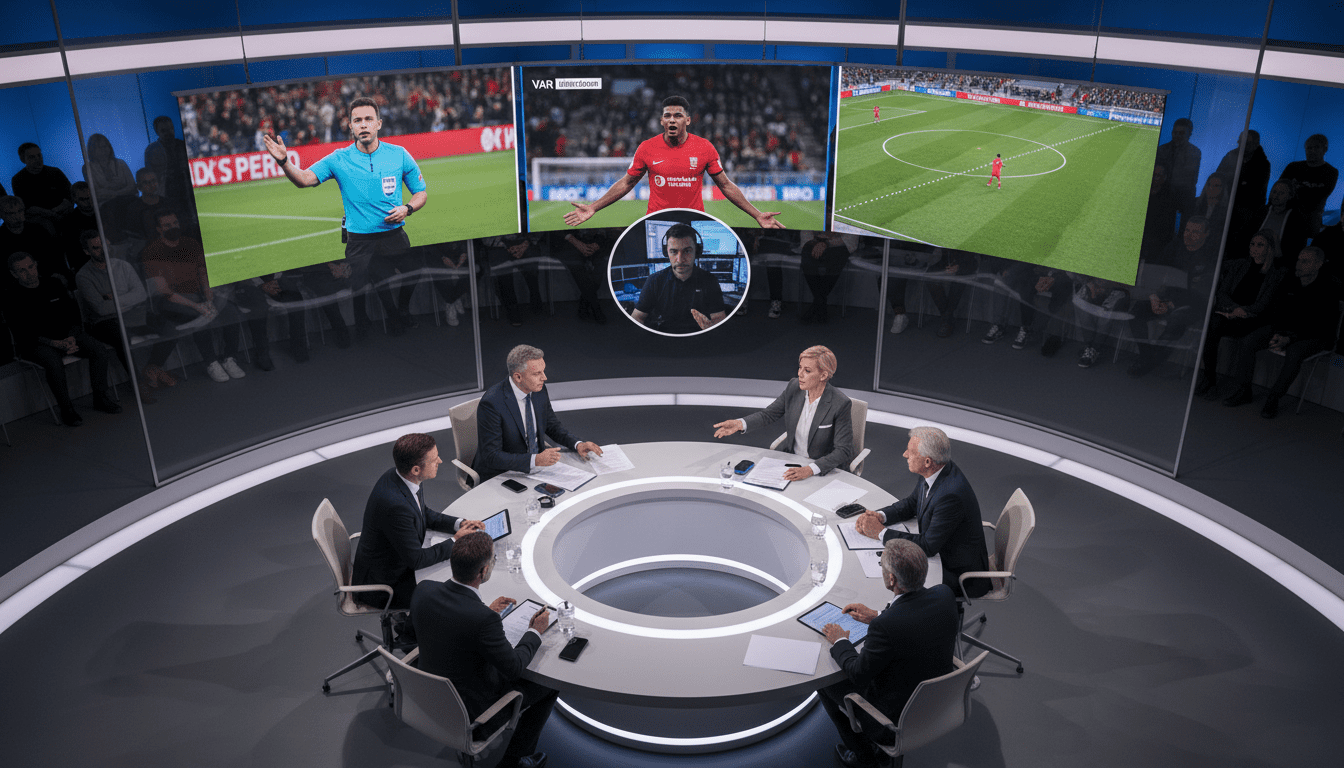
VAR debate in German football escalates as post-match focus shifts to video refereeing
VAR in German football dominates post-match talk, as clubs, media and fans fixate on video calls and question fairness, focus and reforms.
For many fixtures in German football this season, the conversation after full time has centered less on the quality of play and more on the Video Assistant Referee, or VAR. Club officials, coaches and broadcasters routinely highlight controversial video decisions, turning refereeing calls into the headline narrative. That pattern has intensified scrutiny of referees and redirected public attention away from on-pitch performance.
Post-match Focus Shifts to VAR
Across the Bundesliga and lower divisions, VAR interventions have become the primary subject of post-match interviews and punditry. Managers who are unhappy with results often single out a video call as the decisive factor, and journalists amplify those claims during press conferences and on air.
This cycle rewards loud disagreement: a pointed accusation about a VAR decision generates coverage, social media traction and often a viral moment. As a result, matches that were technically rich can feel diminished in public memory if a replayed sequence becomes the dominant takeaway.
Why Complaints Gain Traction
There are structural reasons why VAR complaints attract attention. Video decisions are presented as definitive replays of a single moment, which creates a perception of finality even when interpretation is involved. That clarity is seductive for commentators and supporters seeking a clear cause for a contested result.
Moreover, the complexity of VAR protocols is not easily conveyed in a three-minute TV package. Simplified narratives—“handball, offside, penalty”—fit media formats better than nuanced explanations about marginal calls and human judgment within a technological framework.
Pressure on Referees and the Game
Referees now operate under magnified scrutiny, with every intervention dissected in slow motion and debated publicly. That environment increases psychological pressure on match officials and on the refereeing bodies charged with applying VAR consistently.
The concentration on video incidents can also change on-field behavior. Players may alter their approaches to draw attention to incidents that would trigger VAR, and referees may adjust how they interpret contact, knowing their calls will be replayed and reviewed.
Media Incentives and Club Strategies
Broadcast outlets and club communications teams both have incentives to focus on VAR. Controversy drives ratings and engagement, while clubs can use disputed decisions to shape narratives that relieve pressure on tactical or personnel shortcomings.
This alignment of interests amplifies disputes and can create a feedback loop: complaints beget coverage, coverage encourages more complaints, and audiences come to expect post-match controversy as part of the spectacle.
Fan Reaction and Sporting Consequences
Supporters often respond emotionally to VAR episodes, with social media discussions and fan forums polarizing around interpretations of a single replay. That polarization can erode trust in refereeing institutions when controversial outcomes repeat across a season.
Sporting consequences follow when the emphasis on VAR skews perceptions of fairness and merit. Teams and players may be judged more by disputed rulings than by consistent performance, affecting reputations, morale and, in tight competitions, final standings.
Possible Reforms and Next Steps
Stakeholders across the game have proposed changes to dampen controversy, ranging from clearer communication about VAR rationale to adjustments in what incidents are reviewable. Improving transparency—explaining why a decision was overturned or upheld in the immediate aftermath—could reduce speculation and defuse tensions.
Other suggested measures include refining the threshold for intervention so only clear and obvious errors are overturned, and investing in referee training to harmonize interpretations of marginal situations. Any reform effort must balance technological assistance with preservation of the game’s flow and human judgment.
The growing preoccupation with VAR in German football speaks to broader incentives in modern sport: attention, accountability and the pressure to provide simple explanations for complex events. How clubs, broadcasters and governing bodies respond will shape whether VAR becomes a tool that improves fairness or a perpetual source of distraction.
