
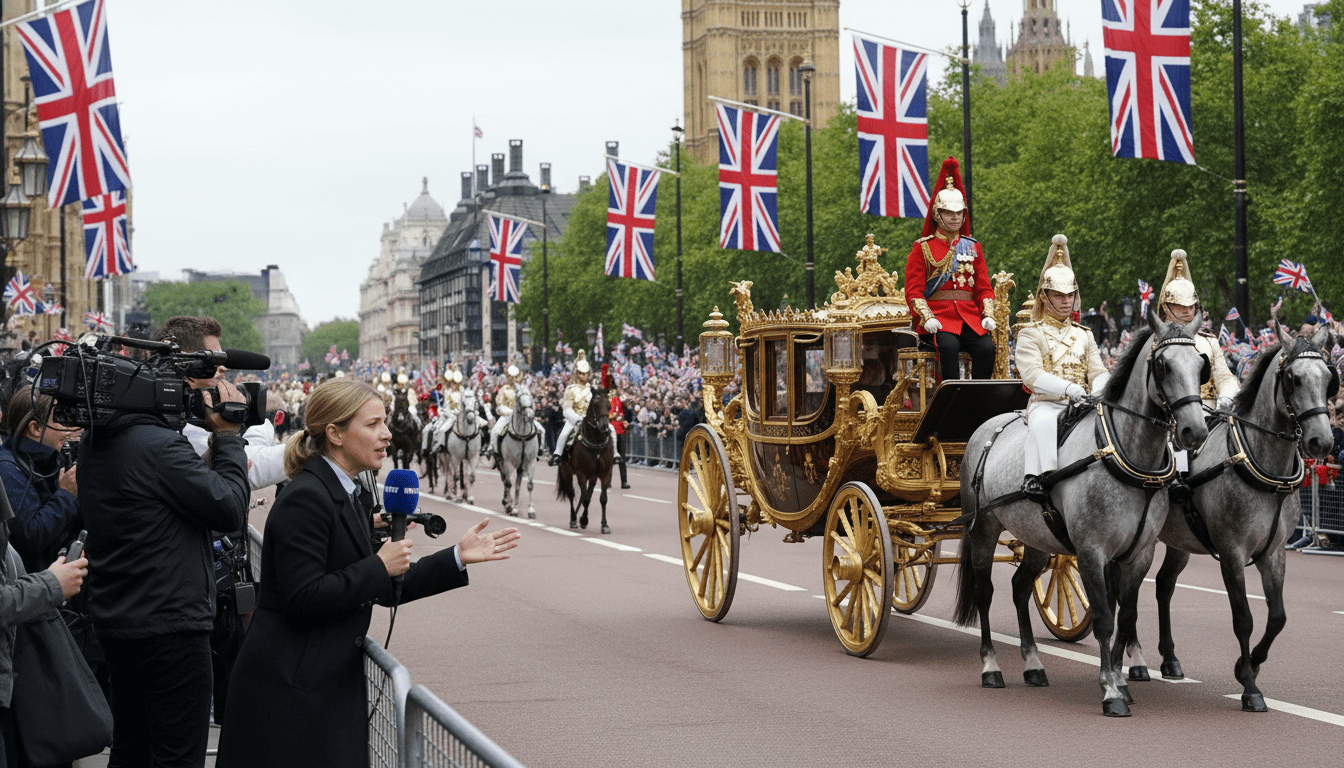
King’s Speech: Monarch Arrives by Carriage as Regalia Carried Separately
King’s Speech: monarch arrives by carriage while regalia, a historic cap, sword and 1.3 kg crown, are transported separately amid BBC coverage, sparking debate.
The King’s Speech was delivered following a traditional procession in which the monarch travelled by carriage to Parliament while ceremonial regalia were moved in a separate vehicle. Broadcasters, including the BBC, aired live coverage that once again raised questions about whether such pageantry remains fitting in modern politics. The split between the public parade and the guarded transport of the crown and other items drew particular attention.
Carriage arrival and procession
The monarch’s arrival by carriage formed the central spectacle of the State Opening, supplying the visual drama long associated with the King’s Speech. Crowds lining the route watched the procession as it passed through ceremonial precincts, with officials and palace aides in formal dress accompanying the route. The carriage element preserves a visible link between the crown and Parliament that organisers say underscores constitutional continuity.
Separate transport of regalia
A distinct vehicle carried items of regalia that are integral to the ceremony but were not conveyed in the carriage with the monarch. Among the objects were a historic cap, a sword and a 1.3-kilogram crown, each secured under official supervision and transported to the Palace of Westminster ahead of the speech. Officials described the separate transit as a matter of logistics and security, ensuring the items arrived safely and in state for the formal proceedings.
BBC coverage and debate over pageantry
During live coverage of the event, BBC presenters and commentators debated whether the pomp surrounding the King’s Speech remains appropriate in a modern democracy. Commentators pointed to the ceremony’s deep roots and symbolic value even as some questioned the expense and spectacle in contemporary contexts. The discussion echoed recurring public conversations about the monarchy’s role and how ceremonial traditions fit with current political sensibilities.
Historical context of the ceremony
The State Opening of Parliament, during which the King’s Speech is given, draws on centuries of ritual that illustrate the constitutional relationship between sovereign and Parliament. The use of regalia such as crown, sword and ceremonial cap is steeped in symbolism tied to authority and continuity. Historians note that while the outward trappings have evolved, the ceremonial language and objects remain powerful signifiers of the state.
Logistics, security and preservation
Organisers coordinated a complex timetable to deliver both the monarch and the regalia to the ceremonial venue without incident. Security teams, palace staff and parliamentary officers worked in tandem to protect the items and manage the route used by the carriage and support vehicles. Conservation considerations also govern how crowns and other historic objects are handled, with specialists ensuring temperature control and secure casing during transport.
Political and public reactions
Responses to the ceremony varied across political and social lines, with some lawmakers and members of the public praising the continuity and gravitas the ritual supplies to the parliamentary year. Others used the occasion to question the relevance of elaborate rituals when political debates focus on policy and cost-of-living concerns. Social media and on-the-ground commentary reflected that split, with images of the carriage juxtaposed against commentary on modern priorities.
The ceremony surrounding the King’s Speech continues to function as both a constitutional ritual and a focal point for broader debates about monarchy, tradition and public life. While the visible procession affirms a centuries-old pageant, the separate transport of the crown and other regalia underscores the practical and security demands behind ceremonial display. As broadcasters and citizens weigh the merits of such traditions, the event remains a potent moment when history, symbolism and contemporary politics intersect.
