
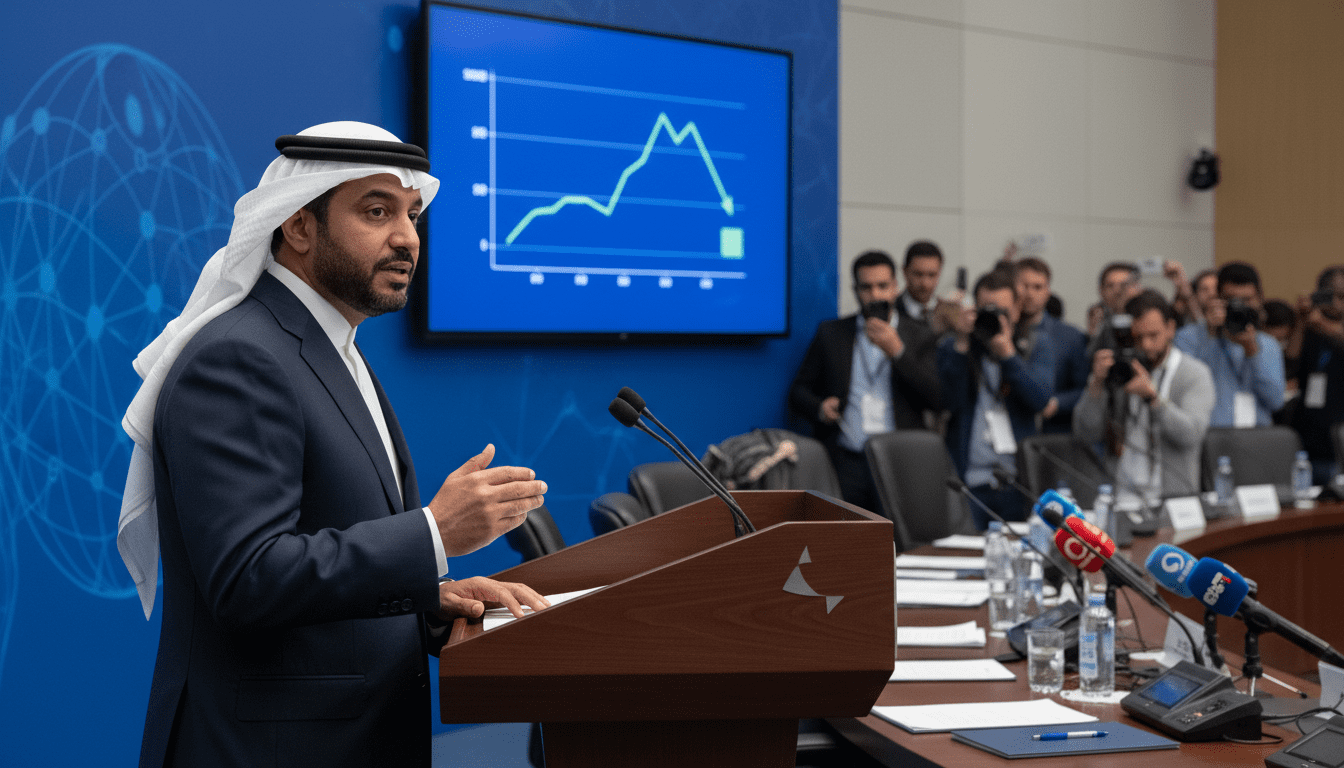
Aramco CEO warns world lost around one billion barrels of oil supply in two months
Aramco CEO Amin Nasser says the world lost around one billion barrels of oil supply in two months; markets will take time to stabilise after Hormuz reopens.
Saudi Aramco chief executive Amin Nasser said on Sunday that global oil supply had contracted by roughly one billion barrels over the preceding two months, a shortfall that he warned would not be resolved quickly even if shipping through the Strait of Hormuz resumed. The comments came alongside the company’s report that first-quarter net profits rose 25 percent, underscoring the tension between tight physical markets and robust earnings for major producers. Nasser’s assessment frames a near-term outlook of constrained availability and lingering market volatility as companies and traders weigh how long recovery will take.
Aramco CEO’s estimate and corporate context
Amin Nasser’s estimate that the world lost around one billion barrels of oil supply was delivered as Aramco disclosed a significant jump in quarterly profits, a juxtaposition that highlights how disruptions can underpin higher energy earnings. The 25 percent rise in first-quarter net income, reported by the state-controlled oil producer, came as physical supply dynamics tightened, supporting stronger margins for refiners and exporters. By linking the profit results to broader supply dislocations, Nasser positioned the company’s financial performance within a market structure still absorbing recent shocks.
Timing and the Strait of Hormuz caveat
Nasser added that global energy markets would need time to stabilise even if the Strait of Hormuz were to reopen and commercial shipping resume, signalling that a return to normal flows would not instantly erase the supply gap. The Strait of Hormuz is a strategic chokepoint through which a significant share of seaborne oil moves, and interruptions there tend to create immediate reverberations across markets. By emphasising a lag between restored transit and market rebalancing, Nasser underlined logistical, commercial and psychological factors that can keep prices and volatility elevated beyond the physical reopening.
How a one billion-barrel loss translates to markets
A sudden reduction of roughly one billion barrels of available supply over two months translates into tighter crude inventories, narrower headroom for refiners and greater reliance on remaining spare production capacity. Markets manage such shortfalls through price signals, inventory drawdowns and adjustments in shipping and refining schedules, but those mechanisms can take weeks to months to fully ameliorate the shortage. The magnitude of the loss cited by Aramco’s chief underscores why traders may react strongly to incremental news and why volatility in benchmarks can persist even as transit routes are restored.
Operational and commercial frictions delaying recovery
Even when physical passages reopen, restoring pre-disruption throughput often requires crews, insurance, cleared freight and coordinated refinery turnarounds, all of which take time to synchronise. Shipowners and insurers typically reassess risk premiums and coverages after disruptions, and elevated freight rates or insurance costs can slow the flow of cargoes back to previous levels. In addition, downstream operations that shifted feedstock or adjusted runs during the disruption may not immediately reverse course, prolonging the period before global crude balances are fully restored.
Broader implications for producers, traders and consumers
For major producers, a sustained shortfall can justify higher output targets or prompt coordinated responses among exporters, but such moves depend on available spare capacity and political calculations. Traders and refiners face a shorter window to source alternative crude grades and may incur higher costs which can flow through to refined product prices for consumers. For markets, the combination of a large supply gap and the message from a leading industry CEO suggests continued sensitivity to shipping, geopolitical developments and inventory data in the near term.
The statement from Aramco’s chief executive and the company’s strong quarterly results together signal a market environment where supply disruptions have direct commercial consequences and where normalisation will likely be gradual rather than instantaneous. Observers will watch shipping lanes, spare production reports and inventory statistics closely in the coming weeks to gauge how quickly the estimated one billion barrels of lost supply can be recovered and what that recovery will mean for prices and energy security.
