
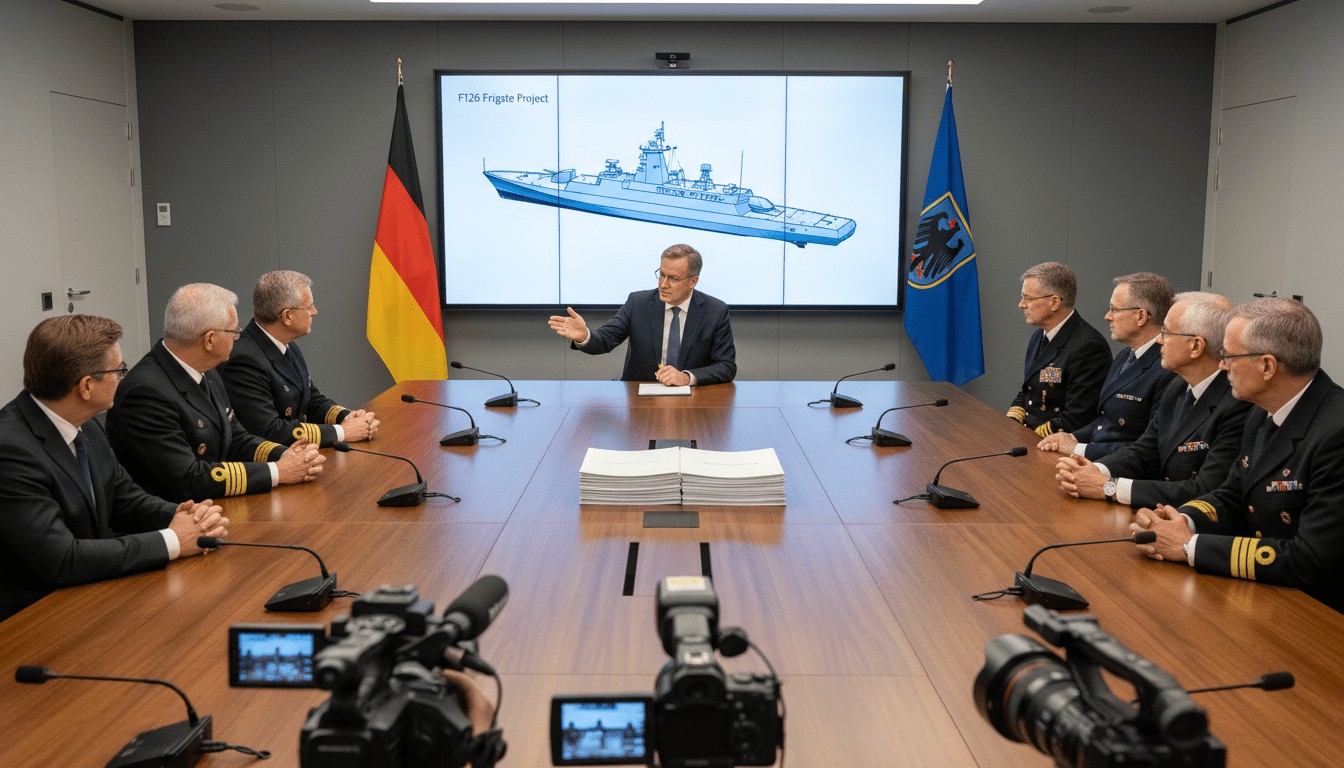
Rheinmetall offers to finish troubled F126 frigate programme in multi-billion euro bid
Rheinmetall proposes to complete the F126 frigate programme for Germany, offering to assume construction and delivery amid rising costs and delays that have already consumed roughly €2 billion.
The German defence group’s overture to finish the F126 frigate project has injected fresh momentum into a procurement programme beset by software issues, budget scrutiny and missed NATO deadlines. Rheinmetall’s chief said the company has completed a technical review and believes its recently acquired naval unit can build the ships, while reported offers place the price tag in the low‑teens of billions of euros. The Bundestag budget committee and the Defence Ministry are weighing options as lawmakers press for clarity on costs, schedules and the operational gap created by slippage.
Rheinmetall’s commercial pitch and technical assessment
Rheinmetall’s CEO signalled in a call with analysts that the group has carried out a technical analysis with the original contractor and concluded its naval unit could assume construction responsibilities. Company officials declined to confirm exact figures but described the programme as “well into the double‑digit billions” and said further commercial talks are underway. The bid follows Rheinmetall’s acquisition of a marine business that expands its footprint into shipbuilding and positions it as a potential single‑supplier solution for completion of the class.
Rheinmetall framed the proposal as contingent on acceptable pricing, risk allocation and technology transfer, saying it would proceed only if it could secure a commercially viable package. Executives also noted the need for streamlined certification and acceptance procedures to bring the ships into service sooner.
Delivery timeline and operational readiness
Company projections suggest hull work could be completed on the first of six ships as early as 2029, but full delivery and operational certification are not expected until 2031 under optimistic assumptions. Rheinmetall emphasised the distinction between construction completion and naval operational readiness, noting that extensive sea trials, systems integration and third‑party testing are required before the vessels can perform anti‑submarine warfare duties. That schedule means Germany will miss the earlier NATO commitment to field the F126s by 2028, a shortfall that has already prompted a parallel procurement track.
Officials warned that even with accelerated processes the timeline remains sensitive to testing outcomes, subcontractor performance and approvals from the Defence Ministry and parliamentary oversight bodies.
Rising programme costs and fiscal pressures
The F126 programme began with an estimated budget of roughly €10 billion, but cost projections have climbed sharply. About €2 billion has already been spent, and reported offers to finish the programme range into the €12 billion plus bracket, implying a substantial escalation once sunk costs are included. Discussions reportedly cover inflation adjustments and additional charges for acceleration measures to shorten delivery, factors that could further inflate the final bill.
Budget committee members have repeatedly scrutinised the programme, and the Defence Ministry has shifted to incremental approvals since late last year, authorising work in smaller tranches while demanding clearer cost control. Political and fiscal stakeholders now face a choice between terminating the troubled contract—with significant write‑offs—or accepting a higher final price to secure completion and long‑term capability.
Interim procurement of MEKO A‑200 frigates
To close the capability gap, the ministry has opened a second procurement track and signed a preliminary contract for four MEKO A‑200 multi‑purpose frigates as an interim solution. Those ships are smaller and less complex than the F126 design but are proven platforms with established production lines, helping to shorten lead times. The interim deal includes payments to prepare production capacity and aims to restore anti‑submarine capability more rapidly while larger programme decisions are finalised.
Industry sources say the MEKO option is significantly cheaper on a per‑ship basis and presents less technical risk, which explains its appeal as a hedging strategy even if Germany ultimately awards the F126 completion to another contractor.
Competition over German Naval Yards and industrial capacity
Rheinmetall is simultaneously moving to secure local shipbuilding capacity, having submitted a non‑binding offer to acquire German Naval Yards Kiel, a yard already positioned as a supplier for the F126. A rival offer from a neighbouring shipbuilder further complicates the picture, and both bidders are conducting due diligence. Acquiring the yard would give Rheinmetall direct control of production capacity and could accelerate build plans if the company wins the contract to finish the class.
The sellers have not publicly commented on the offers, and competing bidders have characterised their approaches as opportunistic rather than mandatory. Observers say consolidation in yard capacity would reduce coordination risks between system integrators and subcontractors.
Market outlook and strategic implications for Rheinmetall
The naval acquisition would bolster Rheinmetall’s Marine Systems division, which the group projects will generate several billion euros in revenue by 2030 and has already helped to expand the firm’s order backlog. Company forecasts anticipate stronger order intake in the marine and land systems segments in the coming quarters, driven by large‑volume defence orders across Europe. Share performance has been volatile as investors price the size and risk of new programmes.
For defence planners, the decision on the F126 will shape Germany’s naval posture for decades: completing the class domestically would preserve industrial know‑how and secure sovereign maintenance capabilities, while interim frigate purchases buy time to restore NATO‑relevant anti‑submarine capacity.
The coming weeks will determine whether the Defence Ministry accepts Rheinmetall’s offer, proceeds with the interim MEKO purchases, or pursues a hybrid solution that combines domestic completion with demonstrated, lower‑risk platforms to meet alliance commitments.
