
Germany’s €1,000 Entlastungsprämie Blocked by Bundesrat, Leaving Relief Plan Uncertain
Bundesrat rejects voluntary, employer-funded €1,000 Entlastungsprämie; companies and public employers refused to pay, forcing government to reassess support.
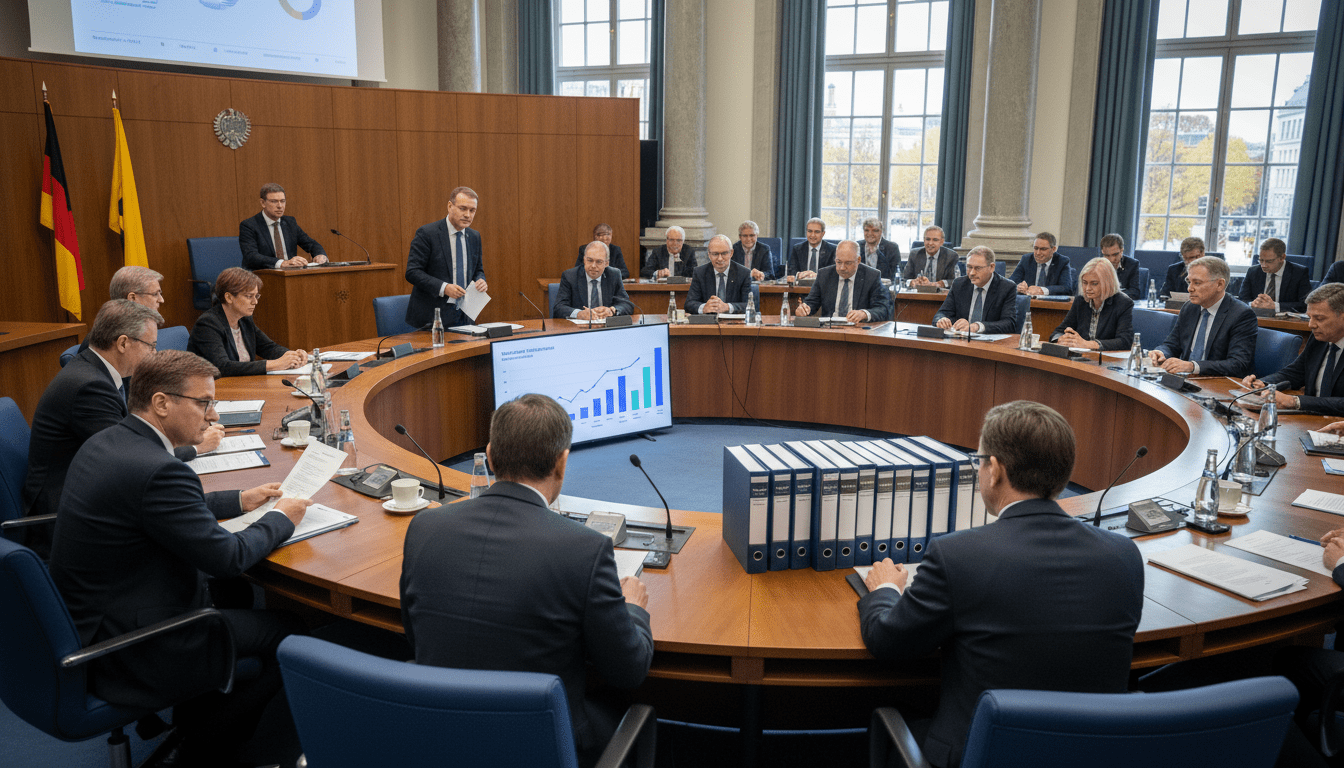
The federal Bundesrat on Friday refused to approve a coalition proposal for a voluntary, employer-funded €1,000 Entlastungsprämie intended to offset high energy costs for employees. The Entlastungsprämie would have been paid by employers, tax-free to workers and deductible as a business expense, but it failed to secure the necessary majority in the upper house. The defeat surprised both coalition partners and businesses that had been preparing for the measure to be enacted.
Coalition agreement and the Entlastungsprämie proposal
The relief measure emerged from a recent coalition meeting at Villa Borsig, where ministers agreed on an employer-paid one-off payment as a quick response to soaring energy bills. Under the plan, employers could choose to grant workers a €1,000 tax-free bonus, which companies would be able to record as deductible operating expenses. Proponents framed the Entlastungsprämie as targeted, immediate aid that avoided direct public spending while delivering rapid support to households.
The proposal was pitched as voluntary to limit state fiscal exposure and to respect business autonomy, but that voluntary nature also undercut the measure’s political momentum. Many companies signaled reluctance to assume the additional cost amid weak profits and uncertain economic forecasts. The lack of unanimous commercial buy-in and reservations from public-sector employers undermined the coalition’s bid to present a unified front.
Business resistance and public employer stance
Industry groups and smaller firms raised immediate objections, warning that a compulsory or effectively expected payment would strain already tight budgets. Several employers argued that a flat €1,000 payment would be easier for larger companies to absorb than it would be for small and medium-sized enterprises facing thinner margins. The measure’s design—tax-free for employees and deductible for employers—did not translate into a clear net advantage for cash-constrained businesses.
Notably, the federal government itself, as a large public employer, declined to pay the Entlastungsprämie on behalf of its own staff, reducing political pressure on states to follow. That refusal from the centre diminished the scheme’s credibility and contributed to hesitancy among Länder representatives whose votes are cast in the Bundesrat. State-level finance ministers signalled concerns about fairness and the potential for uneven uptake across sectors and regions.
Bundesrat denial and the reasons behind it
When the Entlastungsprämie reached the Bundesrat for approval, it failed to obtain the required majority, a result that coalition leaders called unexpected. Members of the upper house cited a series of objections, including the voluntary structure, the administrative complexity for employers, and the potential for unequal relief across different types of employment. Some Länder representatives also expressed reservations about leaving relief decisions to private employers rather than using direct fiscal transfers.
The decision underscores the Bundesrat’s role as a check on federal initiatives that directly affect the Länder’s economic landscapes. By withholding approval, state governments have signalled that any national relief plan must address the practical burdens on businesses and the equitable distribution of aid. The denial also reflects broader tensions within the governing coalition over fiscal priorities and policy design.
Political and economic implications for the coalition
The setback creates a dilemma for coalition partners who aimed to demonstrate responsiveness to soaring household energy costs without expanding public spending. The refusal in the Bundesrat exposes a gap between the government’s political messaging and its ability to deliver policy measures that rely on private-sector cooperation. Opposition parties seized on the failure to question both the plan’s feasibility and the coalition’s coordination.
Economically, the decision may leave a significant number of low- and middle-income workers without the rapid assistance they anticipated. Businesses that had tentatively planned one-off payouts must now reassess budgets, and employees expecting the bonus face renewed uncertainty. The episode could intensify pressure on ministers to design a fallback scheme with clearer funding arrangements and broader administrative feasibility.
Possible next steps and alternative relief options
Government officials now face several paths: reworking the Entlastungsprämie to address Länder and business concerns, proposing a directly state-funded payment, or shifting toward targeted measures such as energy bill subsidies or tax credits for low-income households. Any revision would need to reconcile the Bundesrat’s objections and secure buy-in from small businesses that would be disproportionately affected by voluntary employer payments.
Analysts suggest that a targeted, means-tested approach might be politically more viable, though it would involve greater public expenditure and administrative setup. Another option is a smaller universal payment for public-sector employees and broad-based tax relief for households, measures that could be enacted without relying on employer willingness. The government has signalled that it will consult with state representatives and business associations before presenting a revised plan.
The Entlastungsprämie’s rejection by the Bundesrat leaves an unsettled policy picture, forcing the coalition to choose between revising the voluntary bonus or pursuing direct fiscal support to alleviate household energy burdens. The outcome will be closely watched by employees, employers, and state governments as debate resumes over the most effective and equitable way to deliver relief.
