
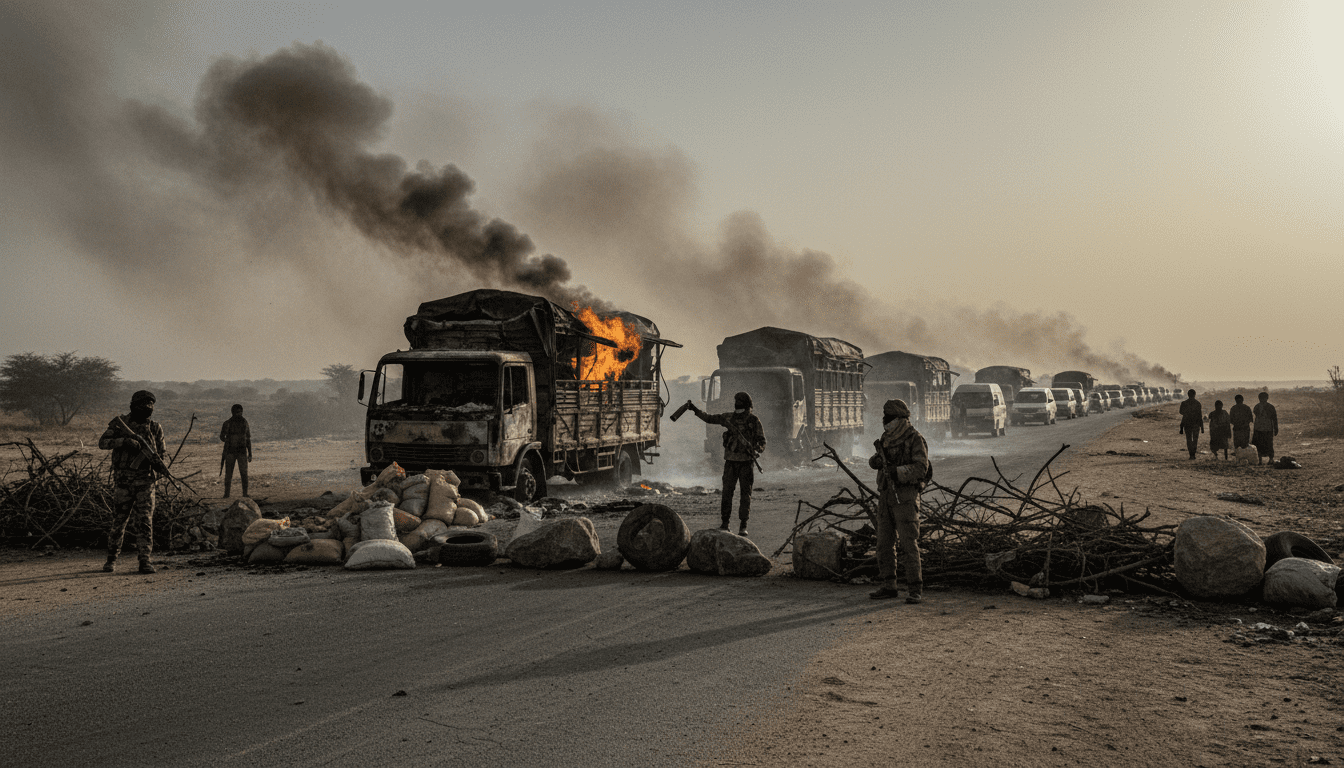
Al-Qaeda-linked fighters torch food trucks as Bamako blockade deepens supply crisis
Al-Qaeda-linked fighters torched food trucks and enforced a Bamako blockade, cutting critical supply routes and worsening hunger in already vulnerable regions.
The Bamako blockade has intensified after armed groups set fire to food convoys on roads approaching the capital, choking supply lines that deliver staples to markets and humanitarian operations. Officials and residents report mounting shortages and rising prices as trucks are stopped, looted, or turned back before reaching the city.
Arson on supply convoys near Bamako
Local authorities and witnesses said convoys carrying rice, oil and other essentials were attacked on major approaches to Bamako, with several vehicles deliberately set ablaze. The deliberate destruction of cargo has not only removed supplies from the market but also deterred transporters from attempting the route.
Drivers who escaped reported that assailants identified and targeted vehicles they believed were carrying food aid or commercial staples, then burned them to block the roads. These attacks have reduced the number of willing hauliers and left remaining drivers demanding higher pay for increased risks.
Roadblocks now choke main supply arteries
The blockade has been enforced on multiple roads leading into the capital, effectively severing overland links with interior production areas and cross-border supplies. Checkpoints manned by fighters and improvised barriers have made certain highways impassable for large trucks.
Officials say the blockade is not a single, continuous line but a network of closures and ambush points that together create a practical cutoff, forcing long detours that many transporters will not attempt. The result is erratic deliveries, empty market shelves in some neighborhoods, and concentrated congestion where goods still arrive.
Humanitarian impact and rising hunger
Humanitarian workers and local officials warn the blockade is accelerating food insecurity in areas already facing shortages from seasonal and economic pressures. Food aid convoys have struggled to reach distribution points, and some planned deliveries were canceled after crews assessed the security risks.
Communities on the city’s periphery and in rural districts report dwindling stocks of staples and sharp price increases for basic items. Aid organizations note that when supply lines are interrupted for weeks, the poorest households quickly deplete savings and adopt negative coping measures such as skipping meals.
Security and government response
Malian authorities have publicly condemned the attacks and said security forces are mounting operations to clear key routes and restore safe passage for civilian convoys. Military and police units have increased patrols on some approaches, but officials acknowledge the challenge of dislodging well-armed groups without broader stabilization.
Analysts caution that clearing roads temporarily will not guarantee long-term safety for commercial drivers unless parallel measures address the groups’ operational bases and financing. The presence of Al-Qaeda-linked fighters complicates military responses and raises the risk of further reprisals against civilians and supply chains.
Market disruptions and economic fallout
Traders and market operators report empty shelves for staples in several districts and are warning of sustained price shocks if deliveries do not resume. Perishable goods are particularly affected because long detours and delays increase spoilage and reduce merchants’ willingness to stock volatile items.
Small businesses that rely on daily supplies face lost income, and transporters are calling for guarantees or escorts to resume routes. The reduced flow of goods threatens to strain informal support networks that families depend on during lean seasons.
Humanitarian access and regional implications
Humanitarian agencies are scrambling to reroute aid and negotiate safe passage but say options are limited without security guarantees. The blockade increases operational costs and dilutes the reach of assistance at a time when needs are already high across multiple regions.
Beyond immediate shortages, experts warn the disruption could have wider regional effects by interrupting cross-border trade and amplifying displacement pressures. If blockade conditions persist, the humanitarian crisis could deepen and complicate diplomatic and security efforts to stabilize affected corridors.
The immediate priority for officials and aid organizations is to reestablish secure transport corridors so commercial and humanitarian convoys can move without fear of attack. Restoring predictable supply lines will be essential to preventing further deterioration of food security and to stabilizing markets in the capital and surrounding regions.
