
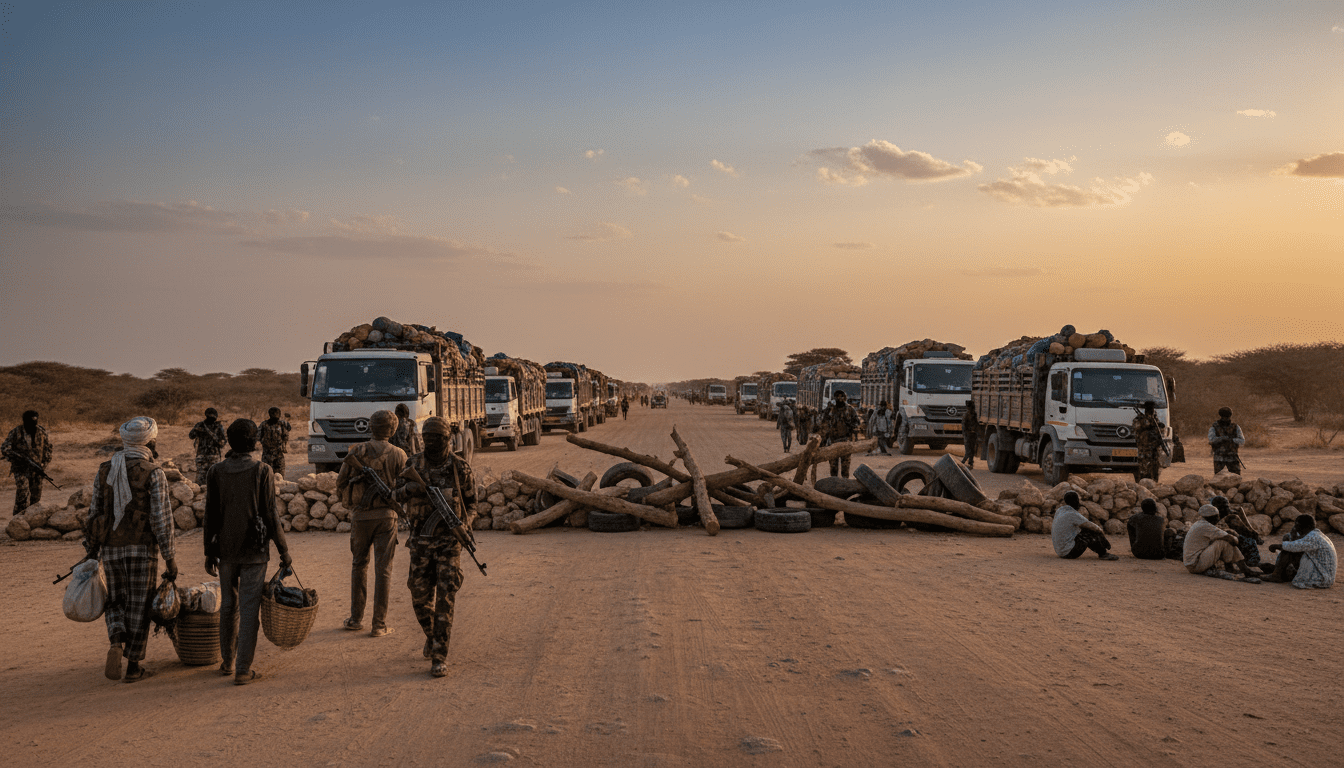
JNIM blockade of Bamako chokes key road links to Senegal Ivory Coast and Burkina Faso
JNIM blockade of Bamako halts key road links to Senegal Ivory Coast and Burkina Faso, triggering border gridlock and worsening security and fuel shortages.
The Islamist group JNIM has mounted a blockade of major roadways leading into Mali capital Bamako, cutting off overland access from Senegal Ivory Coast and Burkina Faso and creating severe cross border congestion. The JNIM blockade of Bamako is preventing vehicles from entering the city while allowing departures, a move that traders and regional officials say is already disrupting commerce and fuel supplies. Local authorities and witnesses reported long queues of trucks at the Senegal border town of Kidira, where the backlog has spilled into nearby roads and markets. The blockade forms part of a wider escalation in attacks that analysts describe as among the most intense since 2012 and which have directly challenged Mali military rule.
Roads sealed and flow reversed
The highways linking Bamako with its western and northern neighbours have long been lifelines for trade and fuel distribution, and the JNIM blockade of Bamako has effectively suspended inbound traffic along those corridors. Drivers reported checkpoints and deliberate obstructions on several axes, forcing heavy vehicles to halt for extended periods or turn back. Authorities in Bamako have permitted outbound movement to avoid trapping residents but that decision has done little to ease shortages inside the capital. Transporters warn that extended disruption will quickly translate into shortages of diesel and other essentials in urban neighbourhoods.
Border congestion at Kidira and regional trade effects
Traders and customs officials in the Senegalese border town of Kidira described long lines of stalled trucks and traders unable to complete deliveries, a sign of growing regional spillover. The slowdown threatens seasonal trade flows between coastal and inland West African markets and risks undermining livelihoods that depend on regular cargo movement. Cross border commerce is particularly sensitive to fuel availability and timely deliveries, and transporters say any prolonged blockage would push up prices in markets across the region. Local border authorities have called for calm while they seek ways to reroute or manage traffic, but options are limited under security pressure.
Recent attacks and the killing of the defence minister
Violence across Mali intensified over the past weekend when insurgents carried out coordinated attacks in six cities, an escalation officials called one of the deadliest surges in over a decade. Those assaults were linked to JNIM and represented the first time militants operated jointly with the separatist FLA group during a single series of strikes. Among the highest profile casualties was Defence Minister Sadia Camaro who was killed during the wave of attacks, a development that has deepened uncertainty within the ruling military administration. Analysts say the killing of a senior defence official underscores the militants capacity to strike at symbolic targets and to exploit gaps in the junta security apparatus.
FLA advance in Azawad and demand for Russian withdrawal
The separatist Front for the Liberation of Azawad has renewed efforts to expand control in northern Mali, declaring its intent to seize territory and to pressure foreign forces to leave. FLA leaders have publicly demanded a permanent withdrawal of Russian paramilitary elements known locally as Afrikakorps which currently back the military government. The FLA view cooperation between the junta and Russian units as an obstacle to their objectives and say the junta lacks means to repel their offensive in the north. The collaboration between JNIM and FLA in recent operations complicates the battlefield picture and blurs traditional divides between jihadist and separatist agendas.
Humanitarian and economic ripple effects
Mali has experienced previous convoy attacks that triggered fuel shortages and school closures, and observers warn the current blockade could reproduce those outcomes on a larger scale. Urban households face rising transport costs and constrained access to basic services when fuel is scarce, and humanitarian groups say vulnerable communities will suffer first. Markets that depend on regular deliveries of food and fuel are showing early signs of price increases, which can exacerbate food insecurity in a country already fractured by conflict. Aid organizations are monitoring access routes as they assess whether relief operations can reach affected populations without exposing staff to new risks.
Governance crisis and regional response options
Mali has been governed by military leaders since two coups in 2020 and 2021 and the junta has faced persistent challenges from extremist groups and criminal networks ever since. The recent spike in attacks and the JNIM blockade of Bamako raise questions about the junta capacity to secure territory and to guarantee trade corridors. Neighbouring states and regional bodies will likely weigh diplomatic and logistical responses but any intervention must navigate a fraught political environment that includes foreign military actors and competing armed groups. For now neighbouring capitals are urging restraint and calling for measures to protect civilians and commerce while governments consider contingency plans.
The immediate priority for humanitarian agencies and traders is restoring access and stabilizing fuel and food flows, while security planners inside Bamako consider defensive options and diplomatic channels to reduce pressure on the capital.
