
Moscow Victory Day parade without military hardware as Kremlin cites threat from Ukrainian drones
Russia will stage the May 9, 2026 Moscow Victory Day parade without military hardware, citing the operational threat from expanded Ukrainian drone strikes on its hinterland.
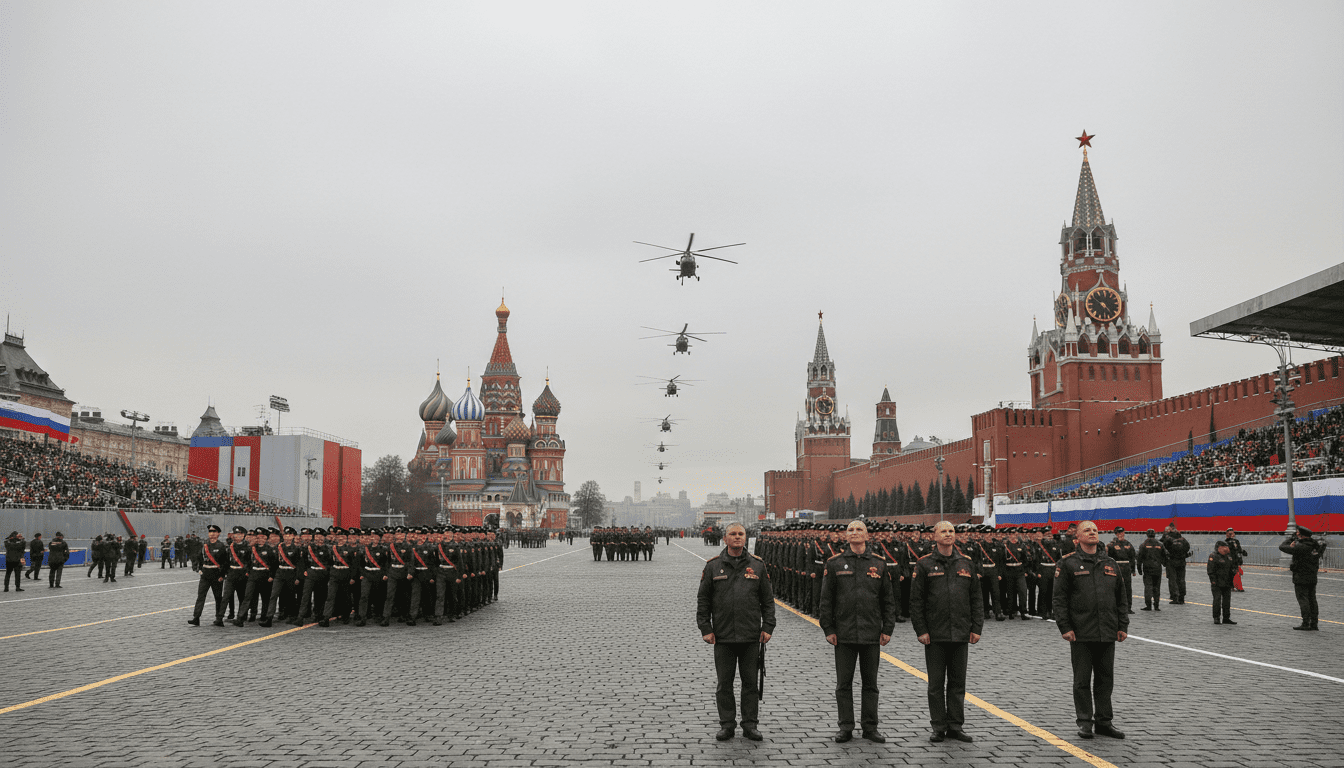
The Kremlin announced that the traditional Victory Day display in Moscow will proceed on May 9, 2026, but without tanks, missile launchers or other heavy equipment on Red Square due to what the Defense Ministry described as the current “operational situation.” The decision follows a period in which Ukrainian forces have increased the use of combat drones directed at targets inside Russia. Thousands of cadets will still march, and troop activity will be presented during the televised broadcast of the event.
Defense Ministry statement and official rationale
The Russian Defense Ministry formally stated that displays of armored vehicles and missile systems would be omitted from the parade because of security considerations tied to the operational environment. Officials framed the move as a precaution to reduce the risk of high-profile assets becoming targets amid heightened aerial threats.
The ministry’s announcement emphasized that the parade program would nonetheless include large-scale marching contingents and that service personnel would be visible during television coverage. Organizers said the decision was administrative and based on current threat assessments rather than a change to the symbolic importance of the commemoration.
Parade composition: marching units and televised elements
Organizers confirmed thousands of officer cadets and other marching units will still appear on Red Square as is customary for Victory Day ceremonies. The televised production will show formations and footage of Russian personnel, signaling an intent to maintain the pageantry while minimizing on-site equipment exposure.
Ceremonial elements such as wreath-laying, speeches and bands are expected to proceed, maintaining the event’s ritual role for veterans and the public. Officials indicated that some hardware might be included in controlled studio or remote segments to preserve visual elements of the celebration without bringing systems into central Moscow.
Ukrainian drone campaign and operational context
Ukrainian forces have expanded the use of armed drones in recent months as part of wider counteroffensive operations, directing some strikes at logistical nodes and military facilities inside Russia. Russian authorities say this widening of the conflict zone has raised concerns about the vulnerability of high-profile targets, including static parade equipment.
Western analysts and security commentators have noted the increased reach and tactical use of drones in the conflict, which has complicated protective planning for large public events. Both sides have framed drone operations differently: Kyiv describes battlefield strikes as a legitimate response to the invasion, while Moscow characterizes them as attacks on Russian territory.
Security measures and air defense posture in Moscow
Moscow’s security apparatus is expected to augment air defense and counter-drone measures ahead of May 9, with restricted flight zones and increased patrols around the city center. Authorities routinely impose temporary airspace closures and implement surveillance measures during mass events, and this year planners have flagged enhanced precautions to mitigate aerial threats.
Logistics for the parade — including staging areas, transport routes and spectator zones — are likely to be tightened, and officials may restrict access in sensitive sectors. Civil defense messaging and visible security deployments are intended to reassure the public and deter potential attempts to target the ceremony.
Domestic political messaging and symbolism
Removing heavy military hardware from the square alters the visual rhetoric of the parade, where tanks and missiles historically underscore state military capability. Kremlin communications are likely to stress continuity of national memory and honor for World War II veterans while framing the decision as a responsible security measure.
Russian leaders have alternated between showcasing military strength and emphasizing pragmatic safety choices in recent years; this iteration permits the state to preserve ceremonial unity without exposing expensive or symbolic platforms. Observers note that televised production can still convey power through edited sequences and archival footage even if vehicles are absent from the live procession.
International observers and regional implications
The change in parade format will attract attention from international media and defence analysts, who will interpret the omission in the broader context of the Ukraine war’s evolving battlefield dynamics. Allies and rival capitals will factor the decision into assessments of Russian domestic resilience and the perceived trajectory of threats to the Russian homeland.
For neighboring states and NATO members, the development underscores how modern unmanned systems are reshaping strategic calculations around public events and critical infrastructure. The adjustment of a high-profile national ritual for security reasons illustrates the operational impact the conflict continues to exert beyond front-line combat.
The situation remains fluid as May 9 approaches; Kremlin officials and defence authorities say they will continue to monitor operational conditions and update arrangements if necessary. Observers expect further briefings from Russian agencies on parade security and presentation in the days preceding the ceremony.
