
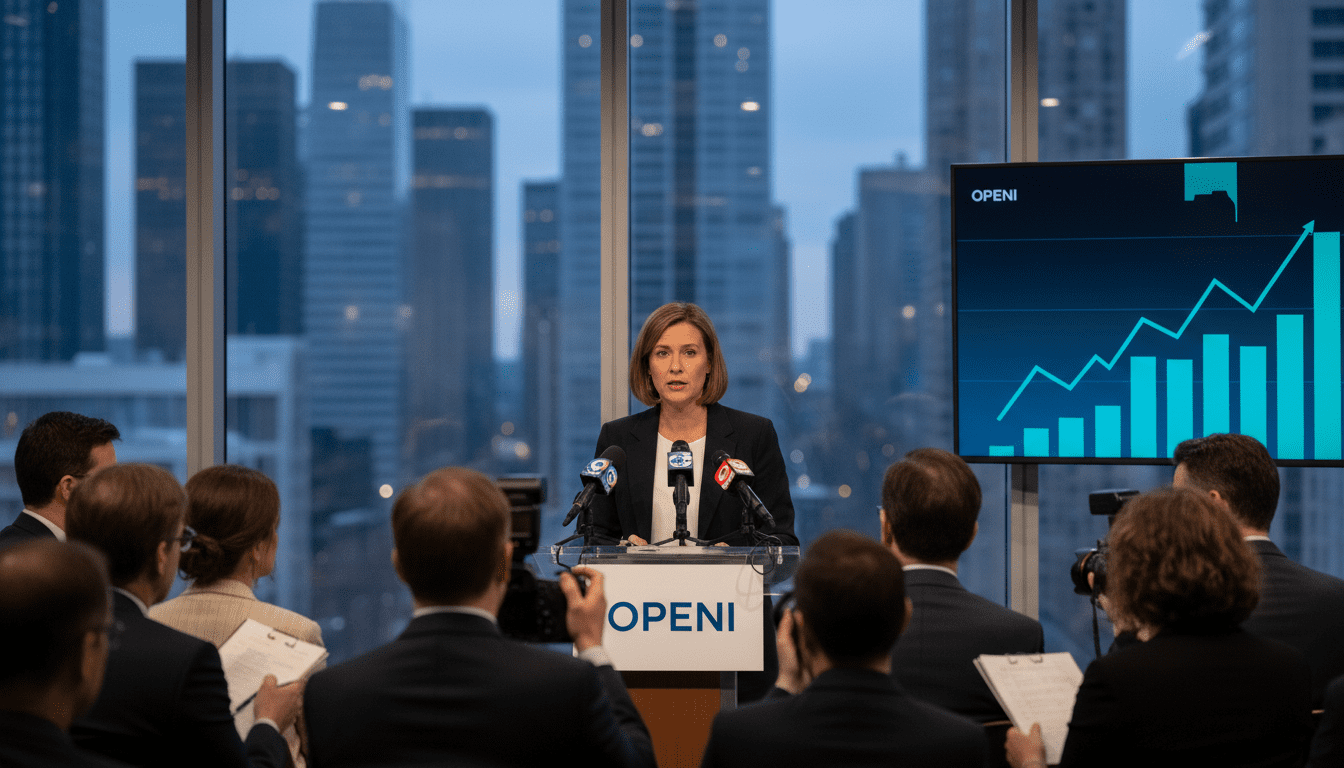
OpenAI CFO Warns Compute Costs Could Outpace Revenue, Raising Funding Concerns
OpenAI CFO Sarah Friar warned that compute costs could outpace revenue growth, risking the company’s ability to finance future AI infrastructure. This development, reported in Das Journal, casts new light on OpenAI’s fiscal challenges and strategic choices.
CFO Raises Alarm Over Compute Spending
A report in Das Journal said OpenAI’s finance chief, Sarah Friar, told executives the company may struggle to cover future compute needs if revenue does not accelerate. The warning centers on the steep and rising costs of the specialized hardware and cloud services that underpin large-scale AI models.
Friar’s concerns reflect the rapid scaling of model size and usage that drives up operational spend. The company faces a choice between aggressive revenue growth and costly investments in compute capacity.
Revenue Trajectory Versus Infrastructure Demand
OpenAI’s business model has relied on subscription services, enterprise contracts, and licensing, but margins are under pressure as model training and inference demand grows. If sales growth slows, the firm could be forced to re-evaluate capital allocation and prioritize which projects receive computing resources.
Analysts note that compute is a fixed, non‑trivial line item for leading AI firms, and timing matters: procuring hardware and securing cloud capacity often requires long-term commitments and upfront spending. Those financing rhythms can clash with the variable pace of revenue realization.
Operational Trade-Offs and Strategic Options
The warning from the CFO suggests OpenAI may consider several operational levers, including prioritizing higher-margin products, renegotiating vendor contracts, or delaying non-critical research workloads. Each option carries trade-offs for product roadmaps, safety testing, and competitive positioning.
Another potential response is seeking additional external capital or restructuring commercial terms with partners to smooth cash flow. Any move to temper compute growth could slow model iteration cycles, with implications for product performance and client retention.
Market and Partner Implications
If OpenAI limits compute expansion, partners and enterprise customers could face longer timelines for features that rely on larger or more expensive models. Cloud providers and chip manufacturers that supply GPUs and specialized accelerators would also watch closely, since their revenue is tied to demand from major AI customers.
Investors and corporate customers rely on visibility into OpenAI’s capacity plans to gauge future product roadmaps and integration timelines. A shift in compute strategy could prompt renegotiations or contingency planning among large customers.
Governance and Internal Debate
The CFO’s reported intervention signals substantive internal debate about balancing growth with fiscal discipline. Finance leaders typically bring forward-looking cost projections to inform strategic discussions; this instance highlights how infrastructure economics can shape executive decisions.
OpenAI’s leadership must weigh short-term financial sustainability against long-term research ambitions. That calculus will involve risk assessments, scenario planning, and likely discussions with board members and major investors.
Broader Industry Context
The cost pressures flagged by OpenAI echo a wider industry challenge as generative AI scales across enterprises and consumer services. Training state-of-the-art models and providing real-time inference at scale require substantial compute investments that can compress margins across the sector.
Companies are experimenting with model efficiency, custom silicon, and hybrid cloud strategies to reduce per‑unit compute costs. The balance between innovation and affordability will influence who can sustain leadership in advanced AI development.
OpenAI’s finance chief flagged a pivotal tension between the accelerating demand for compute and the need for revenue to keep pace; how the company responds will shape its technological roadmap and market relationships.
