
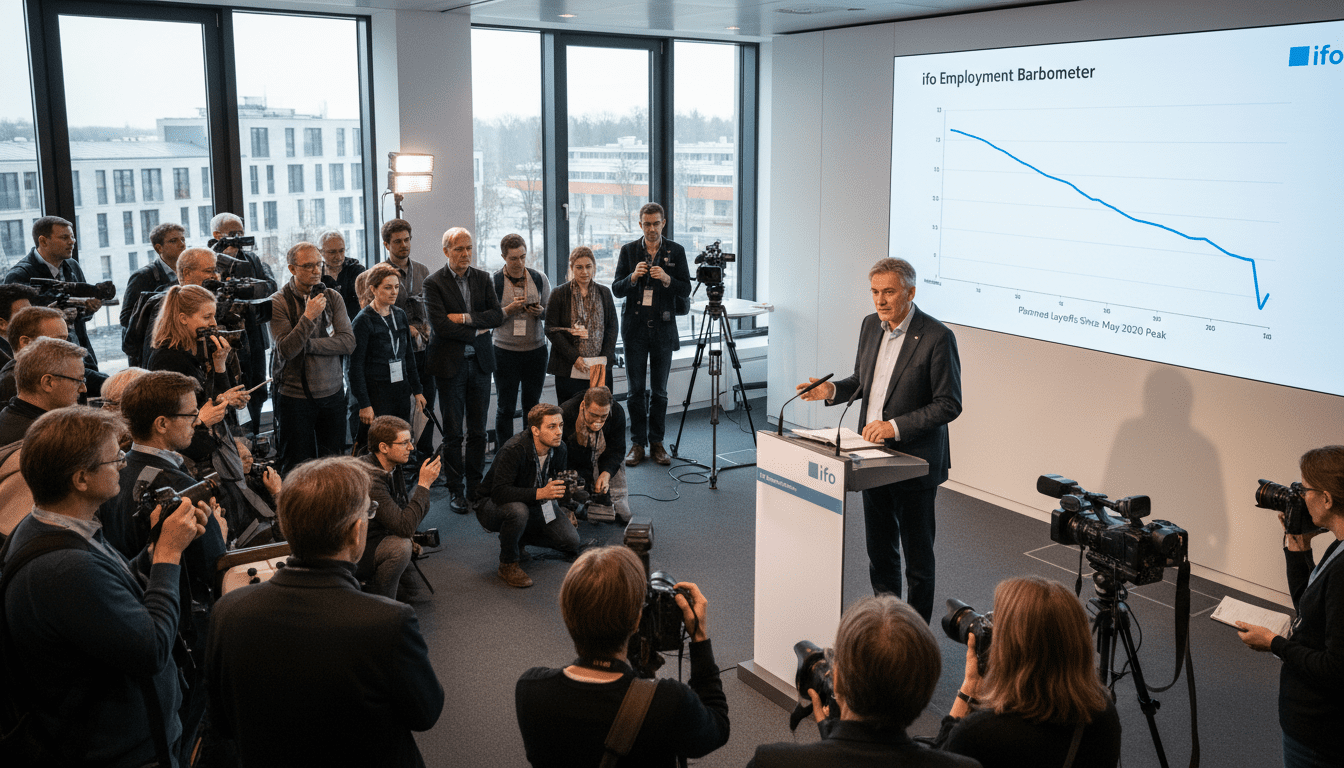
Job cuts in Germany accelerate as ifo barometer falls to lowest since May 2020
Job cuts in Germany rise as the ifo employment barometer falls to 91.3 – the lowest since May 2020 – amid rising energy costs and geopolitical shocks.
Immediate picture: sharp drop in employer hiring expectations
The Munich-based ifo Institute reported a marked deterioration in firms’ staffing plans, with its employment barometer slipping to 91.3 in March. This level is the lowest reading since May 2020 and reflects a drop of more than two points in a single month.
Analysts say the decline signals that, across the economy, more companies intend to cut jobs than to add them, reversing a trend of gradual improvement seen after the pandemic. The institute links the change chiefly to external shocks rather than domestic demand alone.
Layoffs spanning industry, retail and services
According to the ifo Institute, hardly any sector is immune from the wave of job cuts in Germany, with manufacturers, wholesale and retail firms, and service providers all reporting weaker personnel plans. Company surveys behind the barometer point to simultaneous reductions in hiring intentions across those fields.
Managers cited uncertain sales prospects and rising operating costs as immediate drivers of workforce trimming, with firms prioritizing short-term cash preservation and flexibility over expansion.
Logistics and tourism hit by fuel and travel disruptions
Logistics firms in particular are recalibrating staffing because of sharply higher fuel prices, the institute found, leading to reduced shifts and delayed hires. Transport companies are feeling the squeeze on margins and are reflecting those pressures in personnel planning decisions.
Tourism is also recording notable job-cut announcements as travel demand falters in some markets and operating costs climb, prompting hotels and leisure operators to pare back labor or freeze recruitment.
Energy and supply-chain shocks underscore the downturn
The ifo Institute and corporate respondents point to elevated energy costs and broken supply links as core contributors to the deterioration, with the unresolved Middle East conflict singled out as a major strain. Disruptions in the Strait of Hormuz, a critical corridor for oil shipments, have tightened commodity markets and pushed fuel and energy prices higher.
Higher energy bills are squeezing industrial margins and prompting firms to reassess staffing commitments, while interrupted supply chains raise uncertainty about production volumes and future orders.
Business climate index also weakens in April
The institute’s business climate index registered further weakness, sliding to 84.4 in April from 86.3 in March, indicating declining expectations for both current conditions and near-term outlook. The fall in the business climate index parallels the employment barometer and highlights broad-based risk aversion among German companies.
Economists warn that sustained declines in both indicators can presage rising unemployment if firms continue to prioritize cost-cutting over hiring when faced with persistent external shocks.
Experts say recovery depends on geopolitical easing
Klaus Wohlrabe of the ifo Institute noted that geopolitical uncertainty has bled into corporate staffing decisions, and that a lasting improvement in the labor market is unlikely until such uncertainties abate. He emphasized that firms are more inclined to cut jobs than to create them while risks remain high and unpredictable.
Market participants say a visible easing of tensions in energy-producing regions, stabilization of shipping lanes, and cooler commodity prices would be necessary to restore confidence in hiring and investment plans.
Amid the current weakness, policymakers and business groups are watching company surveys and labour market data closely to judge whether targeted support, regulatory relief or stimulus measures will be needed to prevent scarring in the job market.
The coming months will be critical: if energy prices moderate and geopolitical risks recede, firms may resume hiring, but if shocks persist the trend toward job cuts in Germany could deepen and become more entrenched.
