
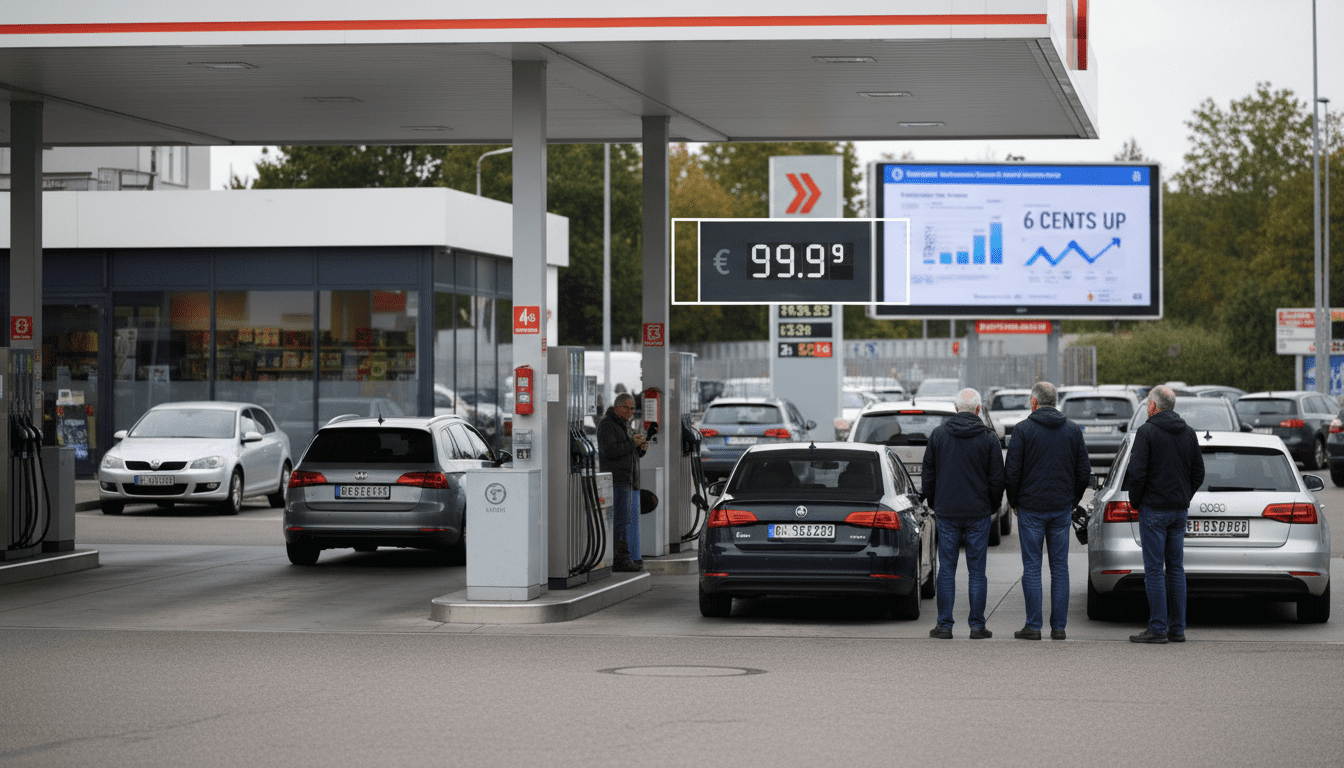
Germany’s tank price reform linked to higher gasoline margins, study finds
Study finds Germany’s tank price reform raised gasoline margins by an average of 6¢; economists urge rule changes and more transparency to protect consumers.
Since the tank price reform that took effect on April 1, 2026, researchers say gasoline margins at German filling stations have risen rather than fallen, with average increases around six euro cents per liter and peaks up to eight cents on some days. The reform, which limits price increases at forecourts to a single daily adjustment at 12:00, was intended to stabilize prices for motorists but is now under scrutiny by economists at the ZEW Mannheim and the Düsseldorf Institute for Competition Economics (DICE). Their joint analysis attributes the bulk of the margin rise to retail pricing behavior rather than wholesale cost shifts, prompting calls for policy adjustments and closer monitoring.
Study finds larger petrol margins after April 1 change
The ZEW and DICE analysis examined price behavior in the two weeks before and after the April 1 rule and concluded that margins on E5 gasoline rose on average by about six cents per liter, with individual days showing increases up to eight cents. Researchers report that these extra cents cannot be explained by movements in the wholesale ARA market alone and instead indicate additional markups at the retail level. The finding directly implicates the operational effect of the new rule that restricts intra-day price increases.
The institutes note that the evidence for diesel is less clear over the short windows studied, in part because diesel prices had been rising more sharply prior to the reform. The limited time frame covered in the study constrains definitive conclusions for diesel, but the gasoline effect was described by the authors as statistically robust.
How analysts measured wholesale costs and retail margins
To approximate suppliers’ procurement costs, the study used the ARA benchmark — the Amsterdam-Rotterdam-Antwerp wholesale price series — as the nearest available comparator to consumer-level inputs. Authors, including ZEW researcher Jacob Schildknecht, said ARA reflects the closest observable point in the supply chain before transfers to refinery and retail margins. They then compared ARA-derived per-liter costs with station pump prices excluding taxes to estimate the added retail margin.
The method assumes that many refineries and supply terminals are integrated into major oil companies’ operations, which simplifies the mapping from wholesale ARA prices to the later retail stages. The researchers stress that while no single proxy is perfect, the ARA-based approach yields a transparent and reproducible way to isolate margin changes around the reform date.
Major brands behaved differently from smaller chains
The study observed variation in behavior across market participants: large integrated oil companies tended to raise margins more cautiously, while medium and smaller independent chains showed larger increases. The authors suggest that big brands may have restrained price moves due to heightened exposure to competition authorities and reputational scrutiny. By contrast, smaller operators appear to have taken advantage of the new one-change-per-day rule to widen spreads.
Geography also mattered: southern Germany displayed higher average margins than other regions, with gasoline margins roughly 1.2 cents higher and diesel about 2.4 cents higher on average. The regional pattern points to localized market structures and competition levels as drivers of the differing outcomes.
Industry groups reject single-cause interpretation
Representatives of the trade association Fuels and Energy pushed back on the study’s conclusions, arguing that the 12:00 rule is only one of many factors influencing pump prices. The association highlighted volatile logistics costs, localized oversupply of gasoline, and new regulatory burdens such as tightened greenhouse gas reduction quotas as meaningful pressures on margins. A sector spokesperson also noted that consumer refuelling patterns — drivers filling up during low-price periods — affect station economics and were not fully captured by the short-window analysis.
A representative of the national forecourt association, which represents lessees and owners of gas stations, added that many retailers feel the reform has left them exposed to negative public sentiment while they themselves face rising operational costs. Those industry comments underscore the complexity of retail fuel pricing and the challenge of attributing effects to a single regulatory change.
Economists propose shifting price-change window and more transparency
DICE economist Justus Haucap recommended two principal adjustments to mitigate unintended margin increases: move the permitted daily price-change time from 12:00 to 20:00, and adopt elements of Austria’s tank-price model that restrict the publication of the highest-priced stations. Haucap argues a later daily change would create more incentive for suppliers to lower prices in the afternoon to attract evening motorists, while reduced visibility of the top half of prices would limit easy coordination on a maximum acceptable pump price.
Proponents of these measures say the changes would restore competitive pressure across the day and make it harder for firms to signal and sustain elevated price floors. The authors of the study and other competition scholars also called for more granular public data on wholesale and retail pricing to allow regulators and independent researchers to monitor outcomes in real time.
Regulators face a narrow window for corrective action
The findings arrive as policymakers assess whether the April 1 reform has produced the intended consumer protections or instead shifted rents to certain market players. Competition authorities and the ministry overseeing energy and consumer affairs have been urged by economists to review a longer dataset and to consider temporary waivers or tweaks if evidence of market distortions persists. The short post-reform observation period in the study leaves open the possibility that competitive responses could yet reduce margins, but officials are warned not to wait too long before acting.
If the patterns documented by ZEW and DICE hold over a longer horizon, legislators may need to either redesign the permitted price-change framework or introduce complementary measures such as targeted transparency rules, stronger regional monitoring, or relief for small forecourt operators.
The tank price reform’s intent to provide predictable and fairer prices for motorists now faces significant empirical and political scrutiny, and the debate over how to reconcile consumer protection with functioning market incentives is likely to intensify in the coming months.
