
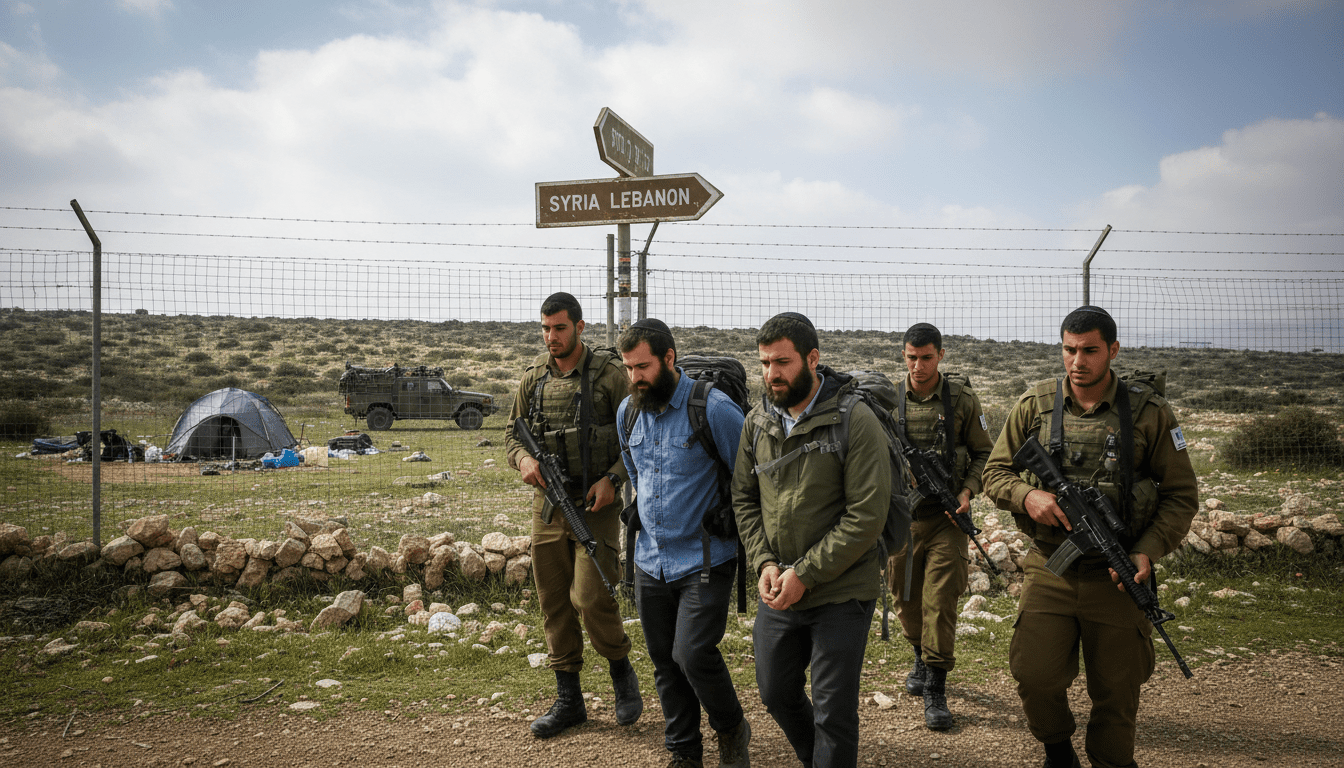
Israeli settlers cross into Syria and Lebanon in coordinated Independence Day incursions
Israeli settlers cross into Syria and Lebanon in coordinated Independence Day incursions, prompting military removal and police warnings on April 22, 2026.
Israeli settlers cross into Syria and Lebanon on April 22, 2026, when groups of activists entered territory across both borders, briefly occupying buildings and terrain before being detained and returned by Israeli forces. The actions, staged on Israel’s 78th Independence Day, were carried out by far-right settler movements pressing for expansion of settlements and sovereignty claims beyond internationally recognized lines. Israeli authorities described the crossings as criminal and dangerous, while settler leaders framed them as demonstrations for family resettlement and broader territorial aims.
Settler group breaches Syrian border village of Hader
Around 40 activists from the Halutzei HaBashan movement crossed the frontier into the Syrian-controlled village of Hader in Quneitra, according to Israeli media reports. Some protesters reportedly barricaded themselves inside a building, binding themselves to structures and posting footage from rooftops as a public appeal against removal.
The Israel Defense Forces intervened, removing and returning the group to Israeli-controlled territory and classifying the action as a “serious offence” that put civilians and soldiers at risk. Israeli police followed with a reminder that unauthorized entry into Syria or Lebanon is punishable under domestic law by up to four years in prison.
Incursion into Lebanon’s Manara cliff and Ramim Ridge area
A separate group from the settler movement Uri Tzafon entered Lebanese territory near the Manara cliff, an area Israelis refer to as the Ramim Ridge, advancing several hundred metres before being detained. Broadcaster Kan 11 and reporter Itay Blumental reported that Israeli forces arrested the activists and handed them over to police custody.
Members of the group said the action was a family-oriented “tour” and an assertion of sovereignty, noting they visited trees planted earlier this year along the border. The group reiterated calls for Israeli control in southern Lebanon, including claims extending to the Litani River.
Political messaging and demands from settler movements
Settler leaders used the incursions to press the Israeli government to authorize family resettlement and to “set facts on the ground,” arguing the state should move quickly to expand territory. The Bashan Pioneers said they would not leave until families received authorization to live in the areas they entered.
Established settler networks, including Nachala, have voiced similar expansionist aims, with spokespersons urging occupation, expulsion and settlement of territories they view as strategic. Such rhetoric aligns with public remarks by senior politicians calling for a political strategy that would reshape borders in Gaza, Lebanon and Syria.
Government response and legal consequences
Israeli security officials described both crossings as illegal and hazardous, stressing that breaches of the international frontier and military zones endanger troops and civilians. The army and police moved quickly to detain the activists and return them to Israel, underscoring enforcement of existing border laws.
Police warnings stressed that unauthorized entry carries significant penalties, and authorities are evaluating possible criminal charges against participants. The rapid removals were framed internally as necessary to prevent escalation or accidental clashes across volatile front lines.
Context of occupation and recent territorial changes since 2024
The incidents take place against a backdrop of altered control on Israel’s northern and northeastern frontiers following events since late 2024. Israeli forces have occupied parts of Syrian-held territory after the collapse of effective control in Damascus in December 2024, and Israel has maintained a presence in areas of southern Lebanon for most of the past two and a half years.
Settler incursions and calls to expand into neighboring states have increased since those shifts, with movements citing security rationales and historical or religious claims to justify actions. Analysts warn that such acts, even when symbolic, can inflame diplomatic tensions and complicate military calculations in an already unstable region.
Regional implications and diplomatic risk
Experts say the crossings risk heightening tensions with Syria and Lebanon and could complicate Israel’s relations with external actors monitoring border stability. Even short-lived incursions can be exploited politically or militarily by adversaries and may prompt condemnations from regional and international stakeholders.
The actions also underline a domestic political debate in Israel over the authority of settler movements and the extent to which the government will accommodate territorial demands. Observers note that public demonstrations on symbolic dates such as Independence Day are intended to sway both public opinion and policymaking.
The brief incursions on April 22, 2026, illustrate how activist-led operations by settler movements continue to shape events along Israel’s borders, raising legal, security and diplomatic questions that authorities will need to address in the coming days.
