
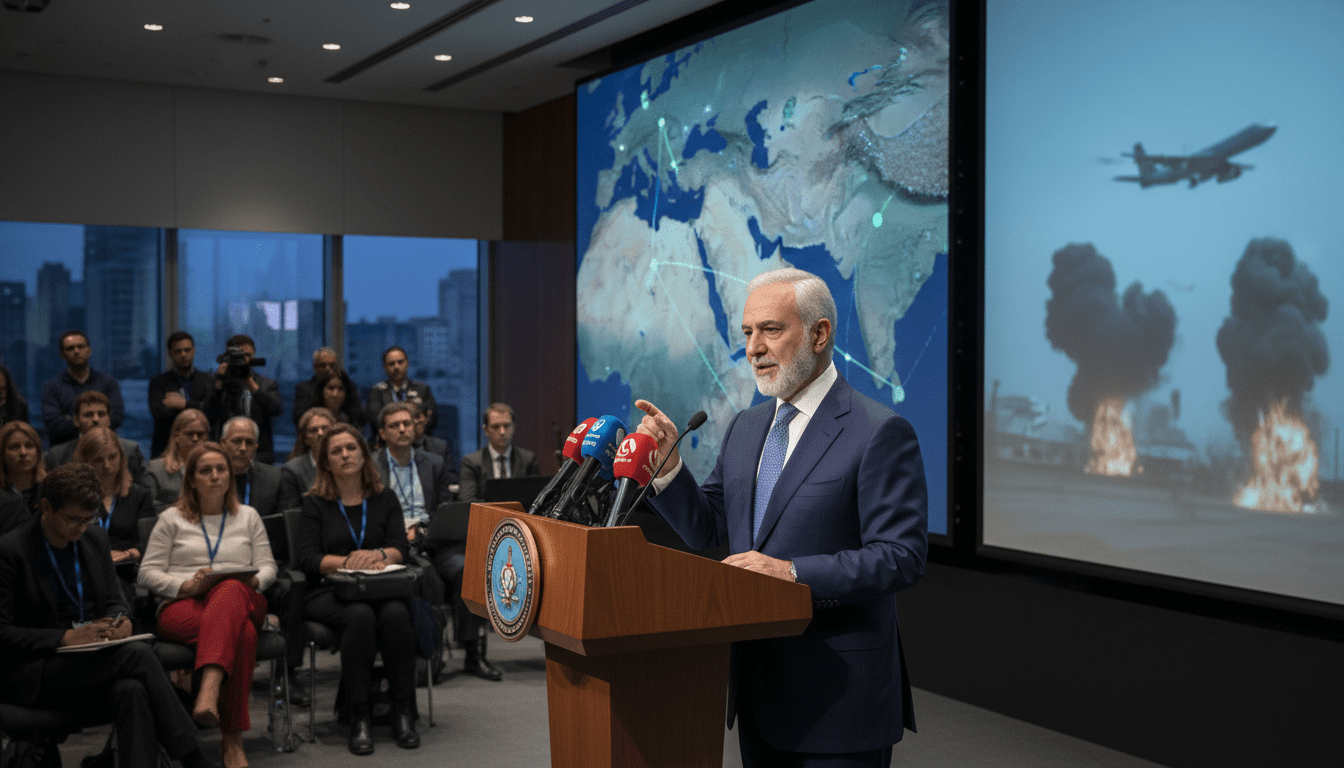
Reza Pahlavi Defends U.S. and Israeli Airstrikes at Berlin Press Conference
Reza Pahlavi defended U.S. and Israeli airstrikes on Iran in Berlin on April 23, 2026, saying they hit the regime and adding, ‘we will not apologize’.
Reza Pahlavi told journalists at the Bundespressekonferenz in Berlin on Thursday, April 23, 2026, that recent U.S. and Israeli airstrikes were necessary measures aimed at the Iranian regime’s apparatus and critical infrastructure. He framed the operations as efforts to protect Iranians whom he said were being “massacred in the streets,” and rejected calls to apologize for the attacks. Pahlavi acknowledged civilian harm as “collateral damage” and stated he regretted any loss of life, but added, “we will not apologize.”
Pahlavi’s reasoning for endorsing strikes
Pahlavi argued the strikes were calibrated to degrade the regime’s capacity to carry out repression and to disrupt networks he described as enforcing domestic violence. He presented the attacks as a form of external intervention intended to defend vulnerable Iranians rather than as an act of aggression against the population at large. His account placed emphasis on the goal of disabling the instruments of state repression, including command-and-control nodes and logistical hubs.
Remarks at the Bundespressekonferenz
At the German federal press conference, Pahlavi was direct when pressed about civilian casualties and responsibility for the human cost of the strikes. He said he regretted those who became caught in what he called “collateral damage,” but made clear he would not apologize for the military actions. During follow-up questions, he interrupted a reporter and told her, “You are asking too many questions,” curtailing the exchange and limiting further clarification.
Pahlavi’s background and political stance
Reza Pahlavi is the son of the monarch overthrown in 1979 and has long been a prominent figure in the Iranian opposition in exile. He has advocated for regime change and greater political freedoms in Iran, while living abroad and engaging with international audiences. His statements in Berlin reflect a continuation of his public posture that prioritizes decisive action against Tehran’s ruling institutions.
Humanitarian and legal concerns raised by the strikes
Independent observers and humanitarian organizations typically emphasize the need to protect civilians and infrastructure essential for civilian life during armed operations. Attacks on infrastructure can disrupt medical services, water and power supplies, and other systems critical to civilian survival, raising legal and ethical questions under international humanitarian law. Pahlavi’s framing of civilian harm as regrettable collateral damage is likely to intensify scrutiny from legal and human rights communities seeking transparent assessments of civilian tolls.
Political implications for Germany and international debate
Pahlavi’s remarks in Berlin add a contentious voice to ongoing international debates about responses to Iran and the limits of external military action. His endorsement of strikes and dismissal of calls for apology may complicate diplomatic discourse, particularly in capitals balancing security concerns with humanitarian obligations. German policymakers and civil society groups may face renewed pressure to articulate clear positions on how to reconcile support for anti-regime measures with protections for noncombatants.
Questions left unanswered after the press conference
Pahlavi left several substantive details unresolved, including independent evidence of the strikes’ effectiveness against regime targets and verified counts of civilian casualties. The interruption of a reporter’s follow-up limited public scrutiny at the moment, and there was no presentation of independent verification or operational details. Observers will likely call for transparent investigations and independent reporting to establish the factual record.
Reza Pahlavi’s statements on April 23, 2026, at the Bundespressekonferenz illustrate the polarizing nature of support for external military pressure on Iran, combining a forceful justification of strikes with a terse dismissal of some journalistic scrutiny and a brief expression of regret for civilian losses.
