
Japan to establish national intelligence council as part of security overhaul
Japan will create a national intelligence agency to centralize threat analysis and counter-disinformation, a move aimed at strengthening responses to rising geopolitical pressures. (150–160 characters)
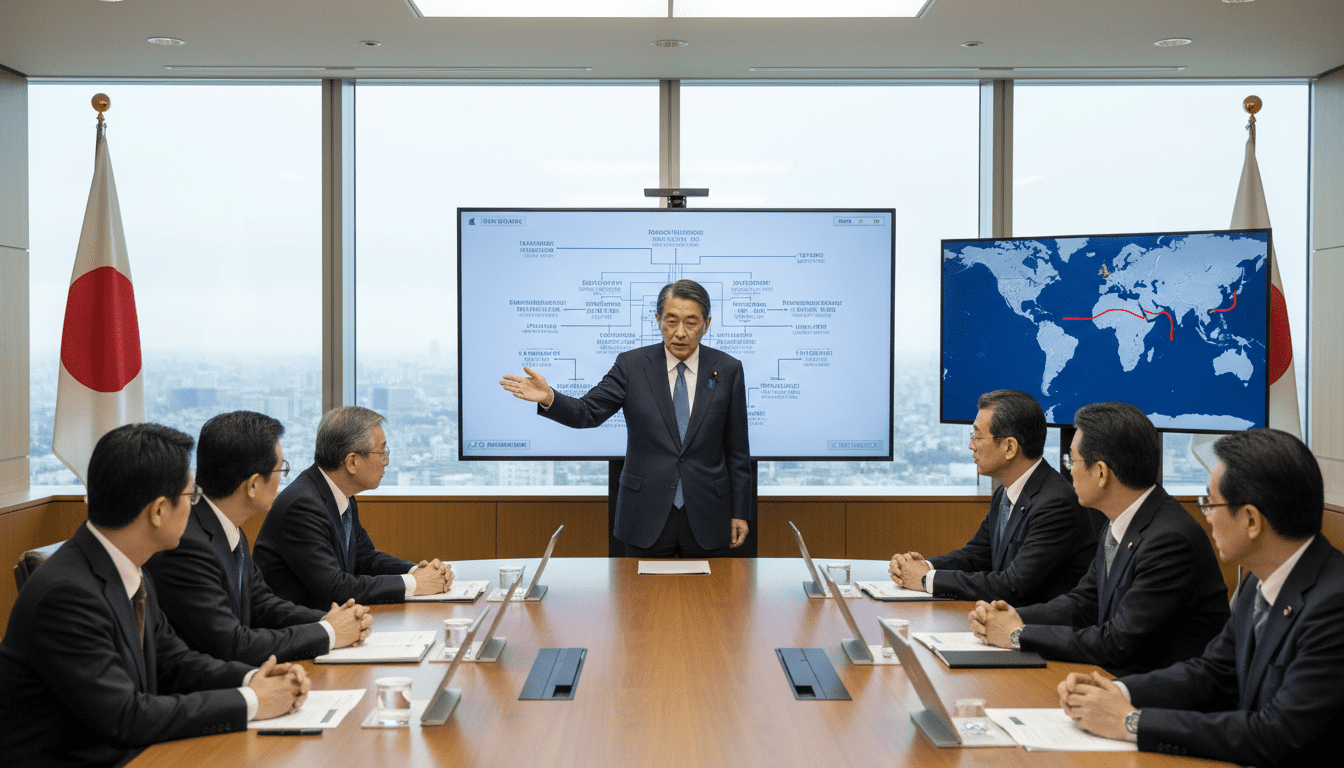
Japan’s lower house this week approved legislation to create a National Intelligence Council that will centralize security-related intelligence and form the core of a new Japan national intelligence agency. The measure responds to a rise in complex disinformation campaigns and growing strategic tensions with China, Russia and North Korea. Proponents say the change will speed decision-making at the highest level of government; critics warn of risks to privacy and civil liberties.
Parliamentary approval and the new council
On Thursday the lower house passed a bill establishing a National Intelligence Council chaired by the prime minister, consolidating intelligence work across ministries and agencies. The council is designed to aggregate information on national security, terrorism and foreign interference and to make coordinated recommendations on government responses. Lawmakers backed the bill as a way to ensure senior officials receive timely, high-quality intelligence in an increasingly volatile international environment.
CIRO’s upgraded role in the new structure
The Cabinet Office’s existing intelligence and research unit, known as CIRO, will be attached directly to the National Intelligence Council and serve as the nucleus of the nascent national intelligence agency. Under the legislation, CIRO would receive expanded functions and authorities to better coordinate collection and analysis across the foreign, economic and defense ministries and the national police. Officials say the reorganization aims to reduce reliance on allied services and to create a single, government-wide channel for threat reporting.
Disinformation case that accelerated reform
Tokyo’s push for a unified intelligence apparatus was intensified after a recent incident in which foreign users sought to use generative AI to design a smear campaign against Prime Minister Sanae Takaichi during her February confirmation. The attempted operation reportedly involved social media manipulation and fake email accounts to spread fabricated corruption allegations. The technology company involved said it had intervened and disclosed details of the activity, prompting Japanese officials to cite disinformation as a key driver of the new law.
Security concerns from neighboring states
Government statements tie the reform to perceived threats from countries including China, Russia and North Korea, and to a broader deterioration in regional stability. Proponents argue that consolidating intelligence will make Tokyo less dependent on outside partners while enabling faster, more coherent responses to espionage, cyber intrusions and covert influence operations. The decision fits within a wider policy shift by Prime Minister Takaichi toward strengthening Japan’s defense posture and strategic autonomy.
Takaichi’s defense and diplomatic agenda
Prime Minister Takaichi, who secured confirmation in February, has made enhancing Japan’s security capabilities a central plank of her administration. Recent steps include lifting a decades-old ban on exports of lethal weapons, which her government describes as necessary to be a dependable partner to allied militaries. Cabinet officials and senior aides frame the intelligence reforms as complementary to those defense measures and as essential for informed, timely policy choices in a more dangerous world.
Privacy, civil liberties and opposition response
The proposed expansion of intelligence powers has drawn criticism from opposition parties, civil society groups and the Japan Federation of Bar Associations (Nichibenren), which warned that the measures could encroach on constitutionally protected rights. Opponents fear broad surveillance powers and weakened safeguards under the banner of national security. To build cross-party support, lawmakers attached a supplementary resolution stipulating that privacy concerns be given “sufficient consideration,” but sceptics say the language stops short of concrete legal protections.
Implementation timeline and further legislation
The government plans to establish the National Intelligence Council within the current Diet session, which runs through July, and to draft additional laws in the second half of the year aimed at countering espionage. Among measures under discussion are expanded transparency requirements for individuals and organizations conducting lobbying on behalf of foreign governments, modeled in part on disclosure regimes in the United States and the United Kingdom. Officials say these steps are intended to close legal gaps and improve situational awareness across the government.
As Japan moves to centralize intelligence functions, policymakers face the dual task of bolstering national security while ensuring robust legal safeguards for privacy and political freedoms. The coming months will test whether the new structures can deliver faster, more unified intelligence without undermining civil liberties or public trust.
