
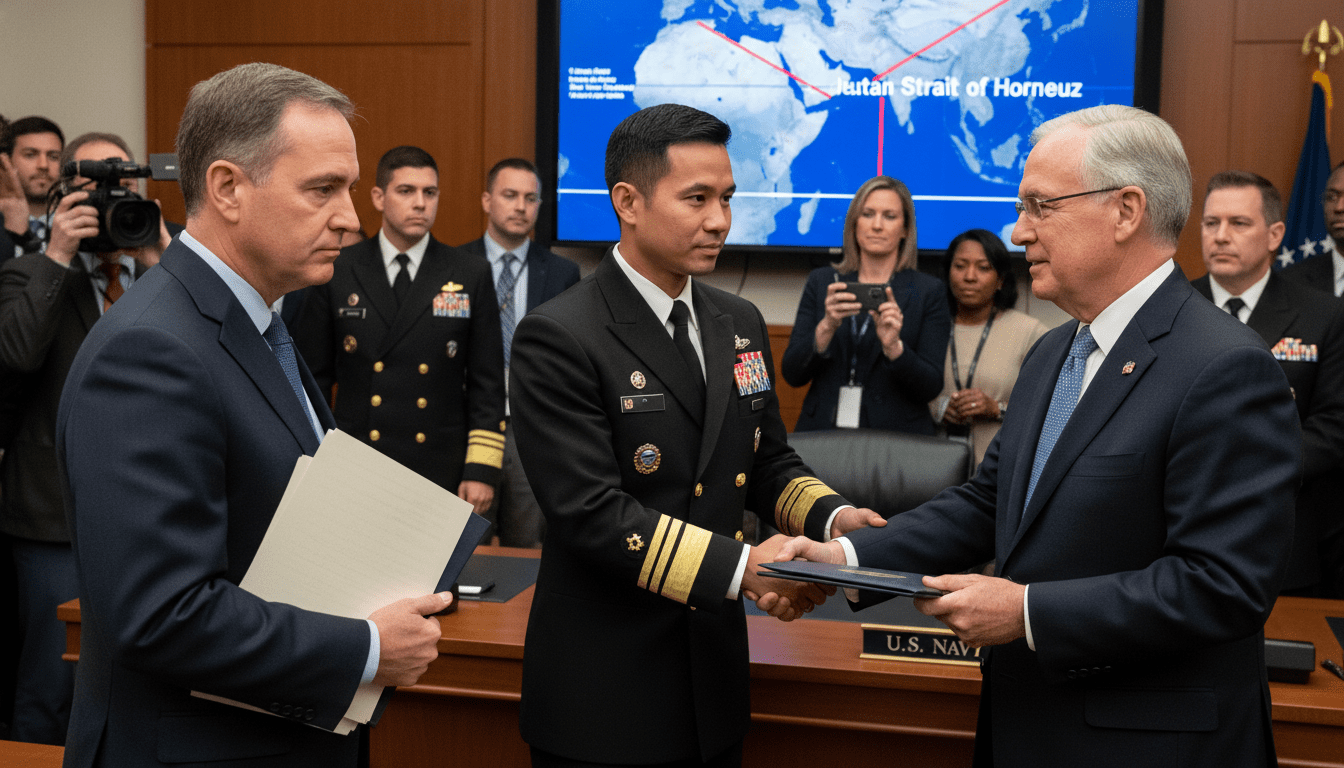
John Phelan Removed as US Navy Undersecretary Amid Strait of Hormuz Blockade
US Navy undersecretary John Phelan was removed from his post with immediate effect as Hung Cao is named acting head, raising questions about shipbuilding and leadership today.
John Phelan, the US Navy undersecretary, left his position immediately amid an ongoing US naval blockade in the Strait of Hormuz, the Pentagon said on social media. The department announced that Deputy Undersecretary Hung Cao will serve as acting head until further notice, but gave no official reason for the sudden change. Media outlets including Reuters and the New York Times reported that Phelan was dismissed after disputes over the Navy’s shipbuilding program and strained relations with senior Defense Department officials.
Department announcement and immediate personnel change
The Defense Department posted a brief notice stating John Phelan would depart with immediate effect and that Hung Cao would assume the duties of undersecretary. The terse announcement contained no explanation for the move, and Pentagon officials declined to elaborate when approached by reporters. Cao, a career official with prior experience in Navy policy, will oversee day-to-day operations while the department considers a permanent replacement.
Reports point to disagreements over shipbuilding policy
News organizations reported that the decision to remove Phelan followed substantive disagreements about the direction and pace of the Navy’s shipbuilding program. Phelan, a former investment banker who took office in March last year, had been a visible proponent of ambitious procurement plans, including an initiative announced with President Donald Trump in December to commission new battleships bearing the president’s name. According to reporting, those plans and procurement priorities put him at odds with Secretary of Defense Pete Hegseth and Deputy Secretary Steve Feinberg.
Context of a broader military leadership shake-up
The personnel move comes amid a wider reshuffling of senior military leadership that has accelerated over recent months. Officials and reports say Secretary Hegseth has pressed changes across service leadership, including the recent forced resignation of Army Chief of Staff General Randy George. Last year’s removals of key uniformed leaders — including the chairman of the Joint Chiefs and senior officers in the Air Force and Navy — form part of a pattern that analysts say reflects growing friction between civilian leadership and the military’s top ranks.
Timing against rising tensions in the Gulf
The change at the Pentagon coincides with heightened activity in the Middle East, where the United States has been expanding naval deployments to maintain a blockade near the Strait of Hormuz. The blockade is part of an effort to keep pressure on Iran amid an uneasy ceasefire, and U.S. officials have described the region’s security environment as fragile. The replacement of a senior Navy civilian official at this moment has prompted concern among some analysts about continuity of policy and operational oversight during a period of increased maritime risk.
Potential impact on procurement and Navy operations
Observers say the removal of the Navy undersecretary could inject additional uncertainty into already contentious shipbuilding plans and contracting timelines. Procurement programs typically require sustained political and civilian leadership to navigate Congress, industry partners and cost-control demands; abrupt personnel changes can delay decisions and complicate budgets. Military planners and lawmakers will be watching closely to see whether the acting leadership maintains Phelan’s priorities or shifts course, and whether a permanent nominee receives prompt confirmation.
Hung Cao’s interim stewardship will include overseeing shipbuilding priorities, readiness posture for deployed forces, and coordination with combatant commanders in the Middle East. Navy officials will also need to manage morale within the service’s civilian and uniformed staff as questions circulate about the reasons for the leadership change.
The Pentagon has not yet provided an official account of the disputes cited by media reports, and it remains unclear whether Congress will seek briefings or hold hearings to examine the circumstances of Phelan’s departure. For now, Hung Cao will preside over the Navy’s civilian leadership at a time when operational tempo, procurement decisions and strategic posture are under intense scrutiny.
