
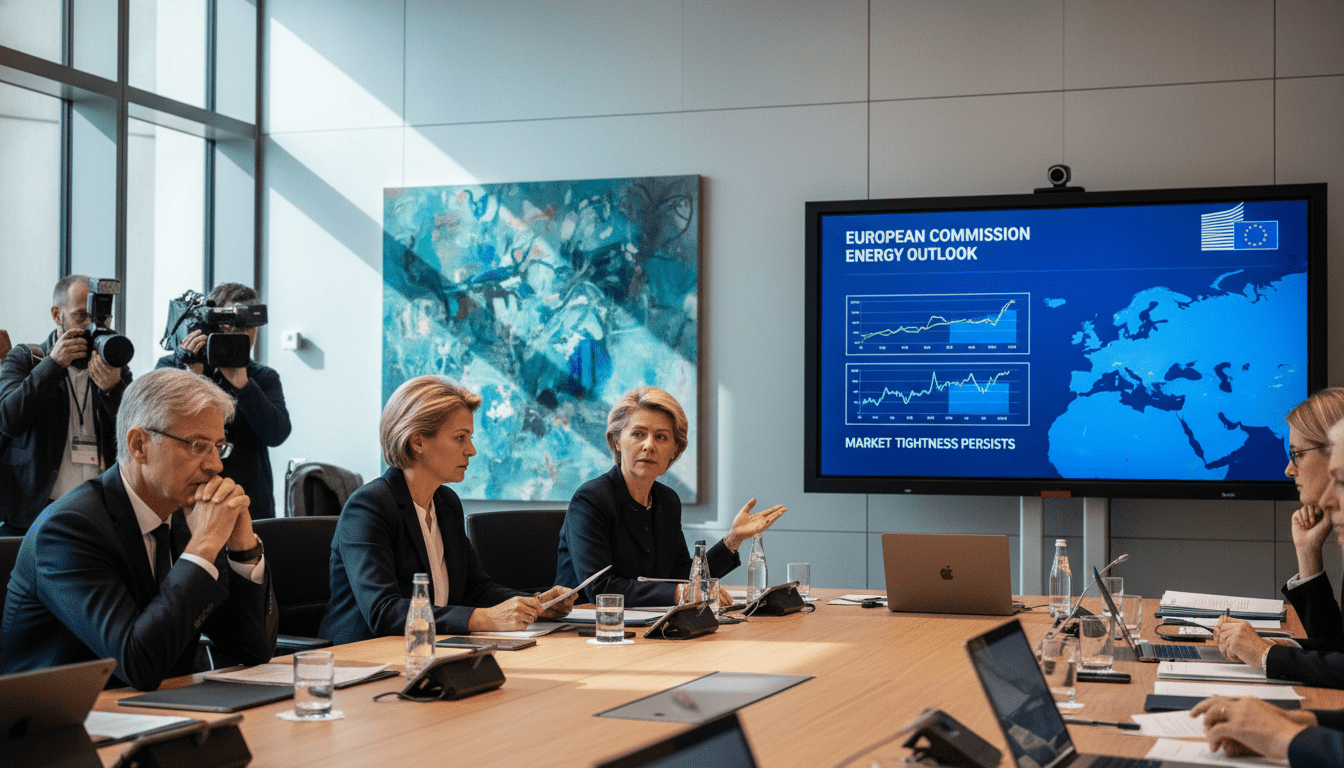
EU energy crisis: Commission warns markets will stay tight even if Iran war ends
EU energy crisis: Commission warns gas and kerosene markets will stay strained even if the Iran war ends; unveils measures to shore up supplies for winter.
The European Commission warned that the EU energy crisis is likely to persist even in the event of a rapid end to the conflict involving Iran, saying gas and aviation fuel markets will not recover overnight. Commission officials flagged long lead times to rebuild infrastructure and signalled a package of measures aimed at safeguarding supplies and protecting vulnerable consumers. The statement outlines both immediate monitoring steps and longer-term ambitions to accelerate electrification and renewables.
Commission underscores lengthy gas recovery timeline
Commission officials said that while some oil deliveries could resume within weeks if hostilities cease, gas markets face a much slower recovery. Rebuilding damaged export and processing capacity, particularly in major supplier states, was described as taking years rather than months. That lag, the Commission warned, means wholesale prices and downstream consumer bills are likely to remain elevated for an extended period.
Officials estimated the economic fallout is already significant, with the EU incurring hundreds of millions of euros in extra energy costs each day as markets react to supply disruptions. The Commission therefore framed its package around two tracks: immediate risk assessment and medium-term resilience measures to avoid repeated shocks.
Aviation at highest immediate risk from kerosene shortfall
The Commission highlighted kerosene as a particularly acute vulnerability, citing agency warnings that shortages could emerge within weeks. To address that risk, Brussels said it will first inventory existing stocks across member states and evaluate options to strengthen supplies. One option under consideration is the creation of strategic kerosene reserves modelled on national or EU oil stockholdings.
The focus on aviation fuel reflects the sector’s limited short-term substitution options and the concentration of supply routes that pass through geopolitically sensitive chokepoints. Regulators and industry were urged to provide rapid data on refinery output and distribution bottlenecks so that coordinated responses can be calibrated.
Oil supply may be more quickly restored, but cost pressures persist
Commissioners indicated that crude oil flows could be re-established faster than gas, with some shipments resuming within a few weeks once shipping risks ease. Even so, the longer the conflict endures, the greater the spillover effects on industrial production, logistics and household energy bills across the single market. The Commission estimated daily additional costs to the EU economy running into the hundreds of millions of euros while volatility remains.
Brussels advised member states to prepare targeted support measures for the most affected households and companies rather than broad fuel subsidies. The goal, officials said, is to protect vulnerable consumers without reinforcing demand for fossil fuels or creating inefficient long-term fiscal burdens.
No EU-wide windfall tax; electrification and renewables prioritized
The Commission rejected calls for an EU-wide windfall or excess-profits tax on oil companies, noting practical and legal obstacles to an EU-level instrument that would require unanimous approval. While senior officials expressed sympathy with proposals to capture extraordinary profits, they argued coordinated national measures or alternative fiscal steps might be more feasible in the short term. The Commission reiterated that any revenue measures must be carefully designed to avoid market distortions.
At the same time Brussels said the crisis reinforces the need to accelerate renewable energy deployment and electrification. A proposal to raise electrification targets is planned, with the Commission presenting concrete objectives and measures in the coming months to reduce dependence on imported fossil fuels.
Member states urged to coordinate supply and demand responses
To secure supplies for the approaching winter season, the Commission is encouraging closer cooperation among member states on fuel stocks, refinery utilization and distribution logistics. It stopped short of imposing binding obligations, instead offering guidance and data-sharing frameworks to help governments align national actions. Officials said that enhanced coordination could allow Europe to increase domestic refining utilization and stretch existing stocks while new capacity and trade routes are pursued.
The Commission also scaled back earlier, more interventionist ideas on transport demand reduction. Proposals such as mandatory teleworking, city car-free days or broad flight restrictions were not included in the final recommendations; emphasis shifted instead toward measures like lower public-transport fares to encourage modal shift where appropriate.
Political reactions reflect differing national priorities
Responses from lawmakers and national representatives revealed a split between calls for rapid fiscal relief and caution about measures that could hinder climate goals. Some members of the European Parliament welcomed the Commission’s focus on efficiency and electrification, arguing targeted help and long-term decarbonisation are compatible. Other voices urged adjustments to market instruments such as the emissions trading system to prevent excessive price pressures during the crisis.
National leaders, meanwhile, continue to weigh domestic relief measures such as fuel tax cuts or rebates against the Commission’s warning that such interventions can lock in fossil fuel demand. Brussels has argued for time-limited, targeted aid that avoids subsidising energy consumption in a way that would undermine climate targets.
The Commission framed its package as a balance between immediate crisis management—monitoring stocks, shoring up kerosene and coordinating member states—and structural shifts toward renewables and electrification to reduce future vulnerability. The coming weeks will test whether voluntary coordination, targeted support and accelerated clean-energy measures can blunt the economic impact as markets adapt to ongoing geopolitical uncertainty.
