
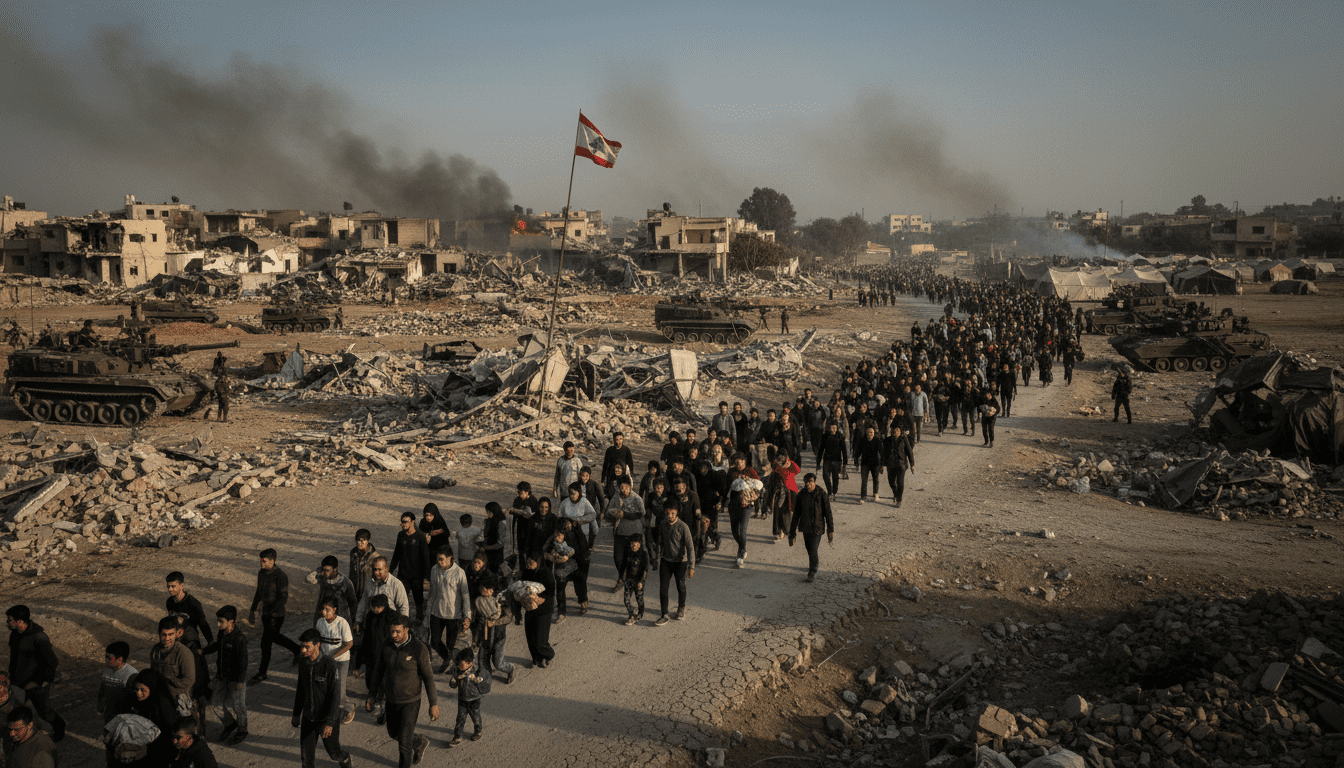
Israeli evacuation warnings in Lebanon precede strikes and force mass displacement
Israeli evacuation warnings in Lebanon have driven thousands to flee as alerts—often with little notice—precede air strikes that have damaged tens of thousands of homes and reshaped civilian life.
For weeks and months residents across southern suburbs of Beirut and villages in the south have received sudden evacuation warnings from Israeli military channels, prompting frantic WhatsApp maps, clogged roads and chaotic departures. The alerts, which first appeared publicly on 27 September 2024 and intensified during clashes and the 2026 resumption of hostilities, frequently give little or no clear timeframe for safe evacuation. Families report leaving homes with only what they could carry as the warnings—sometimes instructing people to move at least 300 metres away—were followed within hours by strikes that destroyed houses and possessions.
Residents receive Israeli evacuation warnings
Residents describe maps circulated in messaging apps that marked buildings, streets and entire districts in red, triggering immediate flight. Many warnings were shared via the Israeli military’s Arabic spokesperson on X and through informal neighbourhood networks, leaving people racing to recognise landmarks on grainy maps. Schoolchildren were evacuated mid-day, parents got stuck in traffic, and some children were left alone on pavements as neighbourhoods emptied in panic.
Warnings precede air strikes and controlled demolitions
Dozens of air strikes reported since the initial alerts have often come after these evacuation orders, according to local accounts and imagery circulated online. On 5 March 2026, Israel issued a mass warning covering 12 neighbourhoods in Beirut’s Dahieh area, instructing hundreds of thousands to leave within hours; drone and satellite footage later showed large-scale damage and what residents described as controlled demolitions in some villages. Some families paid for satellite images to confirm the fate of their homes, while others recognised their properties in widely shared drone videos.
Trauma and the loss of irreplaceable belongings
Survivors recount the shock of watching homes and belongings vanish after frantic evacuations. Sarah recalled picking up her young son without shoes after seeing a map that marked her building; her mother, Fatima, watched television as the family home was struck minutes after arriving at safety. Psychotherapist Elie Abou Chacra warned that these moments constitute ruptures in a person’s psychological system, noting that the reversible routines and objects that anchor memory become sources of reactivated grief when destroyed. Owners of houses, artworks and personal archives say they lost items tied to family history—books, artworks and possessions that cannot be replaced.
New patterns of mass displacement
Humanitarian organisations and local researchers report a sharp increase in displacement tied to the evacuation orders and strikes. The UN estimates that roughly 20 percent of Lebanon’s population has been displaced during recent cycles of fighting, while domestic scientific bodies reported around 40,000 housing units partially or completely destroyed since early March. Entire districts were reported to have emptied onto single highways after mass warnings, overwhelming informal shelters and family networks that have become the primary refuge for many fleeing residents.
Legal and humanitarian scrutiny of evacuation practices
Under international humanitarian law, warnings must be specific, timely and provide a feasible opportunity to evacuate; rights groups have criticised some notices in Lebanon as inadequate or misleading. Amnesty International assessed certain Israeli warnings as failing to give civilians a real chance to escape, while local commentators characterise the alerts as a form of psychological warfare that reshapes civilian movement. Brigadier General Khaled Hamadeh, a political researcher, said the expansion from targeted alerts to blanket orders has altered the operational and demographic landscape, forcing long-term displacement decisions.
How daily life and decisions have been reshaped
Expulsion orders now influence when people leave work, when schools close and how families allocate scarce resources, residents say. Many keep valuables packed and essentials ready; some have decided to treat new, temporary housing as permanent in a deliberate act of resilience. Survivors who lost businesses and clinics speak of debts for properties that no longer exist and of the practical impossibility of deciding what to salvage when time is compressed into minutes. The repeated experience of evacuation and return creates what clinicians call trauma loops, where scenes of destruction replay and hope is repeatedly undermined.
Communities and individuals have responded with both practical coping and determined defiance: some have rebuilt quickly, others continue to paint, teach or run small businesses from new locations, and many insist that displacement will not erase their ties to their neighbourhoods. The pattern of evacuation warnings followed by strikes has not only produced immediate humanitarian need but also raised enduring questions about the protection of civilians, the preservation of cultural and family heritage, and how societies can recover when warned to abandon the places that define them.
