
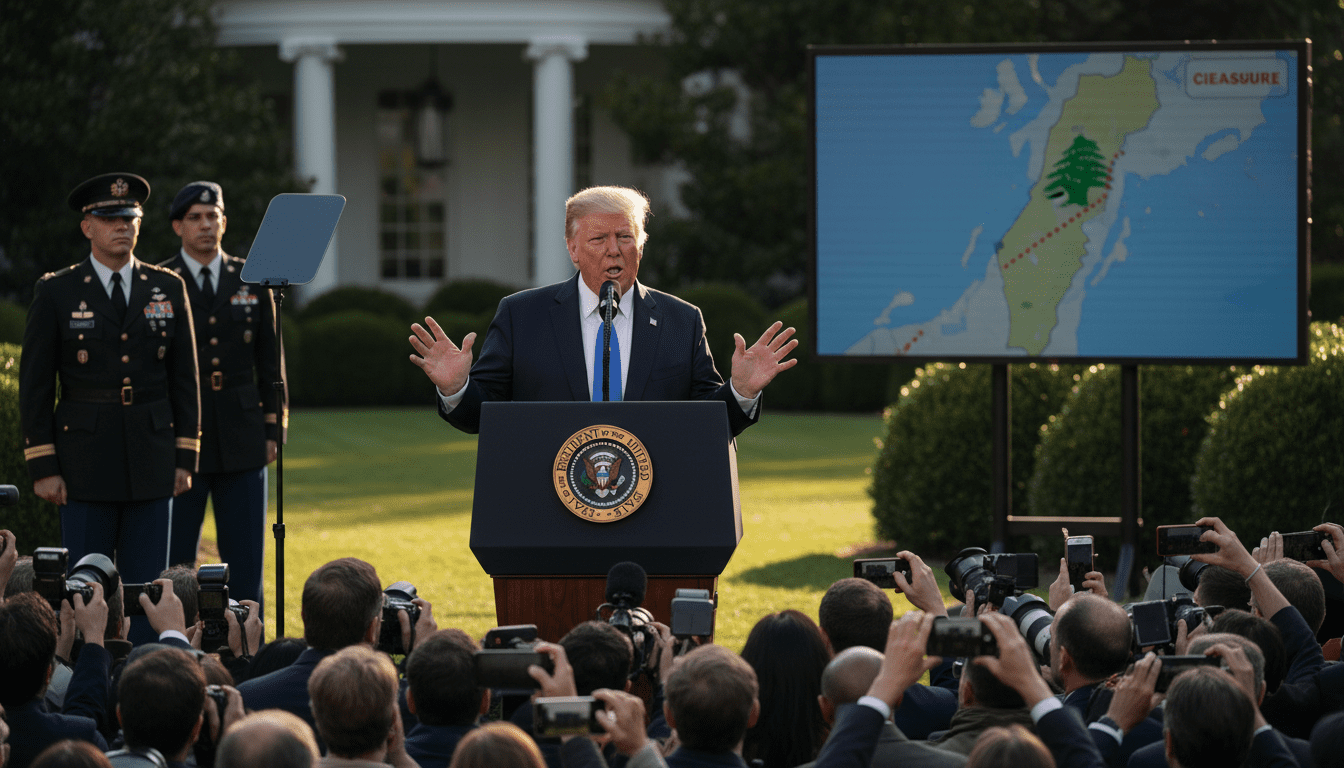
Trump extends Lebanon ceasefire by three weeks after White House talks
U.S. President Donald Trump announced a three-week extension of the Israel-Lebanon ceasefire on April 23, 2026, saying he had brokered the move after hosting ambassadors at the White House. The Lebanon ceasefire extension takes effect as a 10-day truce that began in mid-April was due to expire on Sunday, April 26. (apnews.com)
Trump Announces Extension After White House Meeting
Trump made the announcement on his Truth Social platform following a high-level meeting at the White House that brought together U.S., Israeli and Lebanese envoys. He described the session as historic and said the United States would continue to mediate to prevent an immediate return to hostilities. (axios.com)
Details of the Ceasefire Extension and Timeline
The original agreement, struck in mid-April, established a 10-day truce intended to reduce cross-border strikes between Israel and Hezbollah. Trump’s three-week extension pushes the ceasefire into mid-May, roughly until May 17, 2026, if implemented as described by U.S. officials. Observers say the pause aims to buy diplomatic time and curb a wider regional escalation. (cfr.org)
Hezbollah and Beirut Respond Cautiously
Hezbollah did not immediately endorse the White House announcement and initial reactions from Beirut were mixed, with some Lebanese officials urging continued caution. Local reporting indicated that the truce had already been fragile on the ground, with sporadic violations reported since the ceasefire began. International monitors and humanitarian groups have warned that civilian displacement and infrastructure damage remain acute threats in southern Lebanon. (washingtonpost.com)
U.S. Pledge to Help Lebanon Counter Hezbollah
Trump said the United States would “work with Lebanon to help it protect itself from Hezbollah,” framing Washington’s role as both a security guarantor and a diplomatic broker. He also singled out Iran’s financial support of Hezbollah as a barrier to any lasting settlement, warning that U.S. policy would not accept an arrangement so long as Tehran continued to bankroll the militia. Those remarks underscore a U.S. strategy that ties Lebanese stability to pressure on Iran’s regional networks. (axios.com)
Planned Meetings With Netanyahu and President Aoun
The president said he plans to host Israeli Prime Minister Benjamin Netanyahu and Lebanese President Joseph Aoun at the White House during the extended truce to pursue further negotiations. Trump framed the meetings as an opportunity to solidify the temporary halt and to lay groundwork for more durable arrangements between the two neighbors. Officials on all sides have signaled a desire to keep diplomatic channels open even as mistrust remains high. (apnews.com)
Regional Context: The Iran War and Recent Escalation
The extension takes place against the backdrop of a wider regional conflict that flared after U.S. and Israeli strikes on Iran at the end of February 2026, which precipitated retaliatory attacks and a rapid deterioration of security across the Middle East. That broader confrontation has complicated efforts to reach a comprehensive ceasefire and has made bilateral arrangements between Israel and Lebanon one element of a larger, more volatile diplomacy. (axios.com)
Diplomats and analysts caution that an extended truce does not guarantee long-term peace, noting that the incentives for escalation remain for armed groups and state actors alike. The White House initiative has been welcomed by some international partners as a pragmatic step to reduce immediate civilian harm, while critics argue that it falls short of addressing root political drivers.
Humanitarian agencies have appealed for sustained access to affected areas in southern Lebanon and northern Israel, where damage to homes and infrastructure has displaced thousands. Aid coordinators say the extension could provide a window to deliver relief, repair critical services and evacuate the most vulnerable, but stress that safe corridors and clear reporting of violations will be essential.
If the ceasefire holds through the newly announced period, negotiators may use the breathing space to discuss confidence-building measures, monitoring mechanisms and possible international assistance to Lebanon’s security forces. Yet officials in Beirut and Jerusalem have both signaled realism, noting that any long-term settlement will require wider agreement on Palestinian, Lebanese and Iranian dimensions of the conflict.
For now, the Lebanon ceasefire extension offers a fragile pause amid a wider region-wide confrontation that continues to evolve, with diplomats racing to translate short-term quiet into more stable arrangements before the new deadline in mid-May.
