
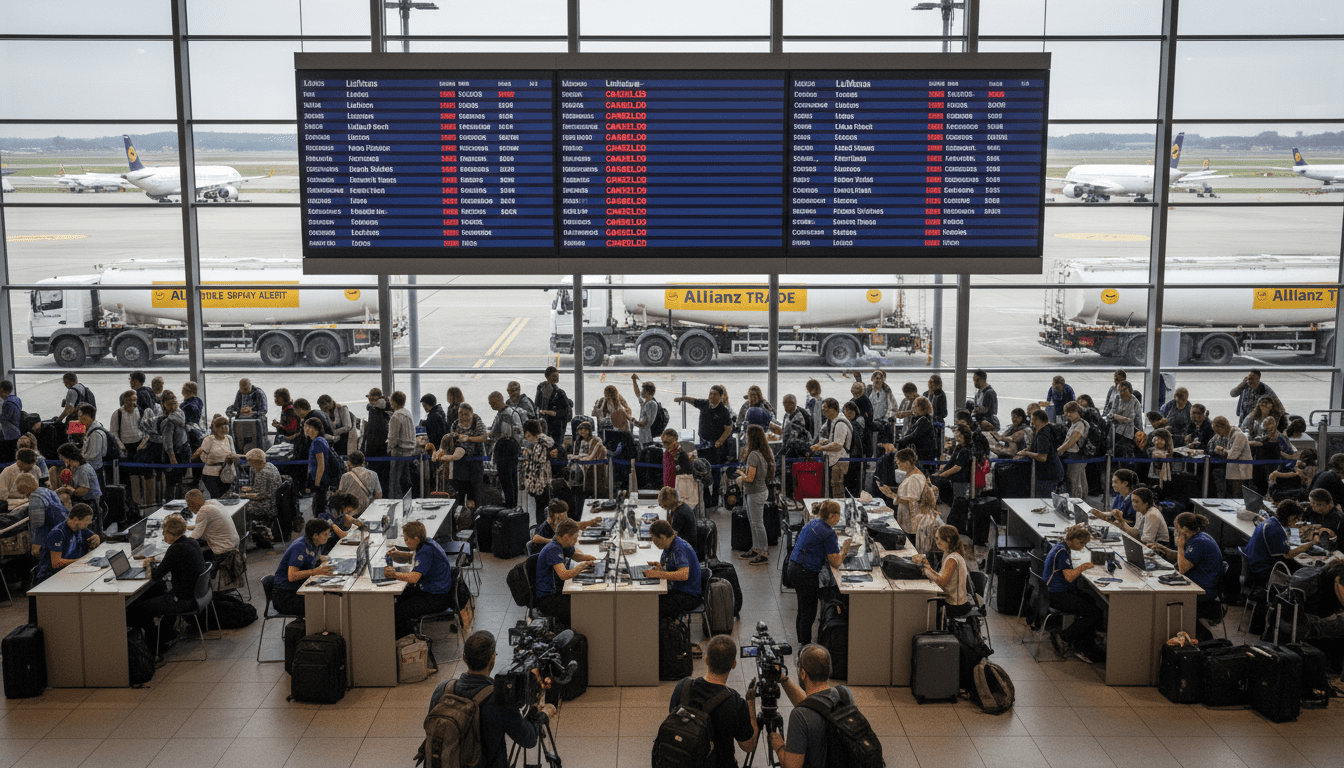
Lufthansa cancels 20,000 flights amid fuel supply concerns; corporates warn of wider fallout
Lufthansa cancels 20,000 flights, citing kerosene and operational challenges, while Allianz Trade warns insolvencies could imperil hundreds of thousands of jobs and SpaceX moves to acquire an option on AI start-up Cursor.
Lufthansa cancels 20,000 flights and cites fuel issues
Lufthansa announced the cancellation of roughly 20,000 flights, attributing the scale of disruptions in part to complications with kerosene supply and ongoing operational constraints. The carrier said the cancellations are linked to limitations across its network that have forced a temporary reshaping of schedules and capacity. Passengers faced widespread rebookings and delays as the airline worked to prioritize key routes and maintain safety standards.
Impact on passengers and network operations
The mass cancellations have immediate consequences for travelers, with thousands of customers affected by lost connections and altered itineraries. Airports and travel agencies reported heightened demand for customer-service assistance as travelers sought rerouting, refunds or hotel accommodations. Airlines typically adjust staffing and aircraft rotation plans under such stress, but the scope of these cancellations suggests longer-lasting ripple effects for seasonal schedules.
Allianz Trade flags insolvency risk to jobs
Allianz Trade has warned that rising insolvencies could threaten more than 200,000 jobs, highlighting mounting financial stress in supply chains and corporate balance sheets. The trade-credit insurer pointed to deteriorating conditions that leave small and medium-sized enterprises particularly exposed to payment defaults and liquidity squeezes. Analysts say job losses linked to wave of bankruptcies would amplify the economic drag from disrupted business activity.
Iran conflict deepens economic uncertainty, says insurer
Allianz Trade also flagged geopolitical developments related to the Iran conflict as a factor worsening the insolvency outlook and supply disruptions. Rising geopolitical tensions have amplified commodity price volatility and complicated trade flows, increasing costs for firms already coping with tight margins. The combination of political risk and corporate fragility creates a feedback loop that can accelerate insolvency cycles if not mitigated.
SpaceX secures option on AI start-up Cursor
In separate corporate news, SpaceX has secured an option to acquire Cursor, an artificial intelligence start-up, marking an expansion of the company’s interests beyond space operations. The option reflects continued tech-sector consolidation and an appetite among large corporates for capabilities in AI tooling. Observers say such moves can serve strategic aims—ranging from internal productivity gains to integrating advanced software into broader mission systems.
Market and corporate responses to the mixed headlines
Markets and corporate stakeholders reacted to the trio of developments with cautious attention to volatility and risk management. Airlines facing capacity shocks often see short-term cost increases and reputational pressure, while insurers monitoring insolvency risk may tighten credit terms or raise premiums. Technology acquisitions, by contrast, can be received as growth bets that diversify corporate revenue streams but also require integration spending.
What travelers and businesses should expect next
Travelers should prepare for ongoing schedule adjustments and monitor communications from carriers about rebooking options or compensation rights. Businesses exposed to late payments or supplier failures are advised to review credit terms and contingency plans to limit exposure to cascading insolvencies. Corporates pursuing acquisitions in AI or other strategic areas will need to balance immediate operational pressures against longer-term innovation goals.
As authorities, industry groups and companies respond, the situation will evolve
Regulators and industry associations may step in to coordinate fuel logistics, support critical supply chains or provide guidance to minimize bankruptcy contagion. Airlines and insurers will likely publish further operational updates as they manage capacity and credit risk respectively. Firms working in high-risk trade corridors may accelerate risk mitigation measures to shield employees and suppliers from financial shock.
The combined wave of airline disruptions, insolvency warnings and strategic tech moves underscores the interconnected pressures facing companies and workers across sectors; adapting to fluctuating fuel supplies, geopolitical volatility and rapid technological change will shape corporate decisions in the weeks ahead.
