
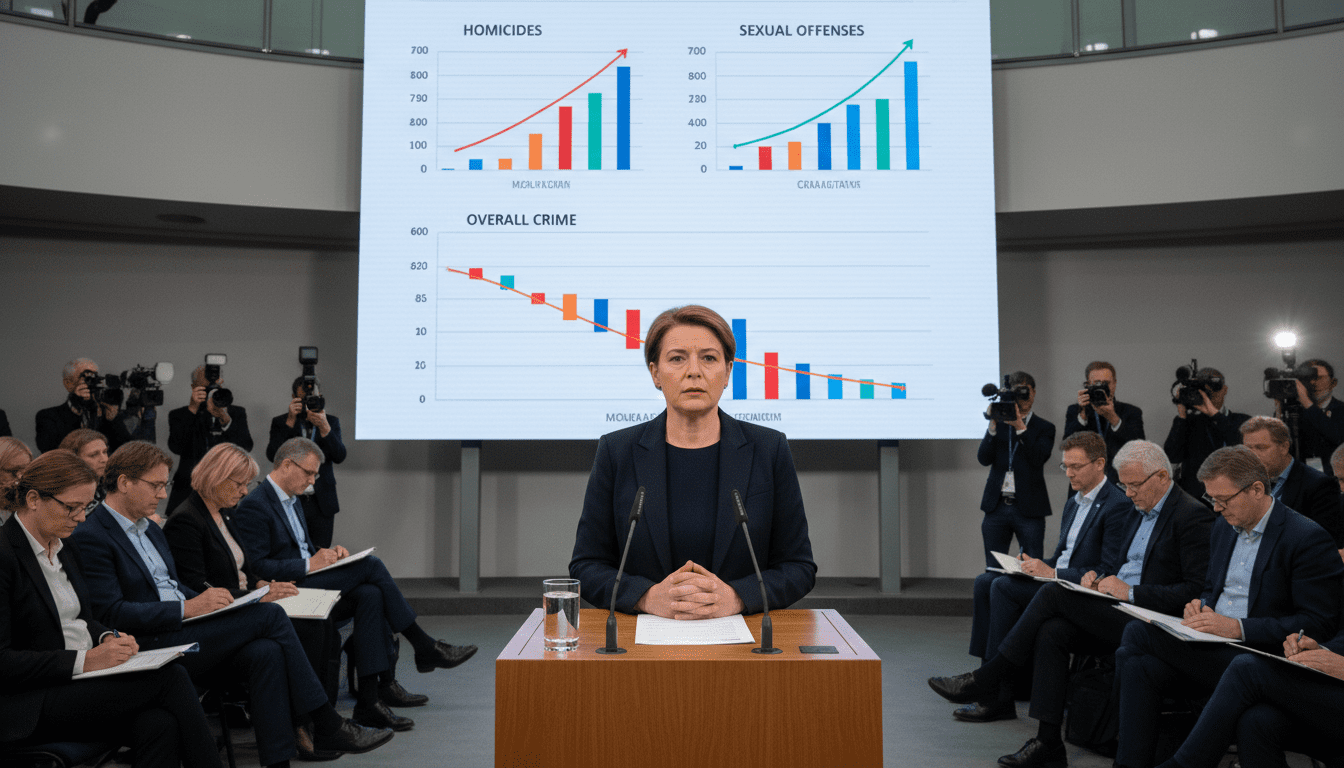
German police crime statistics show drop in theft and robbery but rise in homicide and sexual offences
Germany’s police crime statistics show a notable fall in recorded theft, robbery and street crime compared with 2024, while investigators reported increases in homicide and sexual offences after the latest annual review. The figures were presented in Berlin on Monday, April 20, 2026, by Interior Minister Alexander Dobrindt, BKA President Holger Münch and Hamburg Interior Senator Andy Grote. The contrast between broad declines and spikes in serious violent crimes sharpened an already politically charged debate about public safety.
Officials present data in Berlin on April 20, 2026
The Bundeskriminalamt and the Interior Ministry released the latest police crime statistics at a joint briefing in the capital on Monday. Presenters stressed that the report covers alleged offences registered by police during the past year and reflects recorded incident totals rather than final court findings. The timing and the composition of the delegation — a federal minister, the BKA president and a city interior senator — underscored the national as well as local significance attributed to the new figures.
Recorded crimes declined overall with theft and street crime down
The report shows a clear reduction in the number of alleged offences logged by police, with thefts, robberies and many forms of street crime reported less frequently than in 2024. Police crime statistics analysts pointed to patterns of decline across several property crime categories, which contributed to the overall downward movement. Authorities and analysts cautioned that falling counts can reflect a mix of true reductions in offending, changes in reporting behaviour, or operational shifts in police recording practices.
Homicide and sexual offences buck the downward trend
Investigators documented increases in homicide and in sexual offences even as other categories fell, a divergence that drew particular attention from officials and commentators. While homicide numbers remain low in absolute terms compared with property crime, any uptick in killings prompts intensified scrutiny of investigative capacity and prevention strategies. The rise in recorded sexual offences similarly triggered calls for targeted policy responses and sustained support for victims and specialised units.
PKS has long influenced debate about migration and youth crime
For years the police crime statistics have been a focal point for alarmed headlines linking public-safety deterioration to migration and youth violence, and this release is likely to revive parts of that debate. Past reporting has often framed the PKS as evidence of a worsening security landscape, especially around politically sensitive topics such as asylum and integration. Analysts warn against simplistic readings of the data and urge that demographic, social and procedural factors be weighed before drawing causal conclusions.
Officials emphasize both positive signals and areas of concern
At the briefing, federal and state representatives framed the new statistics as showing positive developments in many day-to-day offences while acknowledging the troubling increases in the most serious categories. The mixed picture has prompted calls from law-enforcement leaders for calibrating resources to address both widespread property crime and the concentrated demands of homicide and sexual-offence investigations. Political actors across the spectrum are expected to use elements of the report to support contrasting policy priorities in weeks ahead.
Methodological caveats and the need for deeper analysis
Experts underscore that the police crime statistics measure reported and recorded allegations rather than court convictions, and that changes in reporting rates or police procedures can materially influence year-to-year comparisons. Analysts recommend further, disaggregated study to determine which demographic groups, locations or offence subtypes drive the shifts seen in the headline figures. They also note that multi-year trends, not single-year fluctuations, provide a firmer basis for policy design and resource allocation.
The latest police crime statistics, with their combination of broad declines and worrying increases in serious violent offences, will shape parliamentary debate and policing priorities in the months to come. Policymakers and law-enforcement agencies face the dual task of consolidating gains against theft and street crime while urgently addressing the factors behind the upticks in homicide and sexual offences.
