
Chancellor Merz and Minister Reiche Clash Over Kerosene Supply as Government Seeks Answers
Katherina Reiche says Germany’s kerosene supply is secure, rejecting claims of an imminent shortage and contradicting Chancellor Friedrich Merz’s call for a National Security Council meeting. Her comments, delivered on April 20, 2026, came amid heated debate over a proposed SPD windfall tax on oil companies and concerns about refinery capacity. The dispute highlights tensions within the coalition as officials and industry prepare contingency plans.
Reiche’s public denial of a kerosene shortage
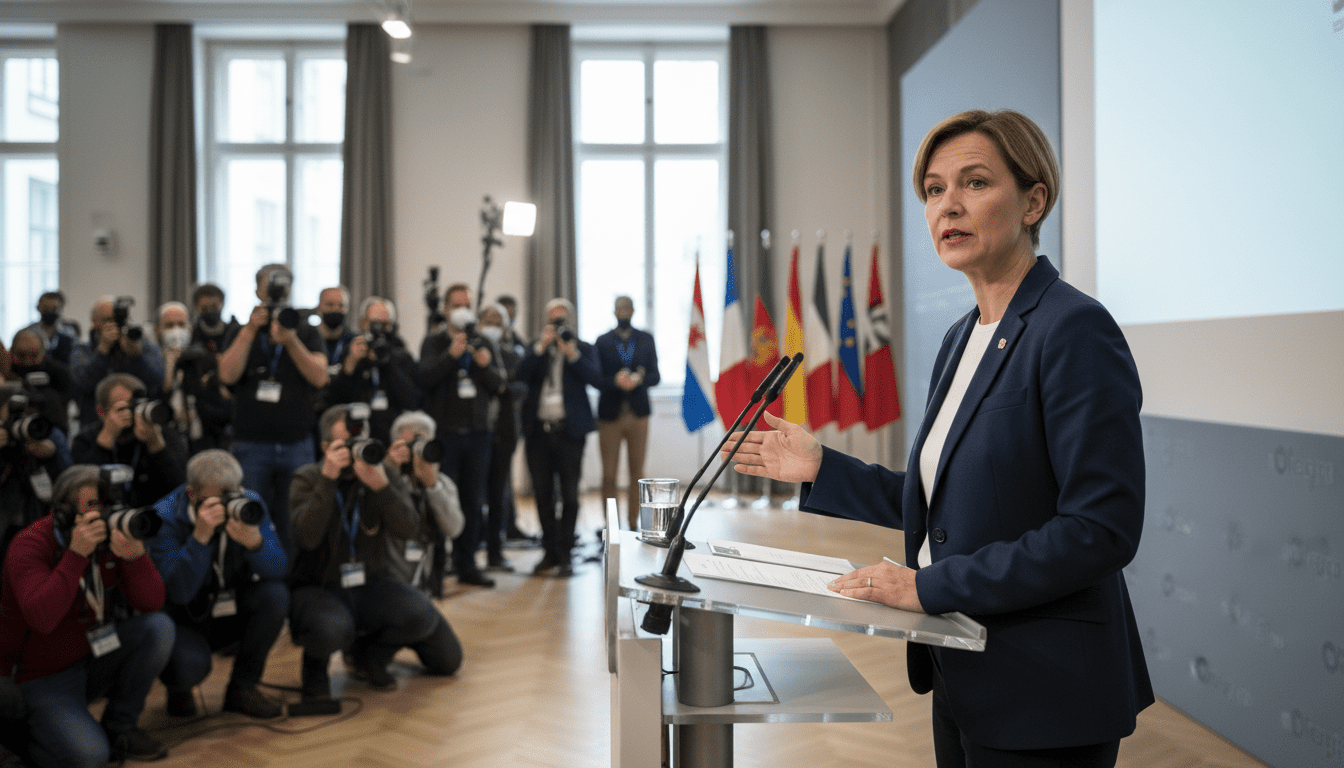
On April 20, 2026, Economy Minister Katherina Reiche told Deutschlandfunk that the country’s kerosene supply was guaranteed and that fears of an immediate shortage were unfounded. She framed her remarks as assurance to consumers, airlines and transport operators that fuel deliveries will continue. Reiche emphasized the operational role of domestic refineries in keeping kerosene, petrol and diesel flowing.
Her statement directly contradicted Chancellor Friedrich Merz, who the previous day, April 19, 2026, said he would convene the National Security Council to discuss the issue. The minister’s comments sought to calm markets and the public while signalling that the government’s economic wing assessed the risk as manageable.
Chancellor Merz convenes national security discussion
On Sunday, April 19, 2026, Chancellor Merz announced plans to bring the National Security Council together to review supply risks related to aviation fuel. The move reflected heightened concern at the top of government about potential disruptions affecting travel and logistics. The chancellor’s intervention underscored how fuel availability has become a matter of strategic and operational importance beyond routine market oversight.
Officials have not published a detailed agenda for the council meeting, but the decision to involve a security forum indicates the issue is being treated as more than a short-term commercial matter. Merz’s step also intensified scrutiny of government preparedness and the adequacy of contingency arrangements for critical fuel supplies.
Debate over a windfall tax on oil companies
The SPD has pressed for an Übergewinnsteuer, or windfall profits tax, aimed at mineral oil companies perceived to be reaping outsized gains amid high fuel prices. The proposal has become a focal point of the dispute between coalition partners. Reiche argued that such a tax would be counterproductive, warning that it could hit the eleven refineries that supply Germany’s kerosene, petrol and diesel.
She told industry representatives that preserving refinery capacity was essential for supply security and that punitive measures risked undercutting the investment and operations needed to maintain fuel flows. Reiche has previously described parts of the SPD plan as costly, ineffective and potentially vulnerable to constitutional challenge, a position that has drawn criticism from party colleagues.
Industry meeting highlights supply chain concerns
On April 20, 2026, the Federal Ministry for Economic Affairs and the Federal Ministry of Transport convened a meeting with refinery operators, airport authorities, airlines and trade associations to review logistics and production status. Participants discussed scheduled maintenance, storage levels, transport bottlenecks and contingency options to ensure continued kerosene deliveries. Officials said they were focused on practical measures to keep supply chains resilient rather than immediate market interventions.
Industry representatives underscored the interdependence of refinery output, pipeline and rail freight capacity, and international crude supplies. They cautioned that sustained high prices or punitive taxation could affect investment decisions that determine long-term capacity and reliability, reiterating the government’s interest in balancing market signals with infrastructure stability.
Coalition tensions and cabinet relations
The disagreement has exposed strains within the governing coalition, pitting SPD policy proposals against the economic ministry’s emphasis on operational continuity. Chancellor Merz signalled concern by elevating the issue to the National Security Council, while Reiche sought to dispel alarm and defend the domestic industrial base. Despite the public exchange, Reiche said she continued to work “trustfully” with cabinet colleagues, including the chancellor and the finance minister.
Political analysts suggest the episode will test the coalition’s ability to reconcile redistribution-focused proposals with industrial and logistical realities. The outcome could shape broader fiscal debates and how the government balances short-term political responses with measures aimed at securing critical infrastructure.
Germany now faces a narrow window to convert the political debate into concrete policy and operational steps. Ministers and industry leaders must clarify contingency plans, refine monitoring of refinery output and ensure transparent communication to markets and the travelling public. The next government announcements will be watched closely by airlines, airports and trading partners.
The coming days will determine whether the dispute over the proposed windfall tax and differing assessments of supply risk can be resolved through technical safeguards and dialogue, or whether it will escalate into a broader policy confrontation with implications for energy and transport sectors.
