
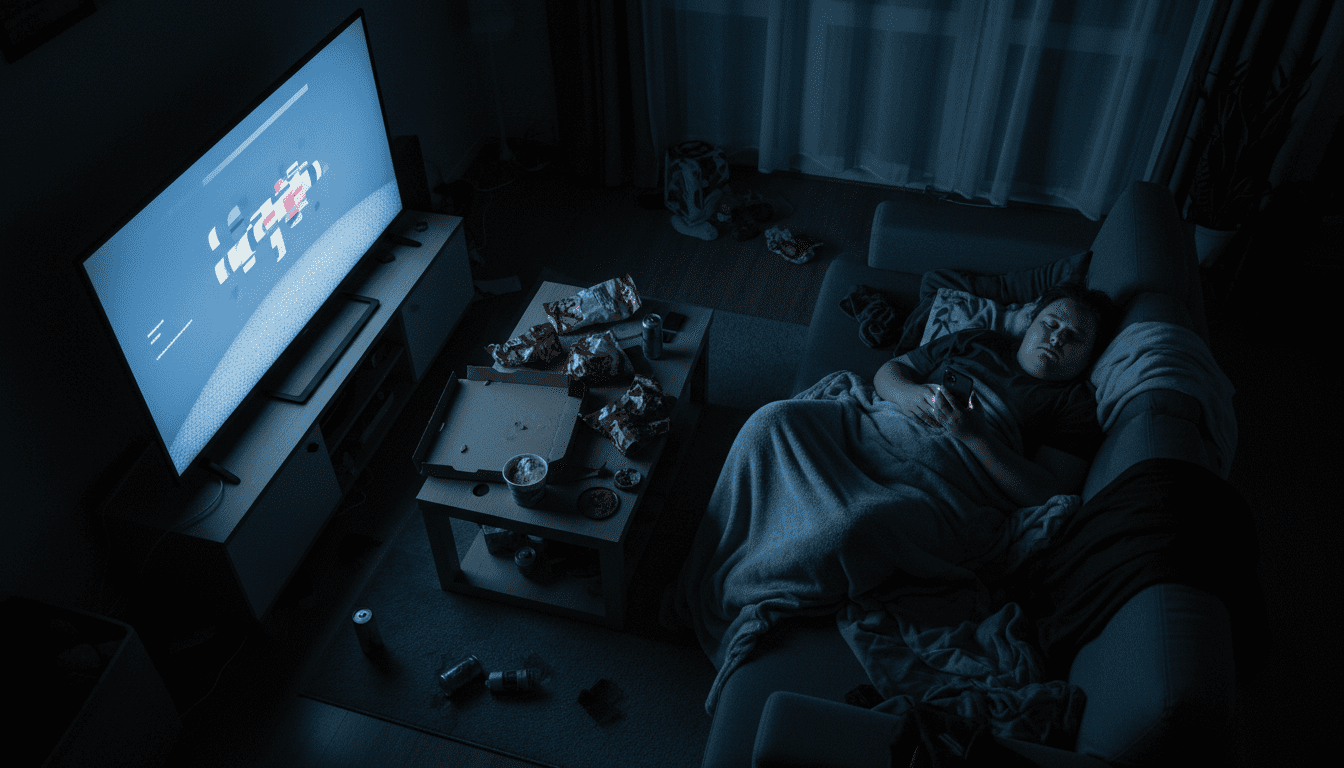
Sleeping with the TV On Linked to Poorer Sleep, Weight Gain and Mood Risks
Sleeping with the TV on can harm sleep and raise weight and mood risks. Experts link nighttime TV exposure to melatonin disruption, poorer REM sleep and daytime impairment.
Large cohort data ties night-time TV to weight gain
A large observational study of more than 43,000 women aged 35 to 74 found an association between sleeping with the TV on and a higher risk of weight gain. Researchers reported about a 17% greater likelihood of gaining weight among participants who kept a television on while they slept compared with those who did not. While the study is observational and cannot prove causation, it adds to a growing body of research connecting light exposure at night with metabolic outcomes.
Blue light from screens suppresses melatonin
Light, and particularly blue-wavelength light emitted by screens, plays a central role in regulating the sleep–wake cycle by affecting melatonin production. Exposure to this light in the evening can blunt the nightly rise of melatonin, delaying sleep onset and shifting circadian timing. That suppression can make it harder to fall asleep and reduce the overall restorative quality of the night’s rest.
Flicker and noise can fragment REM and slow sleep onset
Beyond light, the audiovisual properties of television—screen flicker and changing sound levels—appear to lengthen the time it takes people to fall asleep and to fragment sleep architecture. Studies report reductions in rapid eye movement (REM) sleep when external stimulation persists into the night, a change that can impair memory consolidation and emotional processing. People who fall asleep with media playing also more often wake feeling unrefreshed or report trouble concentrating during the day.
Mood and daytime functioning show measurable declines
Chronic poor sleep is linked to a range of mood and interpersonal problems, and falling asleep with the TV on can contribute to those patterns. Sleep deprivation increases risks of anxiety, irritability and depressive symptoms, and can strain relationships and workplace performance. The cumulative effect of nightly light and audible stimulation can therefore extend beyond one poor night to affect mental health and daily functioning.
Experts acknowledge potential short-term benefits of background TV
Some sleep medicine specialists note that using the TV as a sleep aid can help certain people in the short term by providing familiar sounds or distraction from anxious thoughts. Vikas Jain, MD, clinical assistant professor of sleep medicine at Stanford University School of Medicine, says low-volume, familiar programming can act like a white-noise source and reduce the time it takes some individuals to fall asleep. However, clinicians caution that the same habit may reinforce dependence and carries the trade-off of increased light exposure and possible sleep fragmentation.
Safer alternatives preserve the comfort without the light
There are practical steps to capture the comforting aspects of background media without the downsides of light and flicker. Sound-based strategies—such as white, pink or brown noise, calm music, or recorded ambient sounds like rain or fans—deliver steady acoustic masking without suppressing melatonin. Other options include ASMR recordings, guided relaxation, or a low bedside lamp to create a predictable, low-light pre-sleep environment.
Behavioral changes to reduce reliance on nighttime TV
Adopting incremental changes can help people move away from sleeping with the TV on while maintaining sleep onset benefits. Turning off autoplay, listening only to the audio track, lowering volume to a steady level, or using a timer to switch the screen off after a set interval are practical first steps. Building alternative bedtime rituals—reading, progressive muscle relaxation, or a warm bath—reduces dependence on external media and strengthens sleep hygiene.
A balanced approach recognizes that individual needs and tolerances vary, but the evidence favors minimizing light and intermittent sound after bedtime. For most people, replacing a glowing screen with controlled, low-intensity sounds and a consistent bedtime routine will better protect melatonin rhythms, REM sleep and overall health.
