
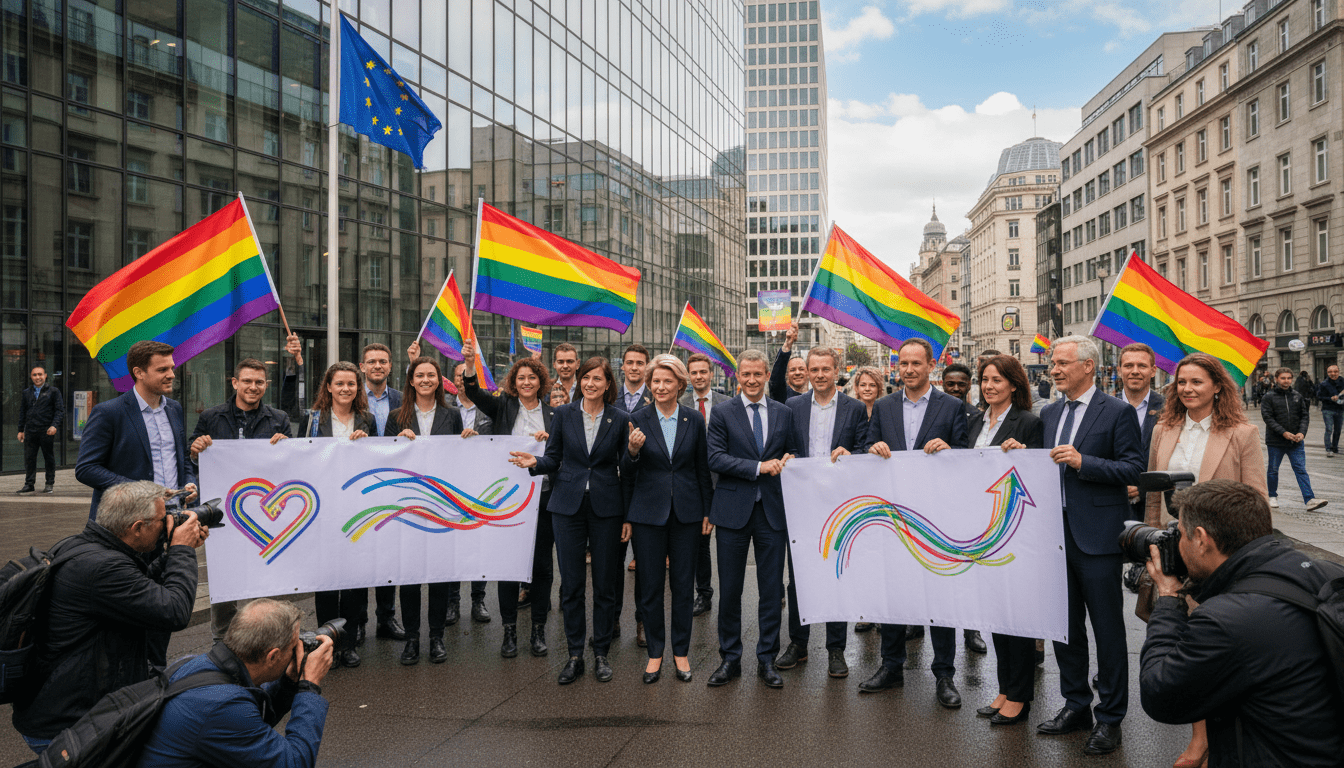
Corporate diversity under strain as U.S. rollbacks meet firm resistance in Europe
Corporate diversity faces a transatlantic test as U.S. rollbacks curb LGBTQ+ programs while leading European firms publicly sustain inclusion and protections.
The U.S. administration’s recent moves to reduce workplace diversity measures and civil protections for queer people have prompted a sharp response from companies and civil society on both sides of the Atlantic. Corporate diversity has been directly affected: several major U.S. firms and non-profits have scaled back LGBTQ+ initiatives, while many European businesses and networks report continued or strengthened commitments. Observers say the development poses both a political and economic question about how inclusion supports competitiveness and social cohesion.
U.S. administration targets corporate diversity programs
The current U.S. executive branch has implemented policies and public rhetoric that critics argue undermine workplace diversity efforts, particularly those aimed at LGBTQ+ inclusion. As a result, some large American companies have retreated from visible sponsorships and internal programs that were previously standard. This retrenchment has hit public events and employee networks, producing measurable funding and visibility losses for community initiatives.
Economic studies link exclusion to lower GDP and innovation
Academic and policy research underscores the economic stakes of discrimination. Analyses by business-focused research groups show that exclusion of LGBTQ+ people can reduce investment, cut innovation, and lower productivity, costing economies a measurable share of output. When talent feels compelled to hide or is pushed out of workplaces, firms lose creative capacity and customer insight that can affect long-term growth.
High-profile sponsorship withdrawals and event impacts
In the wake of political pressure, several major corporate sponsors withdrew from Pride and other public LGBTQ+ events, producing steep revenue shortfalls for organizers. Organizers of major city Pride events reported six-figure sponsorship losses in recent years, with cascading effects on programming and accessibility. The reduction in corporate backing has been especially visible in large U.S. metropolitan events that once relied on global brands for funding and logistics.
European banks and insurers publicly reaffirm inclusion
By contrast, a number of European financial institutions and insurers have publicly maintained or expanded diversity programs as part of corporate strategy. Senior executives at major European banks and insurance groups have framed LGBTQ+ inclusion as both a moral imperative and a business advantage that supports recruitment, retention and legal certainty. These institutions report continued internal networks, conferences and sponsorships even in markets where political pressure is growing.
Civil-society networks and employer charters continue to operate in Europe
Non-profit organizations and employer alliances that connect companies with LGBTQ+ communities report steadier funding and activity levels in much of western Europe. Groups that provide guidance, benchmarking and events for member firms say they have not been forced into broad program cuts and continue to play a convening role. Foundations and job-fair organizers also note increased interest from public agencies and state institutions seeking to engage with diverse talent pools.
Regional divergence amplifies policy and market signals
The diverging trajectories across the Atlantic are producing a complex set of signals for multinational firms and investor communities. Companies operating in both the U.S. and Europe face conflicting political landscapes: one where public retrenchment may reduce reputational risk locally, and another where continued advocacy and legal protections are expected by employees and customers. This split has encouraged some European firms to double down on inclusion as a strategic differentiator and a defence of legal and institutional stability.
Public- and private-sector leaders argue that protecting diversity is not only social policy but also economic prudence. Corporate diversity initiatives, proponents say, reduce hidden costs associated with lost talent and exclusion while strengthening consumer relationships. Observers caution, however, that visible support may be scaled back in some markets even if internal commitments remain intact.
Diversity researchers and company executives alike emphasize that the next phase will hinge on how firms balance market pressures with workforce expectations and regulatory environments. If European companies continue to treat inclusion as a strategic asset, the continent may offer a counterweight to retrenchment elsewhere and help preserve avenues for participation and innovation. The durability of that stance will depend on sustained leadership, regulatory clarity and the willingness of businesses to weigh short-term headwinds against long-term competitiveness.
