
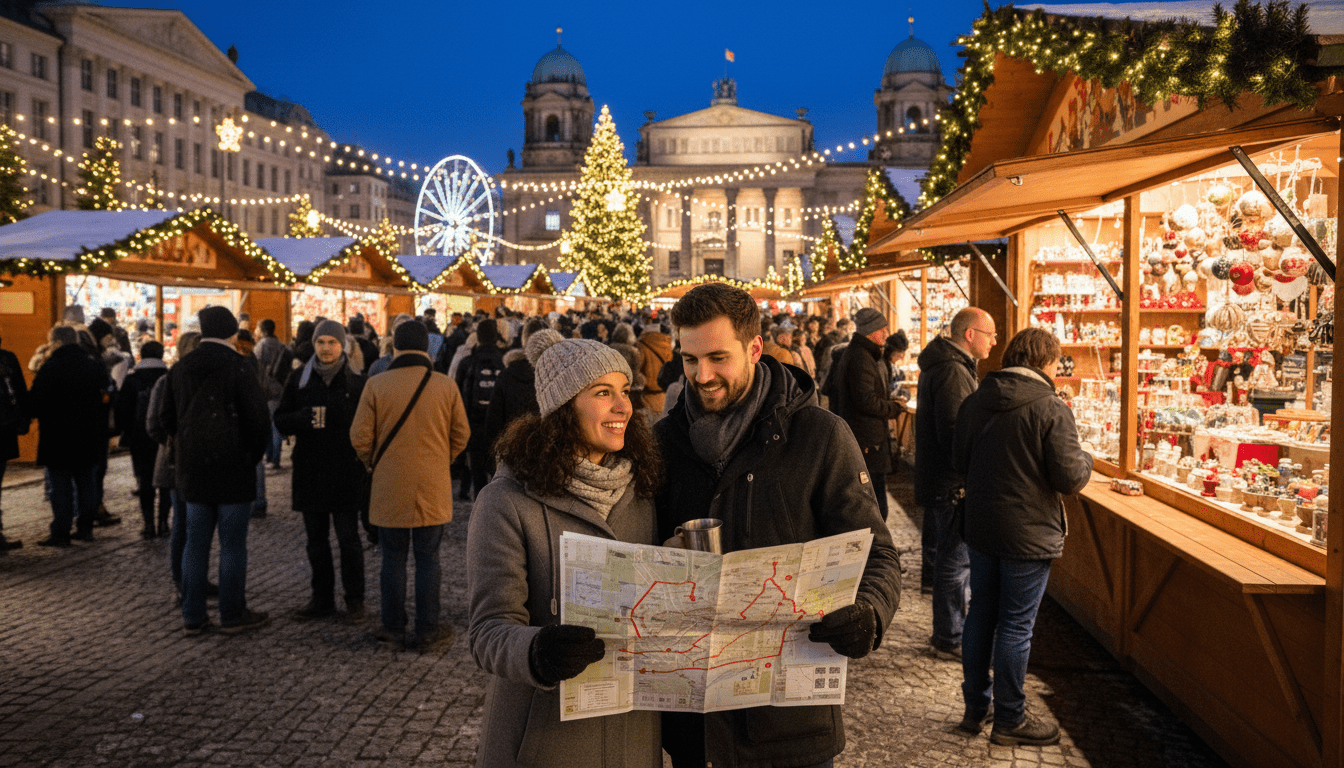
Berlin Christmas markets itinerary: a practical three-day route through Mitte, Friedrichshain and Charlottenburg
Three-day Berlin Christmas markets itinerary: practical routes through Mitte, Friedrichshain and Charlottenburg with transport tips and market highlights.
Three-day Berlin Christmas markets itinerary — quick summary
This three-day Berlin Christmas markets itinerary maps a compact route that combines the city’s most atmospheric markets with key daytime sights. The plan is designed to help visitors see major landmarks during limited winter daylight while leaving evenings free for market strolls and seasonal food. Expect to move between neighbourhoods by foot and public transport, and to prioritise a handful of markets from the city’s many options.
The itinerary focuses on a central base in Mitte for the first day, then moves east to Friedrichshain and Prenzlauer Berg on day two, and finishes with historic West Berlin and Charlottenburg on day three. Each day pairs at least one prominent market with nearby attractions so travellers can balance sightseeing and the festive atmosphere. Practical notes on transport, ticketing and timing accompany the route to make market-hopping efficient.
Where to base yourself: Mitte as a practical starting point
Mitte is the logical base for a short Berlin break focused on Christmas markets and sightseeing because it sits near many of the city’s principal monuments. Staying in Mitte shortens travel times to the Reichstag, Museum Island and the Gendarmenmarkt, all of which are included on day one of this itinerary. Hotels and apartments across price ranges concentrate here, offering easy access to U-Bahn and S-Bahn connections for the days you venture further afield.
If you prefer quieter neighbourhoods, consider an apartment in Prenzlauer Berg or a hotel near the East Side Gallery, but be aware this will add travel time to central sights. For families or small groups, look at 24-hour group tickets and hotel locations that sit on major transit lines to reduce transfers. Book early for December travel, as rooms close to major markets tend to sell out faster than outside the season.
Day 1 — Mitte: Reichstag, Gendarmenmarkt and Humboldt Forum
Begin day one with a morning visit to the Reichstag building and its glass dome to catch views of the city while daylight lasts. The free dome tour requires advance booking and a security check, so plan for at least an hour on site including registration and the audio guide. From the Reichstag, a short walk brings you to Brandenburg Gate and the nearby Memorial to the Murdered Jews of Europe, both essential daylight stops.
After midday, head along Unter den Linden toward Bebelplatz and the Gendarmenmarkt Christmas market, which occupies one of Berlin’s most elegant squares. The market opens around noon and is an excellent place for a festive lunch, with artisanal stalls and a programme of live performances in some years. From Gendarmenmarkt, continue east to Museum Island and the Humboldt Forum where a smaller, atmospheric market sits near the Berliner Dom; this spot is handy for combining cathedral views with a market visit.
Finish the evening at the Rotes Rathaus market, which features an ice rink and Ferris wheel and is a lively place for dinner and seasonal treats. Time your daylight sightseeing so you arrive at the Rotes Rathaus after dusk, when lights and attractions create a stronger festive atmosphere. If you prefer fewer stops, skip one museum visit and linger longer at the markets you enjoy most.
Day 2 — Friedrichshain and Prenzlauer Berg: history, food and a medieval market
Day two starts with a focus on recent history in East Berlin: the Topography of Terror or other Cold War sites provide context for the city’s modern landscape. From there, travel east toward Friedrichshain where a neighbourhood food tour or independent café hopping reveals the multicultural food scene that defines contemporary Berlin. The area’s combination of street art, repurposed industrial sites and lively eateries makes it ideal for a midday walking exploration.
In the afternoon include the RAW Gelände medieval Christmas market if you want a different, themed experience; it usually opens later in the day and offers medieval stalls, performers and warm drinks. The East Side Gallery lies a short distance away and is a natural evening stop to view the painted remains of the Berlin Wall. If you visit the medieval market, check local opening hours in advance, as times and small entrance fees can vary by day.
For families or travellers seeking a cozier Nordic vibe, the Lucia market at Kulturbrauerei in Prenzlauer Berg is an attractive option later in the day. The courtyard setting and Nordic-themed stalls give this market a distinctive feel, and it often hosts kid-friendly activities and indoor options to warm up. Use the tram and S-Bahn connections between Ostkreuz, Warschauer Straße and Eberswalder Straße to move efficiently between sites.
Day 3 — West Berlin: Bernauer Strasse, Charlottenburg Palace and Breitscheidplatz
On the final day of this Berlin Christmas markets itinerary, begin with a morning visit to Bernauer Strasse to learn about the city’s divided past at the Wall Memorial. The visitor centre screens short films that explain the local impact of the Wall and the site is best visited in daylight to walk the preserved sections and observation tower. From there plan a westward journey to Charlottenburg, where the palace and its large seasonal market provide a picture-postcard setting.
The Charlottenburg Palace market is an excellent lunch spot, combining historic architecture with plentiful food stalls and handcrafted gifts. Seek elevated vantage points within the market for views back across the palace grounds, and make time for a palace interior visit if opening hours permit. Later in the afternoon move toward Kurfürstendamm and Breitscheidplatz where the Kaiser Wilhelm Memorial Church anchors a substantial market and the surrounding shopping street is beautifully lit in the evening.
If you have extra time or prefer a village-style market, travel out to Spandau’s Altstadt, which hosts a large traditional market in a compact historic district. Spandau is farther from the city centre but offers a distinct atmosphere that contrasts with central Berlin markets. Return to your hotel by S-Bahn or U-Bahn and consider an indoor dinner to warm up after an evening of outdoor browsing.
Transport, tickets and timing: BVG advice for winter market visits
Public transport is the fastest way to link markets across Berlin; frequent S-Bahn, U-Bahn and tram services connect this itinerary’s key stops. For short city stays, 24-hour tickets and small-group day passes can be economical and reduce the need to buy individual tickets for each journey. Download the BVG Fahrinfo app for real-time routing and disruption notifications; it is the most reliable way to plan connections when schedules change.
Timing is important in December because daylight hours are short and many markets open in the early afternoon; plan sightseeing in the mornings and market visits in the late afternoon and evenings. Allow extra time for security checks at popular attractions and for queuing at busy market stalls during peak hours. Carry contactless payment options and a few euros in cash, as some smaller vendors still prefer cash for food or craft purchases.
If travelling with children, remember that a single adult day ticket can often cover several children at reduced or no extra cost depending on age. For visitors who prefer to minimise walking, map hotels near a main U-Bahn or S-Bahn hub and factor short tram rides into each day to conserve energy. Finally, check public holiday dates and market opening calendars before travel, since some markets alter hours around Christmas and New Year.
Additional markets, tours and alternatives to consider
Beyond the markets included in this three-day route, Berlin hosts neighbourhood markets with distinctive personalities: from traditional artisan stalls in Spandau to the quirky, creative offerings at Holzmarkt. If you want to expand your list, consider a market that emphasises regional crafts or international street food to vary the experience. Markets vary by day of the week and some have entrance fees at peak times, so include those factors when choosing extras.
Guided tours are a practical option for visitors who prefer structure or local commentary; food tours in particular combine tastings with short market visits and can be a good way to sample regional specialties without committing to full meals at multiple stalls. River cruises with seasonal menus are another alternative for a relaxed sightseeing option with a festive touch, particularly when temperatures are low on land. For photographers and visitors seeking fewer crowds, early evening or weekday visits usually offer a more comfortable pace.
If you plan to repeat a favourite market, allocate time to return one evening to soak up the atmosphere again, try a different food stall or buy a specific gift. Many markets feature live music, local theatre or craft workshops on scheduled days; check local listings to time your visit around special performances. Finally, build flexibility into your plans so weather, closures or local events don’t derail the overall experience.
For convenience, keep an eye on opening times and small operational changes that can occur from year to year. Markets are generally seasonal and most operate through December with a handful continuing after Christmas, but precise dates can shift. Use official market calendars or the BVG app in the weeks before travel to verify opening hours and any entry requirements.
This itinerary offers a focused way to experience some of Berlin’s best Christmas markets alongside major sights while keeping daily travel manageable. Tailor the plan to your pace by swapping markets, adding museum time or choosing guided tours according to interests and the season’s schedule. With a practical base, a reliable transit app and modest flexibility, visitors can enjoy the city’s winter lights, seasonal flavours and the variety that makes Berlin’s markets distinctive.
