
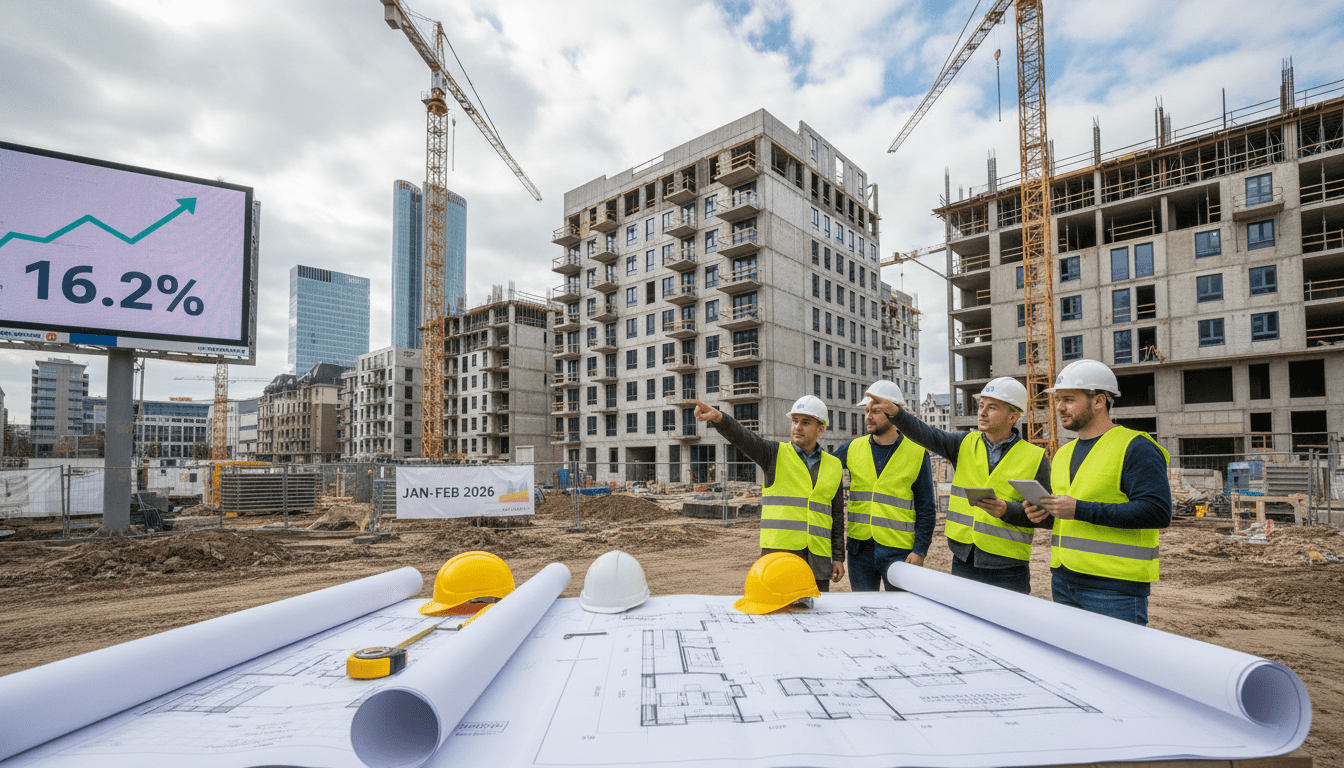
Building permits in Germany rise 16% as approvals reach 41,700 in January–February 2026
Germany saw 41,700 new housing building permits in Jan–Feb 2026, a 16.2% rise from last year, signaling renewed momentum in residential construction.
Germany recorded 41,700 building permits in January–February 2026, a 16.2 percent increase from the same period a year earlier, the Federal Statistical Office reported. The uptick in building permits in Germany was led by a particularly strong February, when approvals climbed 24.1 percent to 22,200. Officials at the Statistisches Bundesamt said the bulk of the approved units—about 19,000—are earmarked for newly constructed apartment buildings.
Monthly breakdown and statistical context
In February 2026 the surge in approvals stood out against a backdrop of subdued construction in prior years due to high financing costs and expensive materials. The Federal Statistical Office’s figures show a rebound after several quarters of slower activity, with the February spike accounting for more than half of the permits issued across the two-month window. Analysts caution that monthly volatility can reflect administrative timing as well as genuine shifts in developer confidence.
Where the approved units are planned
Of the 22,200 permits granted in February, roughly 19,000 relate to new construction projects while the remainder involve conversions or additions within existing buildings. That composition suggests developers are planning fresh supply rather than relying solely on refurbishments. New-build approvals often take longer to translate into starts, however, because they require financing, detailed permits and supply-chain commitments before ground is broken.
Industry warns approvals do not equal starts
The main construction industry association, Hauptverband der Deutschen Bauindustrie, urged caution, noting that more permits do not automatically result in more building activity. Association executives say many permit holders secure approvals but delay starts because of persistent cost pressures, regulatory requirements and bureaucratic hurdles. The industry has called on the federal government to intensify measures to ease financing and reduce obstacles so that approvals can convert into completed dwellings.
Cost pressures and geopolitical risks
Construction costs have been squeezed in recent years by elevated interest rates and higher prices for energy and raw materials, trends that industry groups say could reverse or stall the current momentum. The outbreak of war in Iran has exacerbated uncertainties in energy and commodity markets, pushing some input prices higher and raising the prospect of renewed cost inflation for builders. Market observers also point to the risk of further rate increases, which would raise borrowing costs for developers and prospective homebuyers alike.
Sentiment indicators show fragility in the market
Despite the permit increase, business sentiment in the housing sector weakened in March 2026, according to the ifo Institute’s survey data. The ifo analysts reported that worries over a possible rise in interest rates have dampened expectations among builders and households. Survey leaders warned that higher financing costs could quickly cool demand for new homes and delay project starts, undercutting the initial optimism suggested by permit numbers.
Policy options and calls for a financing boost
Industry leaders have pressed the government to introduce targeted measures to support the translation of permits into construction starts, including stepped-up financing programs, credit guarantees and streamlined approval processes. Proposals advanced by the construction association emphasize interventions aimed at lowering effective borrowing costs and reducing administrative barriers. Policymakers face a balancing act between maintaining fiscal discipline and supporting a sustained increase in housing supply.
The recent rise in building permits in Germany points to a potentially important inflection for the housing sector, but experts stress that approvals are only the first step in a multi-stage process. Converting permits into actual construction will depend on material prices, borrowing costs and the speed of regulatory decisions, leaving the outlook for a faster delivery of new housing contingent on both market and policy responses.
