
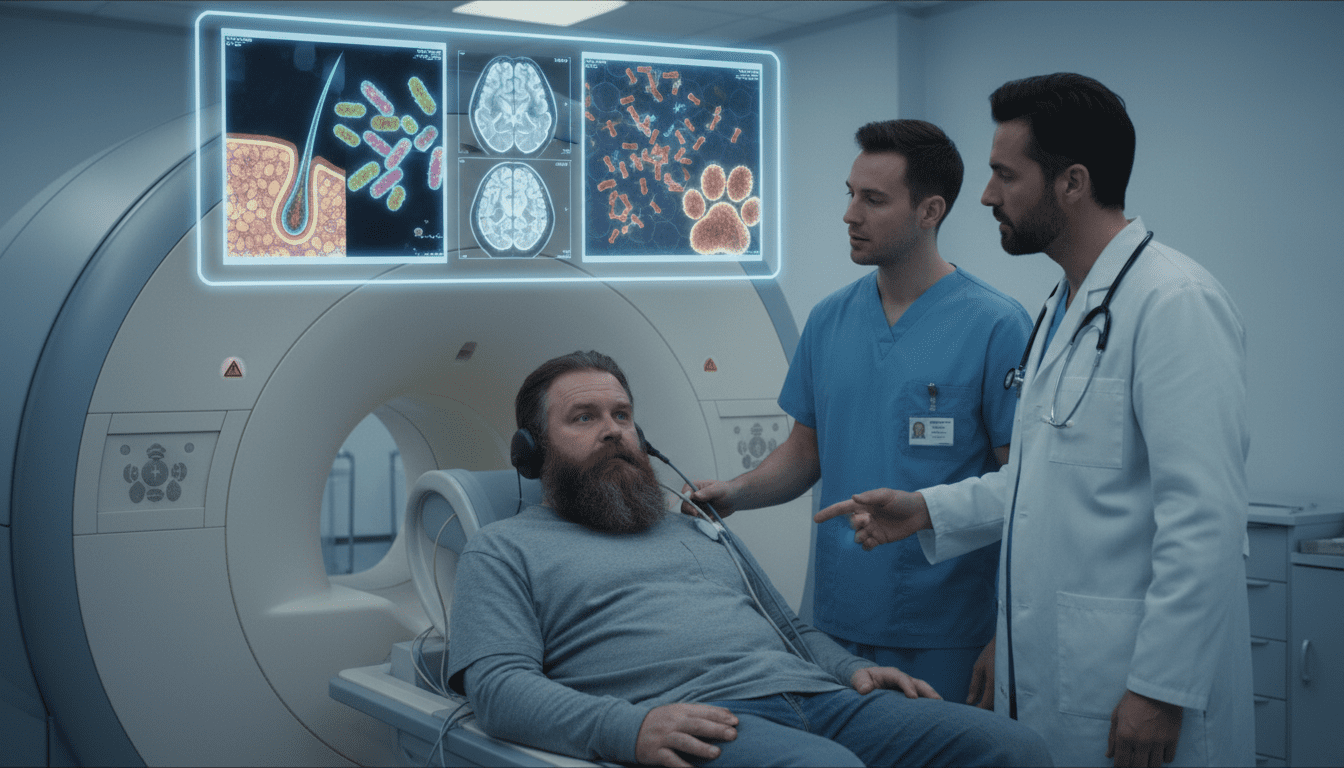
Beard bacteria outnumber those on dog necks, study finds
Study finds beard bacteria exceed those on dog necks, prompting MRI hygiene concerns and renewed advice on beard washing and clinic precautions for patients.
A multicenter trial published in European Radiology reports that beard bacteria levels can be higher than those found on dog necks, a finding that raises fresh questions about hygiene in clinical settings. The study’s headline result — that beards harbored more microbes and a higher share of potential pathogens than canine fur — has prompted discussion about routine beard care and infection-control practices. Researchers designed the comparison to assess whether dogs and humans could safely share MRI machines without extra infection risk.
European Radiology multicenter trial compared beards and dog necks
The study, titled “Would it be safe to have a dog in the MRI scanner before your own examination? A multicenter study to establish hygiene facts related to dogs and men,” sampled 18 men and 30 dogs across several centers. Investigators swabbed human beards and canine necks, then quantified total microbial counts and screened for organisms considered potentially pathogenic. The design responded to practical pressures: veterinary teams sometimes use human MRI equipment when dedicated animal scanners are unavailable.
Beards showed universal high microbial counts and more pathogens
Results showed that all beards sampled returned high microbial counts, while 23 of 30 dog neck samples did so. The proportion of isolates classified as potentially pathogenic was substantially larger in the human samples, with roughly 39 percent of human swabs flagged versus about 13 percent of canine swabs. Researchers also found that humans’ oral cavities contributed more microbes than dogs’ mouths, and comparative measurements taken after MRI use indicated dogs left less bacterial residue behind than humans did.
Past research paints a mixed picture of facial hair hygiene
This new comparison joins a mixed literature on facial hair and microbes. A 2015 investigation reported fecal bacteria in some beards, prompting microbiologists to warn that certain organisms identified would be alarming if found in drinking water. Conversely, a 2014 Journal of Hospital Infection study of 408 male hospital staff suggested clean-shaven workers were more likely to carry harmful bacteria and MRSA on their faces than their bearded colleagues. Other surveys, including an Australian study of men with and without facial hair, have found little consistent difference between beards and bare chins when it comes to bacterial presence.
Hygiene habits and self-reported beard care influence contamination levels
Behavioral surveys suggest part of the explanation may lie in grooming routines. A social-media–based poll of 1,000 bearded men found about 41 percent admitted to not washing their beards regularly, a pattern that could increase microbial accumulation. Critics of beard-focused studies argue that sampling bias and incomplete comparisons — for example, not testing hair on clean-shaven chins or women’s hair — can skew conclusions. Advocates such as Keith Flett of the Beard Liberation Front caution against what they call pogonophobia, arguing that swabs from any hair or hands can reveal unwelcome microbes if sought aggressively.
Public attitudes toward beards differ from clinical concerns
Beyond infection control, cultural preferences and perceptions complicate the debate over facial hair. Statista data and historical surveys illustrate shifting beard prevalence: beards were rare in the late 19th century, surged during the 1960s and 1970s, and today remain common in many populations. Opinion research shows mixed views on attractiveness and trustworthiness; a 2018 YouGov poll found most respondents said facial hair did not change their impression, while among those who did care, clean-shaven men often rated more positively for trust and attractiveness. A large University of Queensland study of more than 8,500 women found short stubble rated most attractive for short-term encounters, while fuller beards tended to score higher for perceived suitability as long-term partners.
Implications for MRI scheduling and clinic hygiene practices
Clinics and imaging centers that occasionally scan animals on human machines may take reassurance that the study did not find dogs to be a greater contamination risk than bearded patients. Still, the authors’ findings underscore the importance of routine cleaning and surface disinfection between scans, and of clear protocols when different patient types use the same equipment. For individuals, the results point to simple preventive steps: regular washing and occasional professional grooming can reduce the build-up of microorganisms on facial hair.
Beard owners and clinic managers alike may take away a practical conclusion: facial hair can carry a substantial microbial load, but behavior and hygiene practices matter more than the mere presence of a beard. Regular shampooing, mindful grooming and adherence to clinic cleaning standards offer straightforward ways to lower contamination risks for both people and animals.
