
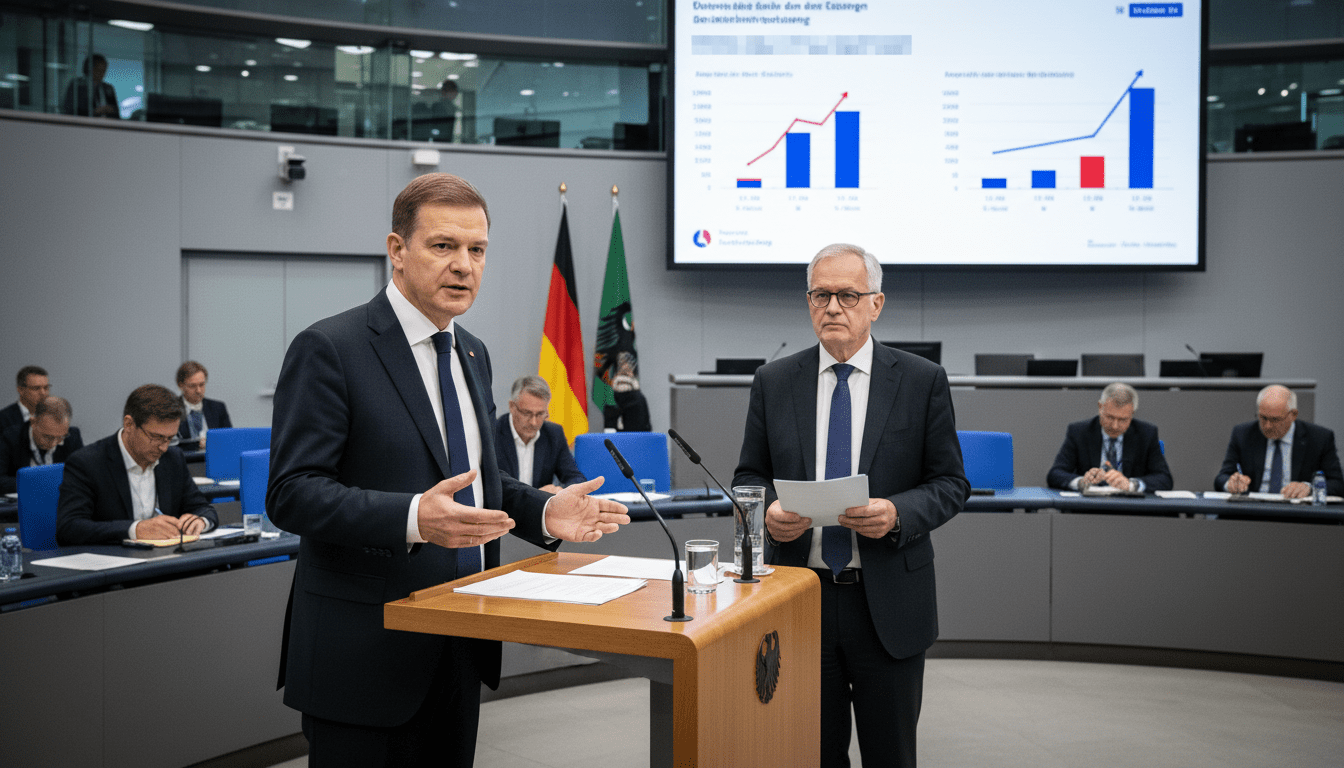
Germany Weighs Reform of Ehegattensplitting and Free Spousal Mitversicherung
April 2026 proposals to reform Ehegattensplitting and limit free spousal Mitversicherung may reduce tax and insurance benefits for single‑earner families.
Germany’s governing debate in April 2026 centers on two linked proposals that would reshape tax and health coverage for married couples. The first proposal would reform the long-standing Ehegattensplitting tax mechanism, and the second would restrict the current system of beitragsfreie Mitversicherung, or free spousal co-insurance, in statutory health insurance. Lawmakers and policymakers say the moves aim to address fairness and fiscal sustainability, while critics warn of financial strain on single‑earner households.
SPD Proposes Changes to Ehegattensplitting
The Ehegattensplitting system currently aggregates spouses’ incomes, halves the total, and taxes each half separately, producing a lower combined tax bill for many unequal‑income couples. The SPD’s proposal discussed in April 2026 would reduce those advantages for partnerships with a large earnings gap, potentially lowering the tax benefit or removing it for the most unequal income pairs.
Proponents argue the change would modernize a tax rule critics see as favoring traditional single‑earner families and contributing to gendered labour market incentives. Opponents counter that abrupt changes could leave households poorer and disincentivize choices such as one parent reducing hours for childcare.
Government Seeks to End Broad Free Spousal Mitversicherung
Under the current statutory health insurance regime, a low‑ or non‑earning spouse can often be covered without paying separate contributions by joining a working partner’s insurance. The new proposal would limit this beitragsfreie Mitversicherung so that it applies only in narrowly defined circumstances rather than broadly across most households.
Officials framing the reform say it would ensure fairness in contributions and help stabilise social insurance finances. Critics note that removing large swathes of free coverage would impose direct monthly costs on many households that have relied on implicit family cross‑subsidies for decades.
Exceptions Proposed for Children, Care and Pensioners
According to the reform outlines released this month, exemptions from compulsory contributions would be retained for households with young children under seven, families caring for children with disabilities, and those providing significant eldercare. Pensioners and explicit hardship cases would also remain eligible for continued free coverage in the draft framework.
These carve‑outs are intended to keep protection for the most vulnerable while narrowing entitlements elsewhere. Policy designers say the aim is to target public support to caregiving families and people in demonstrable need rather than broad, income‑insensitive rules.
Fiscal Motives and Party Arguments
Supporters of both measures cite budgetary pressures on Germany’s social systems and argue that more targeted benefits would free revenue for other priorities. Tax experts within the government claim the reforms could reduce distortions in labour supply and help balance public books amid demographic pressures.
Opposition voices, labour groups, and some family advocates contend that changes would disproportionately hit women and low‑income households, as care responsibilities still fall unevenly within families. They warn that the combined effect of reduced splitting benefits and new insurance costs could push some households into poverty or force secondary earners back into low‑paid work.
Household Impact: Taxes and Insurance Costs
For couples with a single high earner and a non‑working partner, the end or reduction of Ehegattensplitting could mean several thousand euros less in annual tax advantage, depending on income differentials. Likewise, converting a formerly free Mitversicherung into a paid policy could add dozens to a few hundred euros per month in contributions, eroding household budgets.
Beyond direct costs, analysts note behavioural effects: some families may seek more part‑time employment to retain allowances, while others could reconsider childcare arrangements or living standards. The reforms could therefore influence not only taxes and premiums but also labour market participation and family planning decisions.
Public Input Sought from Affected Couples
Journalists and policymakers are asking households affected by these proposals to share concrete examples of how reforms would change their finances. Officials say they will consider empirical testimony alongside fiscal models as they refine the proposals and assess transition rules.
Readers and residents who currently benefit from Ehegattensplitting or free spousal Mitversicherung are being invited to describe their situations, the size of any potential loss, and whether they would have to alter work or care arrangements. Submissions by email to [email protected] and responses through designated forms are being collected with an offer of possible publication, including anonymity on request.
The unfolding debate over Ehegattensplitting and spousal Mitversicherung will shape tax and social policy outcomes for many families, with lawmakers facing the task of balancing fiscal goals and household vulnerability. Families affected by the proposed changes are advised to review their budgets and consider how shifted tax liabilities or insurance costs could affect their finances and work choices.
