
Landtagswahlen 2026: Polls Point to Deep Regional Shifts Ahead of September Votes
Polls ahead of the Landtagswahlen 2026 show shifting voter support across states, testing Chancellor Friedrich Merz’s government and a surging AfD in the east.
The latest round of state polling paints a fragmented political map as Germany approaches a crucial string of elections in 2026, with the Landtagswahlen 2026 emerging as the first major electoral test since Friedrich Merz became chancellor. Voter intent varies sharply by region, with the CDU making gains in some western states while the AfD posts strong figures in eastern provinces. Political strategists say the September contests could reshape coalition possibilities at both state and national levels.
Early Polls Put CDU Ahead in Rhineland-Palatinate
Polling data indicate the CDU has moved into first place in Rhineland-Palatinate for the first time in decades, reversing a long trend for the state. Party officials attribute the surge to local campaigning and voter concerns over economic management that have resonated with centrist and conservative voters. Analysts caution that while the lead is significant, turnout patterns and the performance of smaller parties will be decisive on election day.
Baden-Württemberg Contest Remains Tight Between CDU and Greens
In Baden-Württemberg the race remains neck-and-neck, with the CDU narrowly missing the top spot in recent surveys and the Greens holding a competitive position. The state’s electorate has long balanced environmental priorities with industrial and economic interests, creating volatile swings between the two parties. Observers note that small shifts on single issues such as mobility policy or education funding could determine which camp secures a lasting advantage.
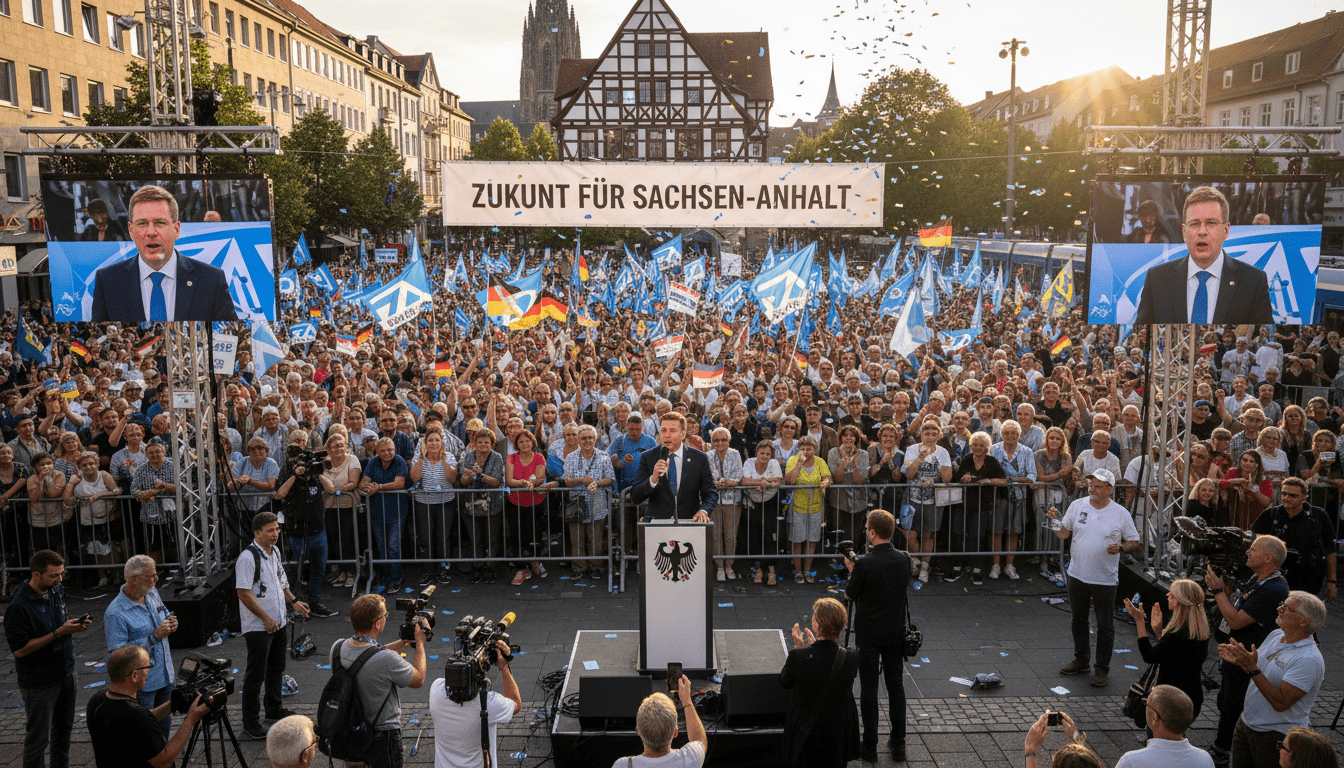
Sachsen-Anhalt Vote on September 6 Sees Strong AfD Support
Sachsen-Anhalt, which votes on September 6, 2026, shows particularly robust support for the AfD, reflecting a pattern seen across parts of eastern Germany. The party’s share of the vote in the region has climbed in successive national and European contests, and local polling projects elevated levels of backing that could translate into a major parliamentary presence. AfD leaders have signaled ambitions to enter government in the state, a prospect that has intensified debate over coalition boundaries and democratic norms.
Implications for Chancellor Friedrich Merz and the Federal Coalition
The Landtagswahlen 2026 are widely viewed as an early referendum on Chancellor Merz and his coalition partners, offering a snapshot of public sentiment less than a year into his tenure. Poor showings for governing parties in several states would complicate federal politics by energizing opposition narratives and narrowing policy space in Berlin. Conversely, gains by the CDU in key western states would bolster the chancellor’s mandate and provide momentum for legislative priorities at the federal level.
Regional Issues Drive Divergent Voter Behavior
Differences in economic structure, demographic trends, and local priorities help explain why poll results vary so markedly between states. Industrial concerns, housing affordability, and infrastructure projects dominate in some regions, while migration, public safety, and cultural debates are more salient in others. This patchwork of priorities means national parties must tailor messages locally, and regional leaders will play an outsized role in mobilizing supporters ahead of the votes.
Coalition Math and the Prospect of Unconventional Alliances
The uneven polling landscape complicates coalition arithmetic as parties calculate paths to governorships and legislative majorities after the Landtagswahlen 2026. A strengthening AfD in eastern legislatures raises the specter of difficult bargaining for traditional parties intent on excluding it from power, while gains by centrist and green forces in other states could open protracted negotiations. Political operatives warn that even small changes in vote shares among smaller parties could tip the balance and produce unconventional alliances at the state level.
As the calendar moves toward September, parties will intensify campaigning and refine local platforms to sway undecided and soft voters across Germany. Polls provide a snapshot but not a certainty, and the composition of the electorate on election days will determine whether current trends crystallize into lasting shifts or revert under the pressure of turnout and local dynamics. The Landtagswahlen 2026 will therefore offer an early and consequential gauge of political momentum ahead of the next national electoral cycles.
