
EU age-verification app pitched as Europe’s “gold standard” for protecting minors online
EU Commission releases source code for EU age-verification app to enable anonymous checks and urges member states to adopt the system amid Digital Services Act enforcement.
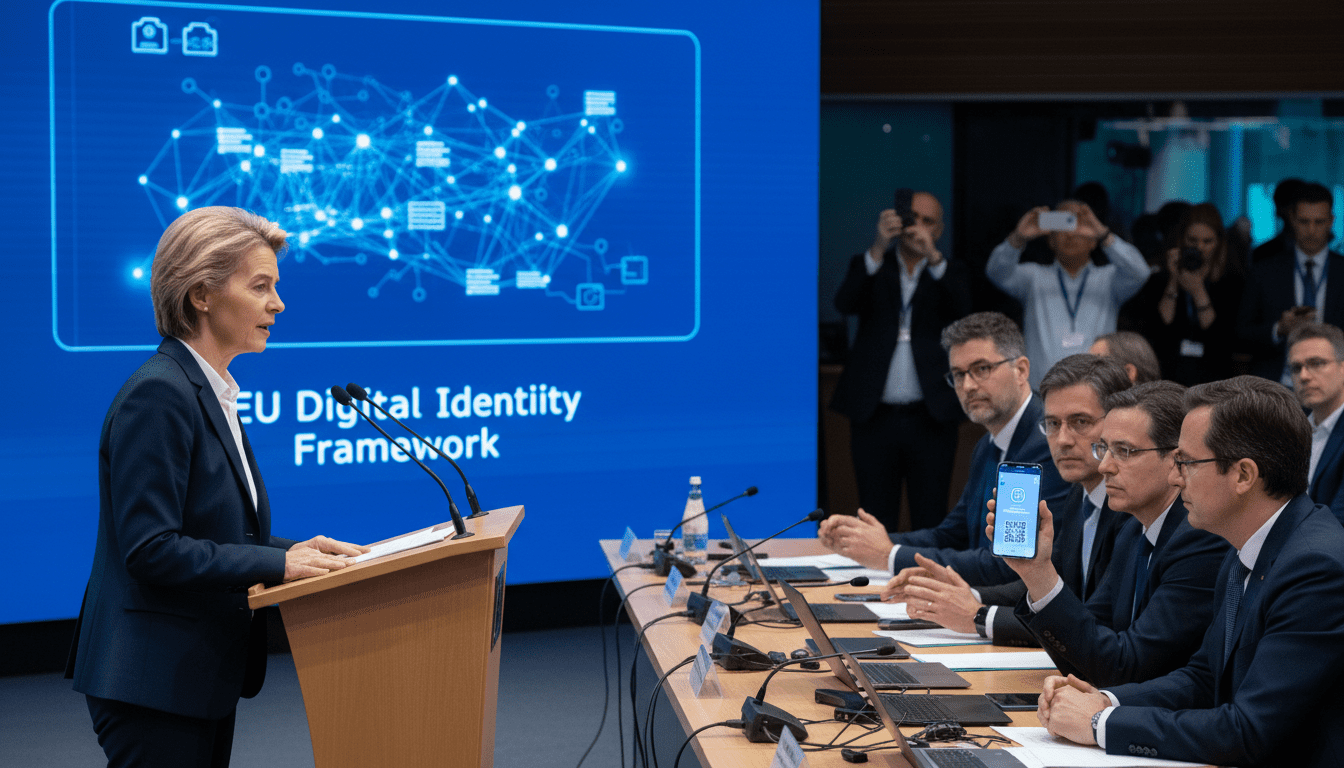
The European Commission on Wednesday urged member states to adopt an EU age-verification app it says is technically ready to verify users’ ages anonymously across online platforms. Commission President Ursula von der Leyen presented the application as a unified tool to protect children in the online environment and called on governments and private companies to follow pilot deployments. The announcement comes as the Commission steps up enforcement of the Digital Services Act’s protections for minors.
How the EU app verifies age
The app requires a one-time identity confirmation using an official ID or an online identity function provided by national authorities. After verification the application stores only the user’s birthdate and not a full identity profile. When a user accesses age-restricted content, the app communicates solely whether they meet the minimum age threshold and does not disclose which sites the person visits.
The Commission describes the mechanism as fully anonymous for third parties, meaning platforms would receive no personal data beyond an age-eligibility flag. That design is intended to limit tracking while enabling stronger age checks than the current practice of self-declared birthdates on social networks.
Source code released for member states
The Commission published the app’s source code to allow EU countries to deploy or adapt the system to national identity frameworks. Participation by platforms and states is voluntary; the Commission has not made use of the EU app mandatory. Several countries—including France, Spain, Greece, Denmark and Ireland—have already tested beta versions, while Germany did not join the initial trials.
By releasing the code, Brussels aims to lower technical barriers and encourage interoperability across national digital identity schemes. The move is also intended to give platforms a ready-made option that meets the Commission’s privacy and security expectations.
Privacy safeguards and acknowledged weaknesses
Commission officials emphasised privacy protections built into the solution, but they also acknowledged limitations. The verification process can be circumvented if an older person—such as a sibling, parent or caregiver—registers on behalf of a minor, a Commission spokesperson said. That caveat leaves a gap that technical safeguards alone cannot fully close.
Privacy experts and civil society advocates have warned that any centralized or widely used verification mechanism must be carefully audited to avoid unintended data flows or misuse. The Commission’s publication of source code is framed as a transparency step that could enable independent review and local adjustments to strengthen safeguards.
Digital Services Act context and enforcement
The push for the EU age-verification app is framed by the Commission as part of broader DSA enforcement. Under the Digital Services Act, large platforms are required to implement measures to protect minors, but regulators say current reliance on self-declared birthdates is insufficient. The Commission has accused several major platforms of failing to provide adequate youth protection and has signalled tougher sanctions for non-compliance.
Von der Leyen described the app as a “gold standard” option for platforms while warning there will be less tolerance for excuses in future enforcement actions. The Commission’s approach combines technical tools with heightened supervisory scrutiny to ensure platforms meet legal obligations on minors’ safety.
Member states’ policy responses and national debates
The roll-out of the app intersects with active national debates over minimum ages and potential bans for underage social media users. Several governments—including France, Spain, Greece and Austria—have signalled intentions to legislate age-floor rules for social-network access, with draft laws already under discussion in some capitals. In Germany, national parties have proposed minimum-age thresholds; CDU and SPD have backed bans for children under 14, with additional protections proposed up to age 16.
An expert group appointed by the Commission is expected to present proposals on a Europe-wide minimum age and complementary measures during the summer. Those recommendations are likely to influence both national lawmaking and platform policies across the bloc.
Public outreach initiatives and political signaling
Political leaders are also engaging in public awareness actions tied to the debate. French President Emmanuel Macron has promoted an “Offline Day,” planning discussions with schoolchildren in Villers-Cotterêts to highlight the value of disconnecting and digital wellbeing. Such initiatives aim to complement technical and legal measures with behavioural and educational approaches.
The Commission has called on private companies to pilot the EU app alongside states, framing uptake as a shared responsibility between public authorities and industry to shield children from harmful online experiences.
The Commission’s release of the EU age-verification app represents a technical and regulatory nudge toward harmonised protection for minors, but deployment will depend on national choices, platform adoption and further safeguards to limit circumvention. As expert proposals and enforcement actions arrive in the coming months, policymakers will balance privacy, practicality and the goal of reducing minors’ exposure to age-restricted online content.
