
World Bank Announces Up to $100 Billion Aid for Countries Hit by Middle East War
World Bank unveils up to $100 billion aid for countries hit by the Middle East war, mobilizing immediate funds and warning of job and food-security risks amid energy and supply shocks.
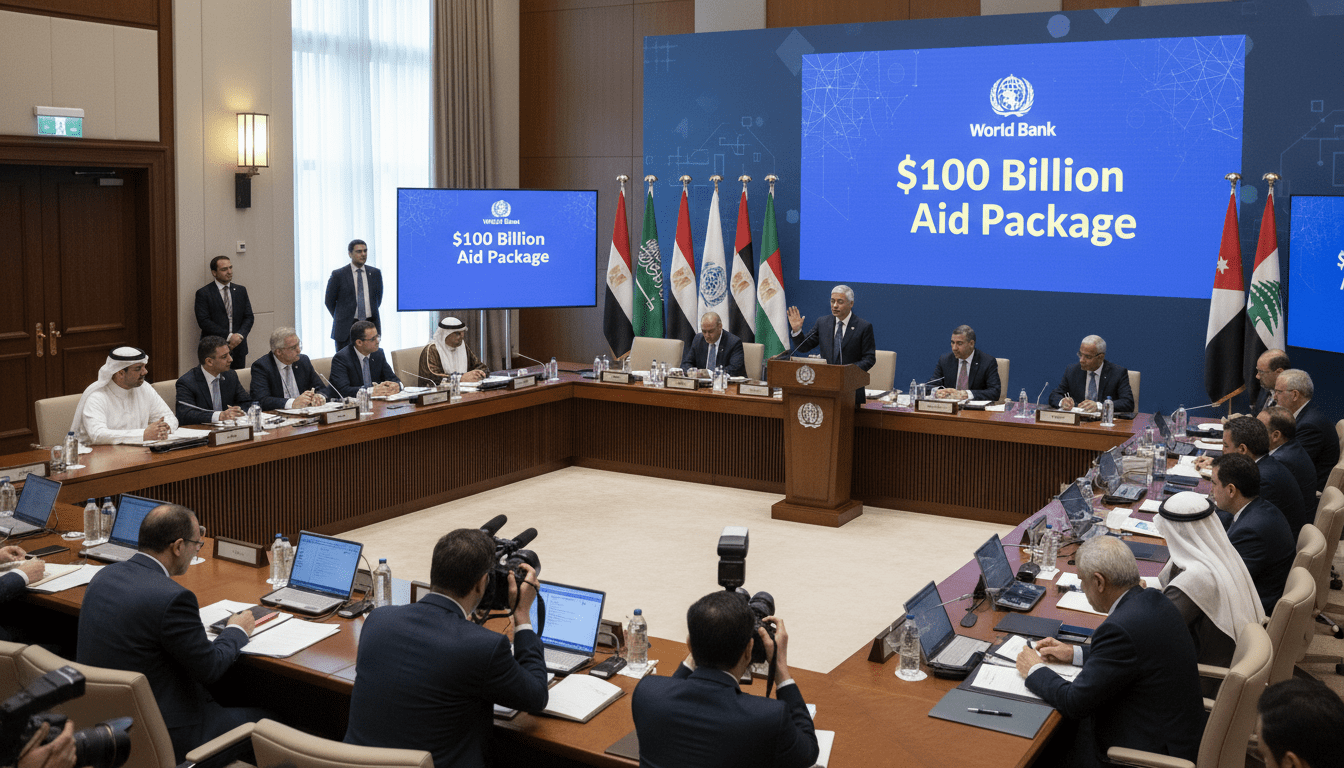
The World Bank announced a plan to mobilize between $80 billion and $100 billion over the next 15 months to help countries hardest hit by the Middle East war. The World Bank $100 billion aid package includes immediate disbursements, accelerated access to previously pledged funds, and reallocation of existing programs to blunt economic fallout. Bank President Ajay Banga made the announcement on the sidelines of the spring meetings of the World Bank and the International Monetary Fund.
Immediate Funding and Early Disbursements
In the coming weeks the World Bank expects to make an initial allocation of $20 billion to $25 billion to vulnerable countries. Countries affected by the conflict will be allowed to draw up to 10 percent of previously pledged support earlier than scheduled to meet urgent balance-of-payments and humanitarian needs. Bank officials said further sums of $30 billion to $40 billion could be freed within about six months through reprogramming of existing instruments.
These early measures are intended to stabilize markets and prevent acute liquidity shortages while longer-term funding arrangements are finalized. Officials cautioned that the remaining portion of the package will likely require more time to assemble and may depend on contributions from donors and multilateral partners.
Scale Compared with Past Crises
At the announced upper bound the package would exceed the financial assistance mobilized during the coronavirus pandemic, when roughly $70 billion was made available to vulnerable economies. World Bank leaders framed the effort as proportionate to the global economic shock emanating from disrupted energy and food markets.
Analysts noted the size of the proposed support reflects both the breadth of the economic spillovers and the potential for prolonged damage if the conflict drags on. The funding aims to address immediate financing gaps while limiting measures that could intensify inflationary pressures.
Economic Risks Highlighted by World Bank and IMF
World Bank Executive Board members and IMF leadership emphasized the broader macroeconomic risks stemming from the conflict. The IMF has already trimmed its global growth projection to 3.1 percent, down from what would have been about 3.4 percent absent the crisis, citing higher energy prices and trade disruptions.
Paschal Donohoe, chairing the World Bank board, warned that the crisis could cost millions of jobs and worsen food insecurity in emerging and low-income countries. He estimated that up to 15 million jobs could be at risk, while U.N. humanitarian agencies have signaled that as many as 45 million additional people could face hunger by mid-2026 if conditions deteriorate further.
Policy Guidance from Bank and IMF Leaders
World Bank President Ajay Banga and IMF Managing Director Kristalina Georgieva urged governments to adopt narrowly targeted, time-limited measures rather than broad subsidies that risk fueling inflation. They said fiscal and monetary authorities should prioritize assistance to those most exposed, including poor households and sectors reliant on food and fuel imports.
Georgieva stressed that a swift resolution of hostilities would allow the global economy to rebound more quickly, while a protracted conflict would deepen pressures on prices and growth. Both institutions called for coordination among multilateral lenders and donor countries to ensure timely delivery of support.
Operational Challenges and Donor Coordination
Officials acknowledged practical hurdles in deploying a package of this scale, including the need for donor commitments, legal and procurement constraints, and the political realities in recipient countries. Reallocating funds from existing programs can yield rapid resources, but it requires careful prioritization to avoid undermining ongoing development objectives.
The World Bank also indicated it will leverage guarantees, concessional financing, and blended instruments to multiply the impact of available capital. Coordination with the IMF and United Nations agencies will be crucial to align macroeconomic stabilization with humanitarian and food-security responses.
Market and Humanitarian Implications
The announcement aims to reassure markets and vulnerable populations, but its effectiveness will depend on speed and targeting. Energy-price spikes and shipping risks through key choke points have already increased costs for importing countries, amplifying inflation and balance-of-payments strains.
Humanitarian agencies and finance ministers will be watching the disbursement timetable closely to determine whether emergency food and social-safety-net programs can be scaled up in time to prevent widespread hunger and income loss.
The World Bank’s pledge marks one of the largest rapid-response initiatives for a conflict-driven global shock in recent years and signals an intensified role for multilateral finance in stabilizing fragile economies. The coming months will test whether the announced $80–100 billion can be converted into timely, well-targeted support that prevents a broader economic and humanitarian deterioration.
