
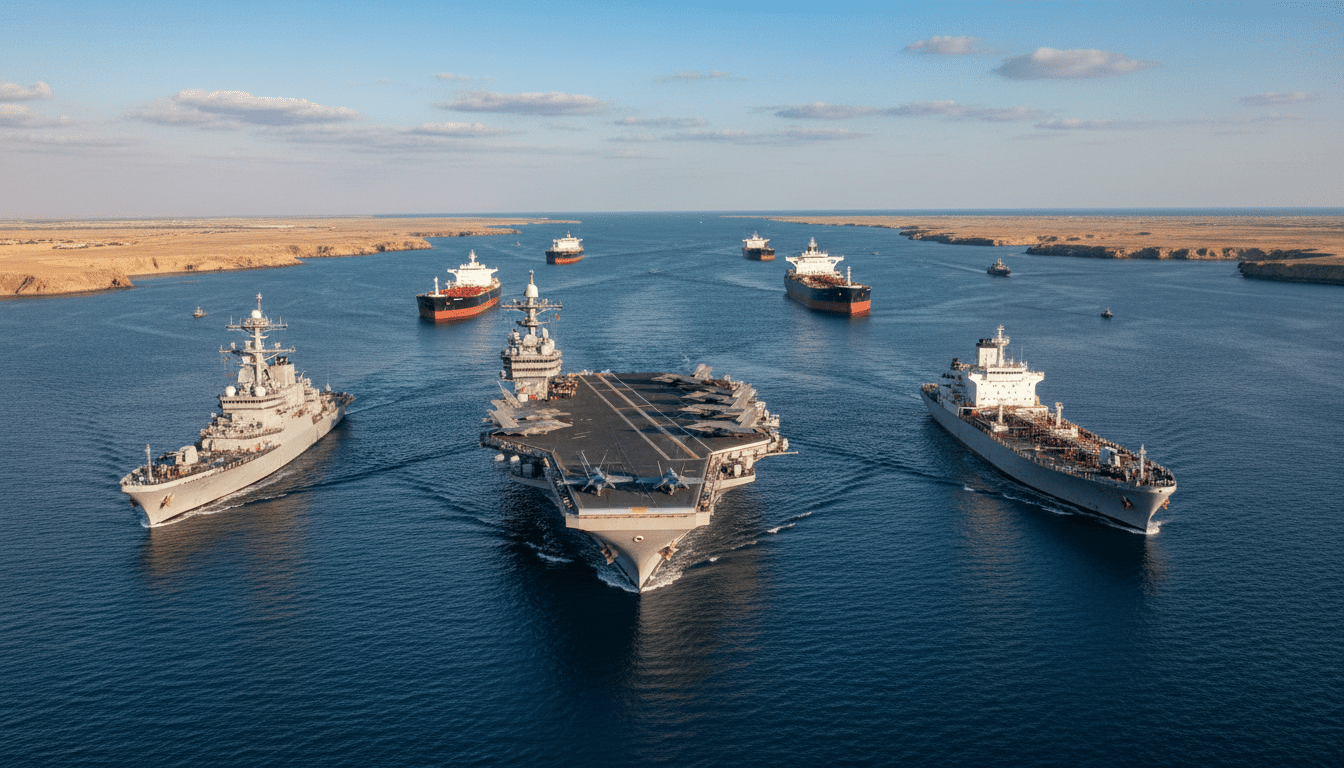
Strait of Hormuz blockade Deepens Global Energy Shock as US Moves to Seal Waterway
US moves to seal the Strait of Hormuz after failed Pakistan talks, slashing daily ship transits and driving global energy and food prices higher. Markets wobble.
Since the Iran conflict began in late February, a de facto Strait of Hormuz blockade has choked one of the world’s busiest maritime chokepoints and pushed commodity markets into turbulence. Shipping through the waterway fell from roughly 150 daily transits to as few as five, tightening supplies of crude oil and other goods. The sudden shift has translated into higher energy and food costs worldwide, prompting urgent diplomatic and security responses.
Shipping Through Hormuz Collapses
Commercial vessel traffic in the Strait of Hormuz plunged after Iran restricted passage in the wake of the conflict that erupted at the end of February. Maritime insurers raised premiums and several shipping companies suspended calls at nearby ports, citing safety and economic risk. The collapse in daily transits has created bottlenecks that extend beyond oil, affecting chemical and bulk cargoes that routinely cross the channel.
Maritime analysts say the drop in ship movements is unprecedented for peacetime disruptions of this scale and has forced traders to seek longer, costlier routes. The constriction of supply chains has already fed into higher prices for refined fuels and grain in spot markets. Ports in the Persian Gulf and transit hubs in the region are reporting backlogs as vessels await clarity on escort and security arrangements.
US Announces Blockade of the Strait of Hormuz
Following unsuccessful negotiations in Pakistan last weekend, the United States announced it would enforce a blockade of the Strait of Hormuz with the stated aim of preventing Iran from exporting oil. The move, framed by Washington as economic pressure on Iran’s leadership, marks an escalation in military and economic tactics in the region. US officials said the blockade is intended to curtail a principal revenue source for Iran’s ruling establishment.
Details of the blockade’s implementation remain limited, and Pentagon officials have signaled a mix of naval interdiction, sanctions enforcement, and targeted port controls. International legal questions about freedom of navigation and the scope of maritime interdiction have been raised by allies and shipping groups, who warn that unilateral measures could further destabilize global trade flows.
Pakistan Talks Fail to Resolve Hormuz Dispute
Diplomats from the United States and Iran met in Pakistan to try to negotiate a cessation of hostilities and address maritime access, but delegations left without a settlement. The Strait of Hormuz became a focal point of those talks, with each side unwilling to accept the other’s terms on control and commercial passage. Observers say the failure to bridge gaps in Pakistan clarified that the waterway would remain a bargaining chip in broader conflict dynamics.
Sources familiar with the negotiations described tense sessions over verification and enforcement mechanisms, and noted that mutual distrust undercut compromises on maritime guarantees. After the talks collapsed, the US announcement to impose its own blockade followed within days, closing the diplomatic window many had hoped would ease maritime tensions.
Economic Ripple Effects Reach Global Markets
The immediate economic fallout has been a sharp rise in energy prices as traders priced in reduced Persian Gulf flows and increased transit risk. Higher oil and fuel costs are cascading into food prices through elevated transport and fertilizer expenses, compounding inflationary pressures in import-dependent countries. Several national governments have moved to tap strategic petroleum reserves and to consult on coordinated market responses.
Businesses reliant on just-in-time shipping are grappling with delays and surcharges that are being passed on to consumers, while carriers reroute vessels around Africa’s Cape of Good Hope to bypass the Strait of Hormuz. That alternative route adds days or weeks to transit times and significantly increases fuel and chartering costs, which industry analysts say could sustain price volatility for months if the blockade persists.
Domestic and Political Reactions in the United States
In Washington, the announcement of the blockade prompted mixed reactions across political lines and among constituents. Supporters of the measure argue that cutting Iran’s oil revenue stream is a necessary lever to force concessions, while critics warn that maritime interdiction risks military escalation and global economic pain. Political commentators note that the move will test the administration’s ability to maintain allied cohesion and to manage domestic messaging about the costs of confronting Tehran.
Correspondents reporting from New York highlighted that voters in key constituencies expressed concern about commodity prices and supply disruptions. Analysts tracking public sentiment say the economic impact of the blockade could become a decisive political factor if higher living costs persist into upcoming election cycles.
Regional Security Dynamics and Shipping Alternatives
Regional navies and international coalitions are racing to establish rules of engagement and escort protocols to protect commercial traffic near the Gulf. Countries bordering the Strait are increasing surveillance and deploying additional patrol assets, while shipping associations are issuing advisories to vessel operators. Legal experts emphasize the need for multilateral coordination to ensure navigation rights are preserved under international law.
Commercial shippers are weighing contingency plans, including transshipment and overland routes, but the capacity and cost limitations of those options mean most bulk oil flows will still rely on maritime corridors. Energy-importing nations are accelerating talks about diversification of suppliers and demand-management measures to blunt the immediate impact on domestic markets.
The unfolding Strait of Hormuz blockade has quickly become the central flashpoint of the wider Iran conflict, with immediate economic consequences and uncertain security risks. As diplomatic channels remain strained and military measures are deployed, governments and businesses face a growing imperative to coordinate responses that protect commerce while averting a broader escalation. Reports of related developments, including proposed health-care reforms and German-Ukrainian government consultations, indicate that the blockade’s effects may ripple across unrelated policy areas as leaders balance domestic priorities with urgent international crisis management.
