
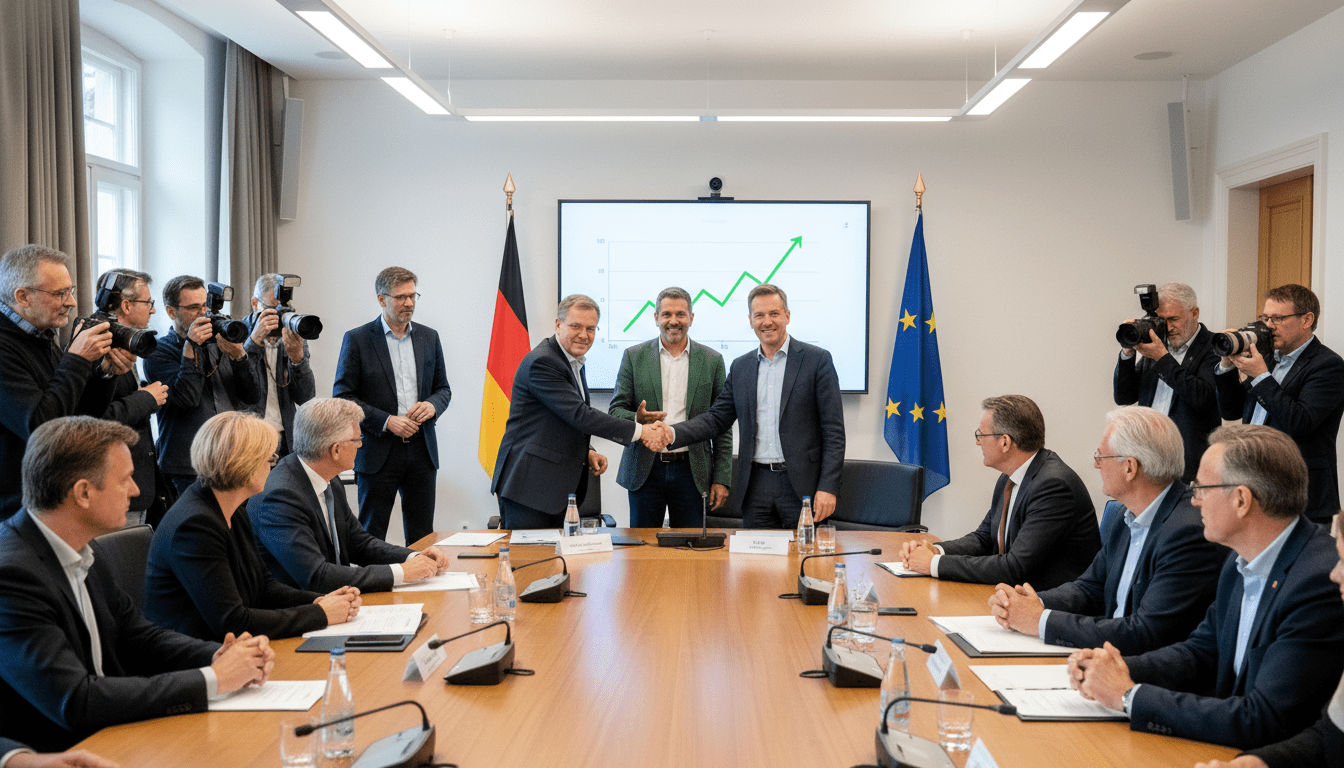
Green–CDU coalition in Baden-Württemberg launches formal talks, eyes Ö zdemir vote on May 13
Greens and CDU in Baden-Württemberg begin coalition talks on April 15, 2026, with a 48-point plan and aim to elect Cem Özdemir as minister-president on May 13.
The Greens and the Christian Democratic Union have moved from exploratory talks to formal coalition negotiations in Baden-Württemberg, opening talks on April 15, 2026, and targeting a vote for Green leader Cem Özdemir in the state parliament on May 13, 2026. Party leaders presented a 48-point exploratory paper as the basis for negotiations, saying the document provides a foundation for a detailed reform contract. CDU chairman Manuel Hagel and Green negotiator Özdemir described the shift as the start of intensive drafting toward a governing agreement.
Groundwork and political timetable
The announcement follows weeks of sondierungen, or exploratory discussions, that ended with both parties agreeing to intensify talks beginning Wednesday, April 15, 2026. Manuel Hagel has publicly set May 13, 2026, as the target date to have Cem Özdemir elected minister-president by the Landtag, a timetable that will shape the pace and priorities of the coming weeks. Observers say the tight schedule will pressure negotiators to deliver a clear program and settle contentious items quickly to meet the parliamentary deadline.
Key commitments in the 48-point paper
The 48-point exploratory paper covers areas from administration reform to education and security, and negotiators described it as a workable blueprint for a full coalition contract. Proposals include shorter timelines for company registration, a state-backed fund to facilitate business capital access, and a technology strategy aimed at boosting sectors such as artificial intelligence, robotics and space. The document also pledges broad administrative digitization and an "efficiency law" designed to phase out certain reporting obligations by the end of 2027 unless explicitly exempted.
Education and childcare changes
Education and early childhood policy are prominent in the draft agreement, with both parties committing to make the final year of kindergarten mandatory and free for all children to better prepare them for school. The plan also calls for a uniform statewide ban on private smartphone use in schools, a move framed as an effort to reduce distractions and promote learning. These measures reflect compromises struck during exploratory talks, where both the Greens and CDU sought visible, voter-facing policy wins.
Economic and innovation agenda
Economic measures in the exploratory paper aim to accelerate startups and scale-ups, including a proposal that company registrations be completed within 48 hours and the creation of a public fund to ease access to capital for early-stage firms. The parties agreed to pursue a coordinated high-tech strategy to strengthen regional strengths in AI, robotics and aerospace technologies, with the stated goal of attracting investment and research to Baden-Württemberg. Officials said streamlined digital administrative procedures will be prioritized to reduce bureaucracy for businesses and citizens alike.
Security measures and surveillance technology
The fledgling coalition plans to expand intelligent video surveillance and continue a police recruitment drive, framing these steps as responses to public safety concerns. On the controversial use of external analytics software such as Palantir, the parties signaled a shared preference for transitioning to a European alternative by 2030, while maintaining some short-term capabilities for police analysis. Negotiators must reconcile Green civil liberties commitments with CDU security priorities as they translate these pledges into binding legal and budgetary measures.
Negotiation dynamics and public expectations
Both sides described the exploratory talks as hard-fought but constructive, with Green negotiator Cem Özdemir calling the outcome a strong basis for a reform pact that can win voter confidence. The CDU has stressed steady governance and administrative efficiency, while the Greens have pushed for stronger climate, education and technology commitments, creating a mix that negotiators say can appeal to a broad electorate. Analysts caution that translating a 48-point outline into a detailed coalition agreement will require compromises on financing, legal wording and implementation timelines.
The coming weeks will test whether the parties can reconcile differences on surveillance, fiscal priorities and regulatory reform while keeping to the May 13, 2026, schedule for a confidence vote in the Landtag. Observers expect working groups to form around the paper’s major clusters—education, economy, administration, security and tech—and to report progress to the chief negotiators in regular sessions. If talks proceed smoothly, Baden-Württemberg could see a new government program that blends the Greens’ reform ambitions with the CDU’s emphasis on order and economic stability.
