
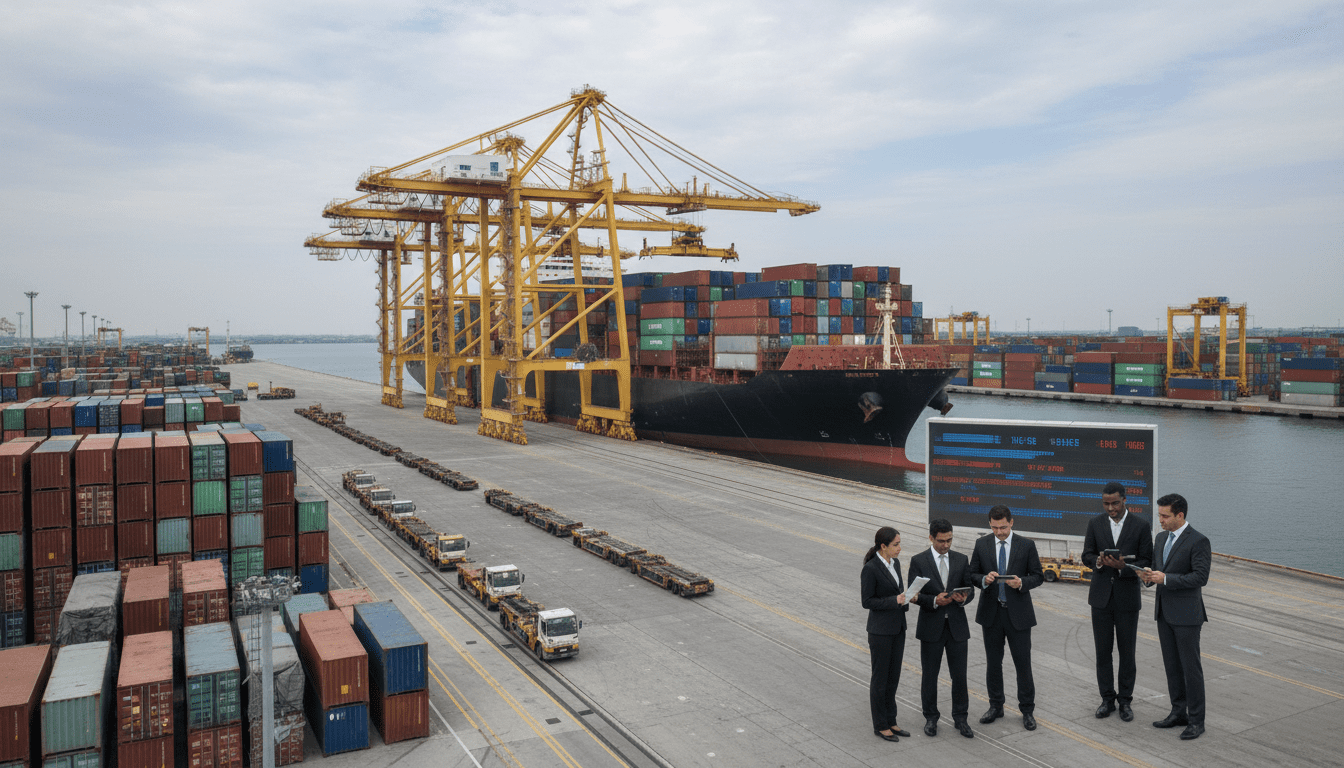
China export slowdown deepens in March 2026 as energy costs and Iran conflict weigh on shipments
China export slowdown deepened in March 2026: exports rose 2.5% year‑on‑year while imports jumped nearly 28%, shrinking the trade surplus and hitting US‑bound shipments.
China’s export slowdown became pronounced in March 2026, with customs data showing outbound shipments rose just 2.5% from a year earlier. The weak performance followed double‑digit growth in January and February and fell well short of analysts’ earlier expectations for stronger expansion. Rising energy prices tied to the Iran conflict and heightened global trade uncertainty were cited as key factors dragging on exporters.
Exports rose only 2.5% in March 2026
In March, China’s exports expanded by 2.5% compared with March 2025, a sharp deceleration from growth rates above 20% recorded in the first two months of the year. Market consensus had been for roughly 9% year‑on‑year export growth, leaving the official figures well below forecasts. The slowdown signals that momentum from early‑year restocking and seasonal demand has cooled as external risks have increased.
Analysts note the timing: March’s figures capture the immediate knock‑on effects of geopolitical shocks and commodity price swings that began to intensify in recent weeks. Export volumes into several major markets softened, suggesting the weakness was not limited to a single sector or region.
Imports jump amid rising energy costs
Chinese imports surged by nearly 28% in March, driven in large part by higher energy bills and stronger commodity inflows. Pinpoint Asset Management analyst Zhiwei Zhang attributes much of the import surge to a sharp rise in energy prices, which pushed up the value of shipments into China. The spike in import values narrowed the country’s trade margin despite only modest export gains.
Higher import bills reflect both increased volumes of energy and the pass‑through effect of elevated global oil and gas prices onto the value of traded goods. For policy makers and companies, the immediate consequence is a heavier import bill that can compress margins for trade‑dependent industries.
Shipments to the United States plunged
The customs data also showed a pronounced drop in exports bound for the United States, with shipments down 26.5% year‑on‑year to $29.4 billion in March. The retreat in US‑bound exports was one of the more striking elements of the monthly report and was linked by analysts to weaker external demand and broader macroeconomic uncertainty. Reduced orders from US buyers and logistical disruptions tied to geopolitical tensions have both been mentioned as contributing factors.
A fall of this magnitude to a single market amplifies concerns about the uneven nature of China’s external recovery and highlights the sensitivity of some export categories to cyclical swings in demand.
Trade surplus narrows to lowest level in over a year
As a result of the divergence between modest export growth and surging import values, China’s trade surplus contracted to its smallest level in more than a year. The narrower surplus reflects the immediate impact of energy‑intensive imports and the relative weakness of overseas orders. For the broader economy, a shrinking trade surplus reduces an important source of foreign exchange inflows and can complicate macroeconomic management.
Policy makers will be watching whether the squeeze on the trade balance represents a temporary price effect or the start of a more persistent shift in external demand that would require a fiscal or monetary response.
Analysts point to semiconductors and green tech as offsetting factors
Despite the March weakness, several analysts say China’s exports should remain at a “good level” over coming quarters because of strong demand for semiconductors and green technologies. Zichun Huang of Capital Economics argues that elevated global demand for chips and renewable energy equipment can help sustain shipments even amid broader headwinds. That structural lift from technology and clean energy sectors may partially offset cyclical weakness in other manufacturing categories.
Still, analysts caution that rising oil prices and continuing geopolitical risk could dampen global consumption growth and shift purchasing patterns, potentially altering the outlook for export‑oriented firms.
Q1 GDP release scheduled for April 16, 2026
China’s National Bureau of Statistics is scheduled to publish official first‑quarter GDP figures on Thursday, April 16, 2026. Economists polled ahead of the release were forecasting growth of about 4.8% year‑on‑year for Q1, modestly higher than the 4.5% recorded in the final quarter of 2025. The upcoming GDP print will be scrutinized for signs that domestic demand is compensating for external pressures and for clues about whether trade dynamics are weighing on overall growth.
Investors and policy makers will parse the data for sectoral detail, looking in particular at industrial production, investment, and consumption to assess whether the export slowdown is spilling over into the domestic economy.
Looking ahead, firms and officials face a delicate balancing act: managing the short‑term fallout from higher energy prices and regional instability while trying to harness stronger structural demand for high‑tech and green goods to stabilise external performance.
