
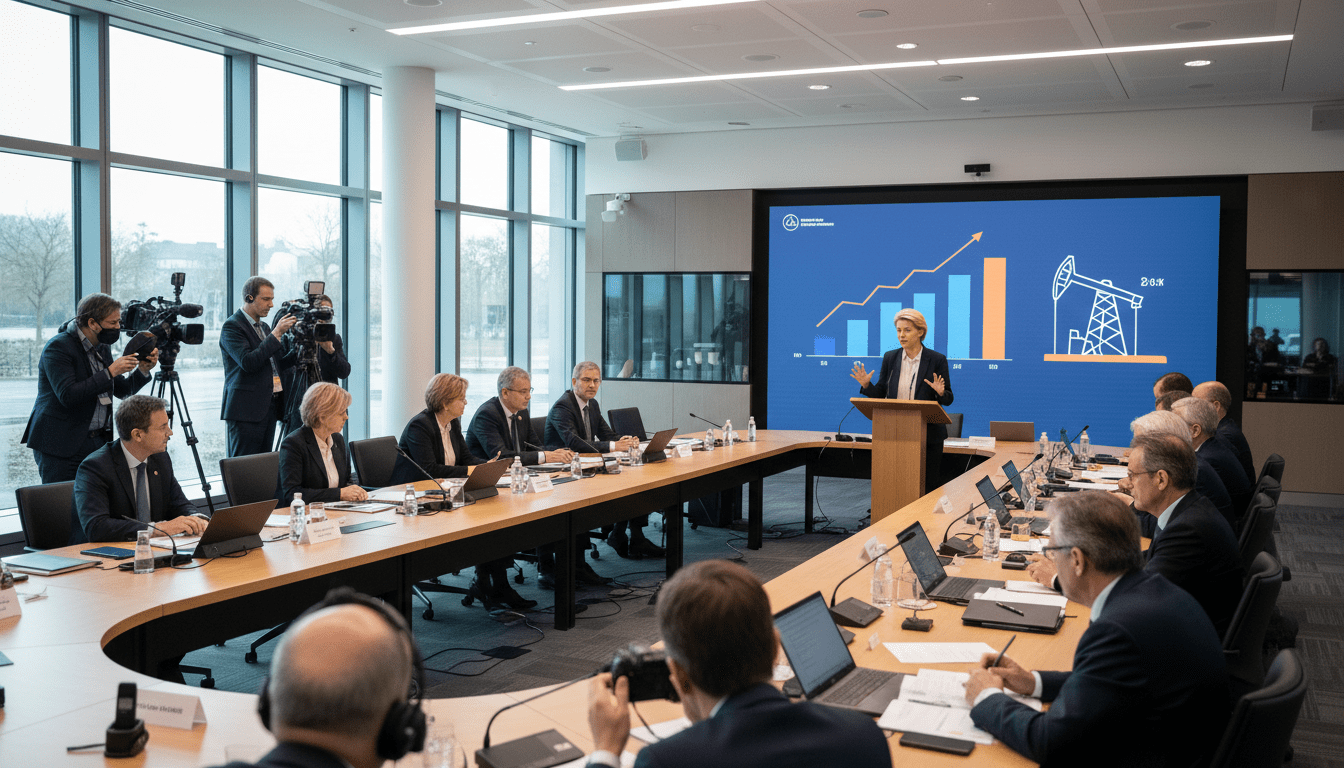
EU Loosens State Aid Rules to Help Firms Shielded from Cost Surge after Iran Conflict
EU to relax state aid rules temporarily, letting governments offset fuel, fertilizer and electricity cost hikes from the Iran conflict to support key industries.
The European Commission has proposed a temporary relaxation of EU state aid rules to allow governments to take on a larger share of companies’ rising costs after the conflict that began on February 28, 2026. The move is designed to let member states support sectors hit hardest by surging fuel, fertilizer and electricity prices without immediately triggering formal competition investigations. This proposal signals a rare broadening of leeway for national interventions in order to limit social and economic fallout.
Commission proposal detailed
The Commission’s draft would permit targeted payments and measures aimed at compensating firms for cost increases linked to the region-wide disruption in oil and gas supplies. Under the plan, aid could cover part of additional expenses that companies have incurred since the onset of the Iran conflict on February 28, 2026. The approach is framed as temporary and conditional, with safeguards intended to limit distortions to the single market.
The text indicates particular attention to energy-intensive industries and to sectors where short-term state support can prevent immediate bankruptcies or supply-chain collapse. While the Commission retains its mandate to police member-state aid, the proposal provides a legal basis for quicker approval of emergency measures when they meet defined criteria. Member states will need to justify interventions as proportionate and strictly time-bound.
Which sectors stand to benefit
Agriculture, road transport and shipping are identified as priority recipients of the relief measures under the proposal. Farmers and agribusinesses face elevated fertilizer and fuel bills that have pushed production costs sharply higher, undermining margins and food prices. Road hauliers and shipping firms are also exposed to volatile bunker and diesel prices, with implications for cross-border freight and household inflation.
Energy-intensive manufacturers could receive particularly large support, with the proposal allowing states to underwrite more than 50 percent of electricity costs in certain cases. That threshold acknowledges the acute stress on industries such as steel, chemicals and cement, where power represents a major share of production expenses. The Commission frames such measures as tools to preserve industrial capacity and employment in the short term.
EU oversight and competition concerns
Normally, the Commission enforces strict state aid rules to prevent unfair advantages and market fragmentation across the EU. Those rules are designed to keep competition on a level playing field by scrutinizing subsidies, tax benefits and rescue packages. The proposed relaxation therefore marks a calibrated shift rather than a wholesale abandonment of oversight.
Officials say measures must be narrowly tailored, proportionate and transparent to avoid long-term distortions. The Commission will likely insist on clear exit criteria and reporting obligations so support does not become permanent protection. Legal safeguards are expected to include limits by sector, caps on aid, and requirements that beneficiaries cannot use funds to expand market share at the expense of rivals.
Member-state actions and economic context
Several EU governments have already adopted national measures to blunt the economic impact of higher energy and commodity costs. Germany, Italy, Poland and Hungary have introduced steps such as fuel price caps, temporary tax reductions, or direct payments to affected sectors. These unilateral actions prompted concern in Brussels about divergent national responses that could create competitive imbalances.
The immediate driver of higher costs is market anxiety about sustained interruptions to oil and gas deliveries, which has pushed energy prices upward across Europe. That volatility has fed through to fertilizer production inputs and transport costs, magnifying the hit to domestic producers and logistics companies. Policymakers argue the Commission’s proposal aims to harmonize emergency responses while minimizing market disruption.
Potential market effects and next steps
If the Commission’s proposal is adopted, member states will have a clearer legal route to design relief schemes that can be approved rapidly under EU law. That could reduce the need for ad hoc national measures that differ widely across borders. However, critics caution that generous subsidies risk propping up inefficient firms and postponing necessary structural adjustments in energy use and supply chains.
The Commission will now consult with member states and may refine conditions tied to duration, eligibility and monitoring. Any change to EU state aid rules will also face scrutiny from industry groups, trade associations and competition watchdogs concerned about the balance between emergency relief and long-term market integrity. Timing for final adoption will depend on negotiations among member governments and legal review.
Short-term relief is expected to ease cash-flow pressures for vulnerable firms, but officials emphasize that the measures are not a substitute for durable solutions to energy security and market stability. The Commission has stressed that state support must complement broader efforts to diversify supply, accelerate energy efficiency and solidify cross-border coordination.
The proposal underscores Brussels’ effort to strike a balance between protecting firms and preserving the integrity of the EU single market during an international crisis that has rapidly reshaped energy and commodity dynamics.
