
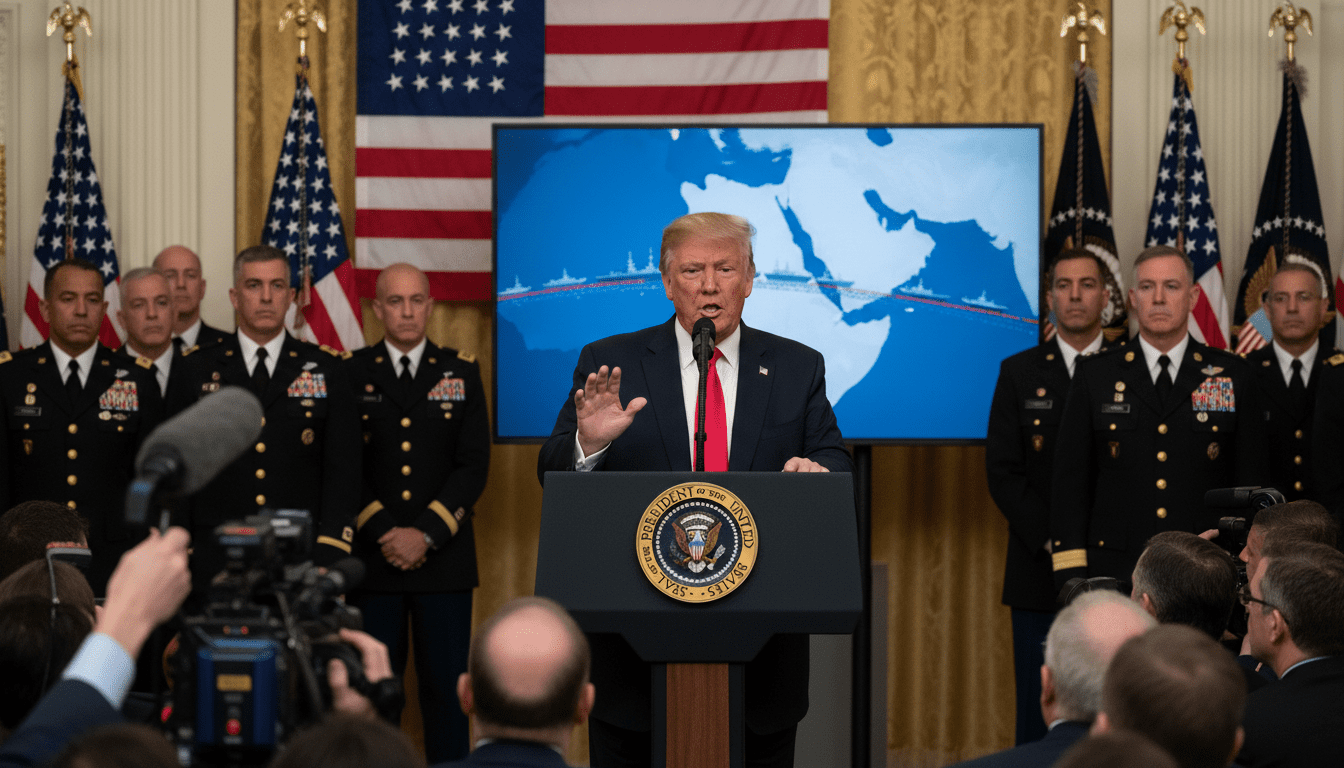
Trump Orders U.S. Blockade of Iranian Ports in Strait of Hormuz
President Trump orders a U.S. blockade of Iranian ports in the Strait of Hormuz after talks failed; U.S. forces to begin enforcement Monday, April 13, 2026.
The White House announced on April 13, 2026, that the United States will implement a U.S. blockade of Iranian ports in the Strait of Hormuz after diplomatic discussions with Tehran ended without an agreement. President Trump said the military measure would begin Monday morning and framed the move as an effort to prevent Iran from advancing toward a nuclear weapon. The announcement follows reported negotiations that did not produce a deal and marks a significant escalation in U.S.-Iran tensions.
Presidential Announcement and Timing
President Trump addressed the nation and briefed senior officials before making the public announcement that a blockade would take effect the following morning. The administration set a specific start time, saying enforcement would begin at 10 a.m. local time on Monday, April 13, 2026, signaling a rapid transition from diplomacy to direct military action. Officials described the measure as a targeted effort to curb Iran’s ability to export oil and to deny revenue that could support nuclear ambitions.
Diplomatic Breakdown Before Blockade
U.S. and Iranian delegations held talks that the administration characterized as unsuccessful, with negotiators unable to bridge key disagreements, according to U.S. statements. American officials said those discussions made clear Iran’s continued pursuit of capabilities the United States and its allies view as a proliferation risk. The collapse of talks prompted U.S. leaders to pursue a coercive strategy intended to pressure Tehran through maritime restrictions rather than renewed sanctions alone.
Scope and Enforcement in the Strait
The stated operation focuses on ports in and around the Strait of Hormuz, the narrow waterway through which a significant share of global petroleum shipments transit. U.S. military authorities indicated they would deploy naval assets to interdict vessels linked to Iranian oil exports and to enforce new restrictions on maritime traffic tied to that commerce. Officials emphasized the action was designed to be precise, but they also acknowledged the move would require sustained naval presence and coordination with partners to be effective.
Economic and Shipping Consequences
Analysts warned that the blockade could disrupt global energy markets and raise shipping insurance costs if vessels alter routes to avoid the strait or if commercial operators face increased inspections. The Strait of Hormuz is a strategic chokepoint for crude oil and liquefied natural gas, and restrictions there can quickly ripple through international supply chains. Markets typically react to heightened geopolitical risk with price volatility, and industry participants may seek alternatives or temporary safeguards to mitigate immediate impacts.
Regional Military Posture and Risks
Regional militaries and naval forces are likely to respond to the blockade by adjusting deployments, increasing surveillance, and preparing contingency plans, defense analysts said. The proximity of commercial traffic to naval operations raises the risk of accidents or confrontations that could inadvertently escalate into broader conflict. Commanders on all sides will be tasked with balancing enforcement objectives against the need to avoid incidents that could draw other states into hostilities.
International Diplomatic Responses Expected
Foreign governments and international organizations are expected to call for calm while urging renewed diplomatic engagement to prevent further escalation. Allies with interests in regional stability may seek consultations with Washington to coordinate responses or to propose parallel diplomatic initiatives. Some states could publicly support efforts to constrain Iran’s nuclear ambitions while privately pressing for a return to negotiation channels that could ease tensions.
The U.S. blockade of Iranian ports in the Strait of Hormuz marks a clear shift from diplomacy to military enforcement after talks ended without a deal, and it will test the capacity of the United States and its partners to manage a prolonged maritime operation without triggering wider conflict.
