
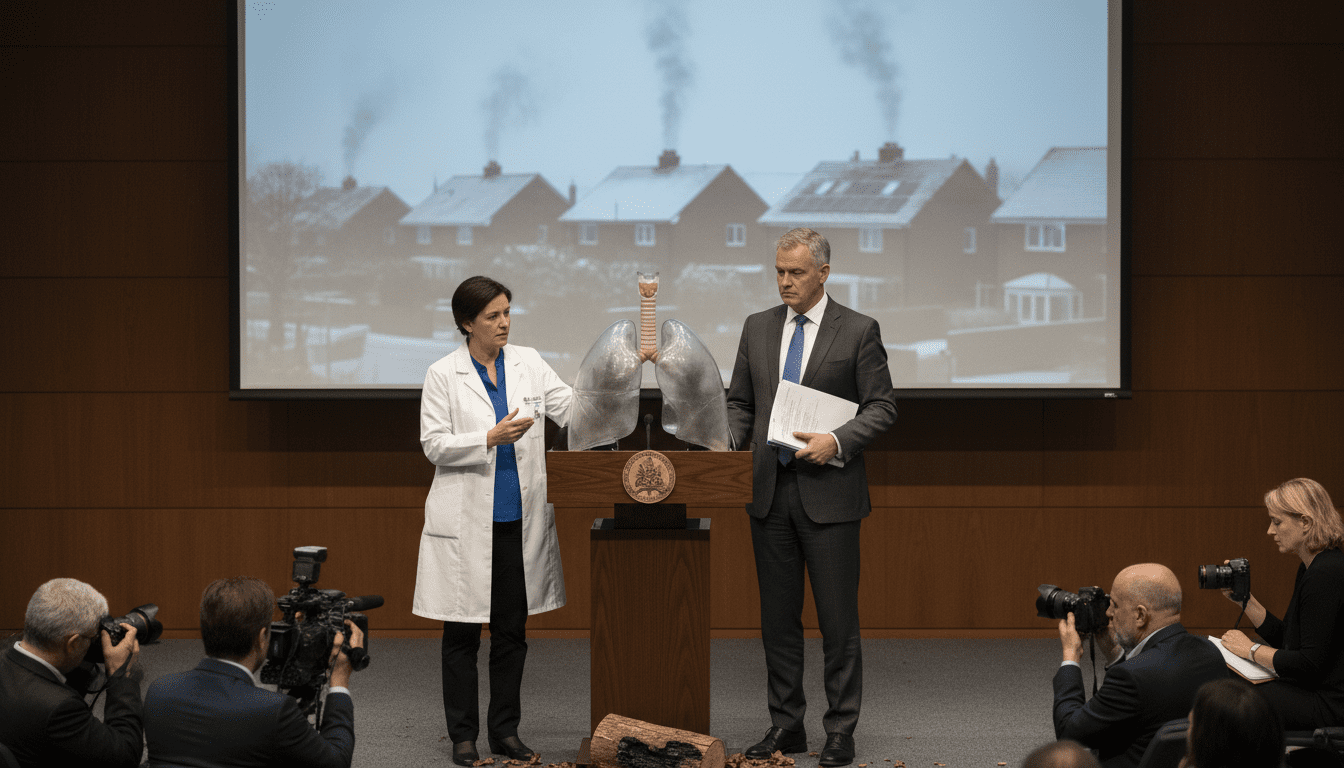
Residential wood burning tied to more than one-fifth of U.S. winter PM2.5 exposure, study finds
Northwestern researchers say residential wood burning contributes over 20% of U.S. winter PM2.5 exposure nationwide, linked to roughly 8,600 premature deaths each year.
A new Northwestern University analysis concludes that residential wood burning — the use of fireplaces, stoves, furnaces and boilers in homes — accounts for more than one fifth of Americans’ exposure to fine particulate matter (PM2.5) during winter months. The study, published on Jan. 23 in Science Advances, estimates that wintertime pollution from residential wood combustion is associated with about 8,600 premature deaths annually and highlights unexpected urban and racial disparities in exposure and health outcomes.
Study quantifies wood burning’s contribution to winter pollution
The research team found that although just 2 percent of U.S. households rely on wood as their primary heating source, residential wood burning contributes roughly 22 percent of wintertime PM2.5 across the continental United States. PM2.5 particles are small enough to penetrate deep into the lungs and enter the bloodstream, and long-term exposure is linked to cardiovascular and respiratory disease as well as increased mortality. By isolating the contribution of wood combustion, the study positions residential wood burning among the largest single sources of fine particulate pollution in cold months.
Urban areas and people of color carry disproportionate burden
Contrary to common assumptions that wood smoke is mainly a rural problem, the study finds the greatest health impacts occur in urban and suburban population centers. Emissions generated in suburban neighborhoods often drift into denser city cores, increasing exposure where more people live. The researchers also report that people of color face higher exposure and worse health outcomes from residential wood smoke despite contributing less to emissions themselves, a disparity the authors link to higher baseline mortality rates and historical discriminatory policies that amplify vulnerability.
High-resolution modeling maps pollution neighborhood by neighborhood
To reach these conclusions, the team used residential wood-burning data from the U.S. Environmental Protection Agency’s National Emissions Inventory and ran a high-resolution atmospheric model over a grid of 4 km by 4 km cells. The model incorporated meteorology, terrain, chemical transformations and hourly emissions to simulate how wood smoke travels, disperses and forms secondary particulate matter. By comparing model runs with and without residential wood-burning emissions, the authors quantified the incremental PM2.5 attributable to home heating and identified localized hotspots that broader county or city averages would miss.
Health impacts and limitations of the analysis
The study links wintertime residential wood smoke to about 8,600 premature deaths per year based on long-term exposure relationships between PM2.5 and mortality. Researchers emphasized cardiovascular disease as a major pathway by which fine particles increase risk; inhaled PM2.5 can trigger inflammation, worsen chronic lung conditions and contribute to heart attacks and strokes. The authors also note an important limitation: the published estimate reflects outdoor exposures only and does not account for indoor particulate exposure from household burning, which could add further health burden.
Policy options and public-health implications
Researchers argue that because relatively few households account for a large share of winter PM2.5, facilitating a transition from burning wood to cleaner or non-burning heat sources could yield outsized improvements in air quality. Suggested measures include incentives for replacing old wood stoves, programs to accelerate adoption of heat pumps and electric heating, and local restrictions or burn bans during stagnant air episodes. The study’s authors underscore the potential for targeted interventions to improve urban air quality and reduce inequities, noting that reductions in residential wood emissions would benefit many who do not themselves burn wood.
Northwestern study leaders stressed the policy relevance of the findings. “Using alternative appliances to heat homes instead of burning wood would have a big impact on fine particulate matter in the air,” said Kyan Shlipak, who led the analysis. Daniel Horton, the paper’s senior author, added that attention to everyday home heating is warranted: “We frequently hear about the negative health impacts of wildfire smoke, but do not often consider the consequences of burning wood for heat in our homes.”
The research, supported by the National Science Foundation, frames residential wood burning not only as a source of local smoke but as a regional contributor to wintertime air pollution that disproportionately affects densely populated and historically disadvantaged communities. Transition policies that combine emissions monitoring, financial support for cleaner heating technologies, and community-focused outreach may be required to translate these findings into measurable public-health gains.
