
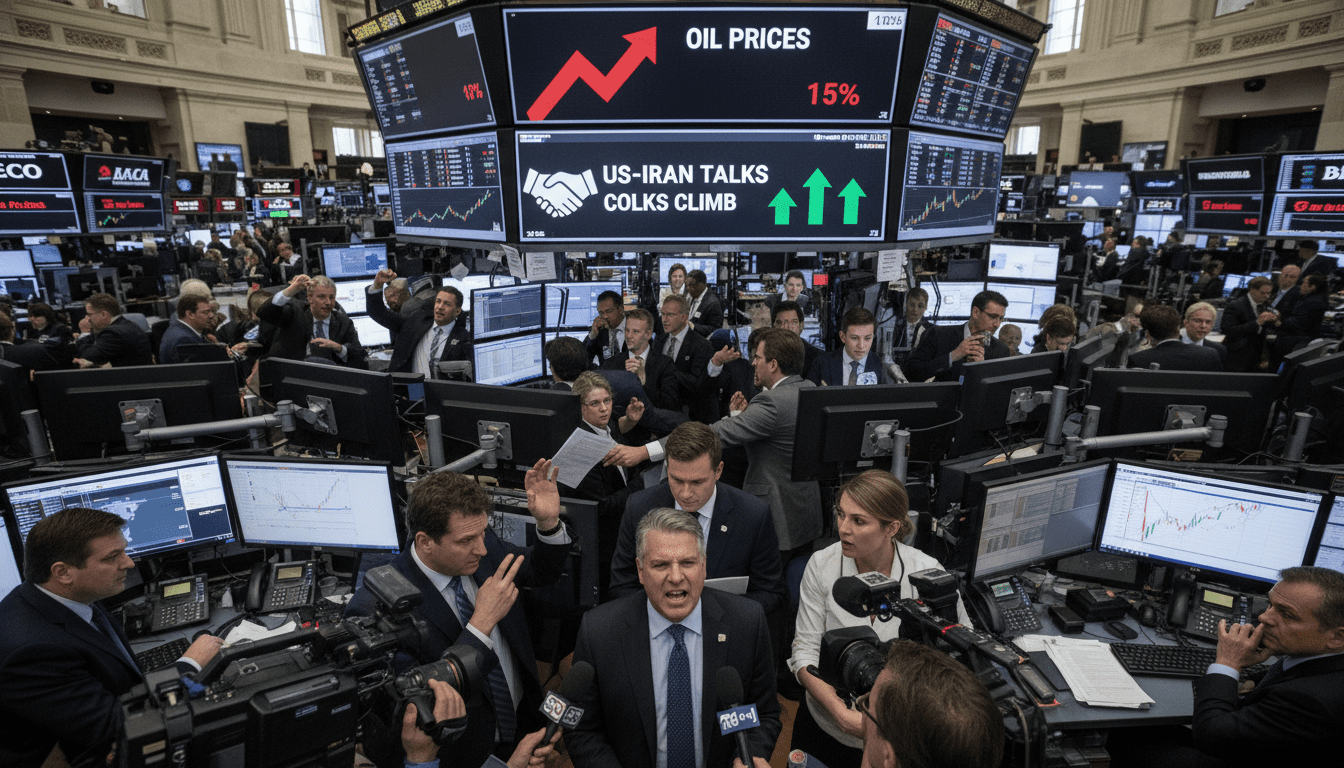
Markets Hold Steady as Strait of Hormuz Tensions Send Oil Prices Soaring
After US-Iran talks collapsed, markets opened modestly lower while oil and bond yields surged as concerns over the Strait of Hormuz pushed energy costs higher.
Global equity markets opened the week with only modest declines after weekend reports that peace negotiations between the United States and Iran had broken down, but energy and sovereign debt markets showed sharper reactions. The Strait of Hormuz emerged as the central risk factor, driving a jump in crude prices and prompting investors to reprice long-term yields. Despite headline-grabbing rhetoric, major indices in Asia and Europe avoided a broad sell-off on the first trading day following the talks’ collapse.
Asian Stock Markets Open with Measured Losses
The Nikkei 225 slipped about 1 percent in early Tokyo trading, reflecting investor caution rather than panic, while South Korea’s Kospi fell roughly 1.2 percent in Seoul. Germany’s DAX also opened near 1 percent lower, indicating a synchronized but contained reaction across major markets. Market participants described the moves as muted compared with earlier phases of the Iran crisis, when sudden shifts produced far larger volatility swings.
The restrained equity response stood in contrast to risk-pricing in other asset classes, suggesting traders weighed immediate corporate fundamentals against geopolitical tail risk. Analysts noted that investors may be awaiting clearer signals about shipping disruptions and policy responses before committing to larger equity reallocations. Liquidity conditions and month-end positioning likely also tempered selling.
Oil Prices Surge on Threat to Strait of Hormuz Shipping
Brent crude jumped more than 7 percent to about $102.17 a barrel, while US West Texas Intermediate climbed around 8.6 percent to near $104.91, as markets reacted to statements about a possible blockade of the Strait of Hormuz. European gas benchmarks also moved higher, with the TTF price up roughly 8 percent, reflecting concern that broader energy supply chains could be affected. Traders cited the prospect of dual blockades or interdictions in the narrow shipping lane as the immediate catalyst for the spike.
The route’s importance for Asian energy imports amplified the price response, since a substantial share of regional oil shipments transit the strait under normal conditions. Commodity desks said the jump in freight and insurance costs for tankers would add to the immediate price shock if passage remained uncertain. Short-term traders pushed volatility higher while longer-dated futures reflected a material risk premium for continued disruption.
Bond Markets Reprice Risk; Yields Reach Multi-Decade Levels
Government bond yields climbed across markets as investors shifted into duration amid heightened geopolitical uncertainty and inflation worries. Japan’s 10-year government bond yield rose to about 2.49 percent, a level not seen in roughly 29 years, while ten-year German bund yields edged up to around 3.06 percent—below March peaks but noticeably firmer. Similar moves appeared in Australia and New Zealand, where yields rose as traders priced in potential energy-driven inflation and fiscal responses.
Market strategists linked the yield moves to two dynamics: safe-haven demand lifting core sovereign rates while inflationary expectations rose alongside energy costs. Keisuke Tsuruta, an asset strategist at Mitsubishi UFJ Morgan Stanley Securities, noted that uncertainty over the outlook for the Middle East had elevated term premia and pushed investors toward re-evaluating interest-rate scenarios. Higher yields increase borrowing costs for heavily indebted governments and could narrow fiscal space for subsidies.
Japan Releases Reserves and Targets Critical Deliveries
Tokyo announced a temporary release from strategic oil reserves to blunt near-term supply stress, authorizing distributions intended to cover roughly 20 days of consumption from state stocks. The government also called on major domestic refiners and distributors to prioritize essential users, directing deliveries to hospitals and rural agricultural producers such as tea farmers who are beginning harvests. Officials said the country retains overall oil stocks sufficient into next year, but logistical bottlenecks and regional distribution shortfalls have created localized strain.
Media accounts cited that of about 45 vessels linked to Japan only three transited the Strait of Hormuz during a brief truce, underscoring how shipping hesitancy can disrupt normal trade flows. Authorities emphasized that crude shipments directly arriving from the Middle East form the backbone of Japan’s energy supply, making uninterrupted maritime access a strategic priority. The targeted allocation effort aims to limit immediate economic dislocation while officials explore further contingency measures.
Fiscal and Monetary Implications for Policymakers
High energy prices and rising bond yields present a policy dilemma for governments and central banks across Asia and Europe, as officials weigh targeted relief against longer-term fiscal sustainability. Several governments are already considering or implementing energy subsidies to shield households, a move that would increase public borrowing if prices remain elevated. Central banks face the prospect that higher consumer energy costs could feed into broader inflation, complicating decisions on interest-rate paths at a time when markets are recalibrating risk.
Economists say sustained disruption to shipping through the Strait of Hormuz could lower growth prospects by raising input costs for industry and eroding consumer purchasing power. Financial markets will likely monitor shipping reports, official statements on any interdiction plans, and diplomatic developments closely for signs of escalation or de-escalation. Policy responses that reduce uncertainty or secure alternative supply routes would be key to stabilizing both energy markets and sovereign debt dynamics.
Markets remained subdued in headline terms on the first trading day after the talks failed, but the sharp moves in oil and bond markets underscored how quickly geopolitical risk can ripple through global finance. Traders and policymakers will be watching shipping lanes, energy flows and official responses over the coming days as they reassess the economic and market implications of continued Strait of Hormuz tensions.
