
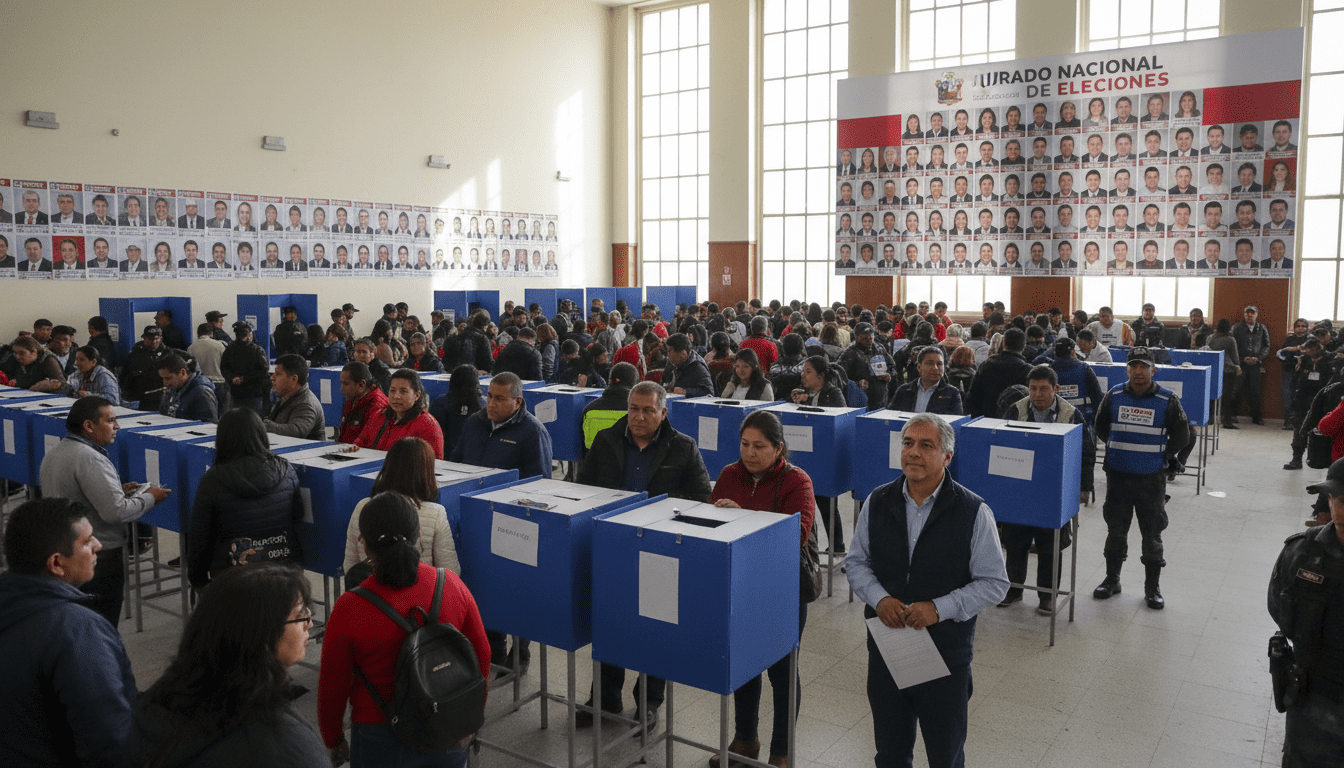
Peru presidential election opens with 35 candidates as voters head to the polls
Peru presidential election polls opened with 35 contenders and no clear frontrunner, as 27 million eligible voters cast ballots amid years of political instability and a likely runoff.
Polls open nationwide amid deep voter frustration
Polls opened across Peru at 7am local time and are scheduled to close at 5pm, with preliminary results due soon after the count begins. Election day follows a period of intense political turnover that has left many voters skeptical of established parties.
Since 2018 the country has seen a rapid succession of leaders, and that history of short-lived administrations has shaped public expectations for this vote. Many Peruvians told international news agencies they are disillusioned and undecided, citing corruption and weak governance as reasons for low enthusiasm.
A crowded ballot with broad ideological range
With 35 names on the presidential ballot, the contest presents an unusually wide field that spans the political spectrum and includes unconventional entrants. Voters can choose from mainstream politicians, media figures, entertainers, and candidates tied to longstanding political families.
The diversity of the slate complicates early projections because no candidate appears to be consolidating enough support to win outright. That fragmentation increases the probability that the top two finishers will advance to a runoff contest to decide the presidency.
Keiko Fujimori frames her bid around order and stability
One of the most prominent candidates is Keiko Fujimori, who is seeking the presidency for the fourth time after previously reaching runoffs in three elections. She has positioned herself as a guarantor of order and economic steadiness and has promised a rapid, forceful response to crime and migration problems if elected.
Fujimori’s candidacy remains polarizing because of her family’s legacy and the conviction of her father on charges related to abuses and corruption. Those historical grievances continue to shape debate about governance, accountability, and the limits of political inheritance in Peru.
Challengers gain attention with populist and law and order appeals
Trailing Fujimori in pre-election polls are candidates such as former Lima mayor Ricardo Belmont and popular comedian Carlos Alvarez, both of whom have campaigned on tough stances on crime. Belmont has attracted voters with his record as a municipal leader while Alvarez has leveraged his public profile to promote law and order messages.
Other high-profile contenders include a media baron and a political dynasty heiress, underscoring the unusual mix of personalities in the race. Several candidates have sought to tap into voter anger by offering decisive, short-term solutions to security and economic worries.
Public sentiment reflects disillusionment and fear of more instability
Street-level interviews recorded by international agencies show many Peruvians are unconvinced by the options on offer, expressing fatigue with recurring corruption scandals and institutional weakness. Some voters said they would abstain or spoil their ballots rather than back a candidate they perceive as part of the problem.
That sentiment creates uncertainty about turnout and the composition of the electorate on election day, factors that could reshape outcomes as results are tallied. Analysts say a high level of undecided or apathetic voters increases the chance that alliances and second-round dynamics will determine the final result.
Runoff likely and implications for governance
Because no major contender is polling above the threshold needed to win in the first round, a runoff on June 7 appears probable if the initial count reflects current polling. A second round would force the two leading camps into head-to-head competition and could prompt strategic shifts in messaging and alliances.
The need for a runoff would extend the campaign season and place renewed emphasis on coalition-building and voter mobilization. It would also intensify scrutiny of promises on security, economic policy, and institutional reform as candidates attempt to broaden their appeal.
A defeat or victory in a runoff could have immediate consequences for Peru’s governing capacity, particularly if the incoming leader lacks legislative allies. Observers note that durable stabilization will likely require not just a change of person but sustained institutional reforms and credible anti-corruption measures.
Peru’s presidential ballot is being watched closely at home and abroad because the result will shape the country’s approach to law and order, migration, and economic policy during a period of pronounced public distrust. The initial count will show whether any candidate can break through the crowded field or whether voters will return to the ballot box in June to settle the contest.
