
World ID Expands to Tinder and Ticketing as World Scales Orb Network
World ID verification is being deployed across dating, ticketing and enterprise services as World announces Orb expansion, Concert Kit, Selfie Check and agent-delegation features.
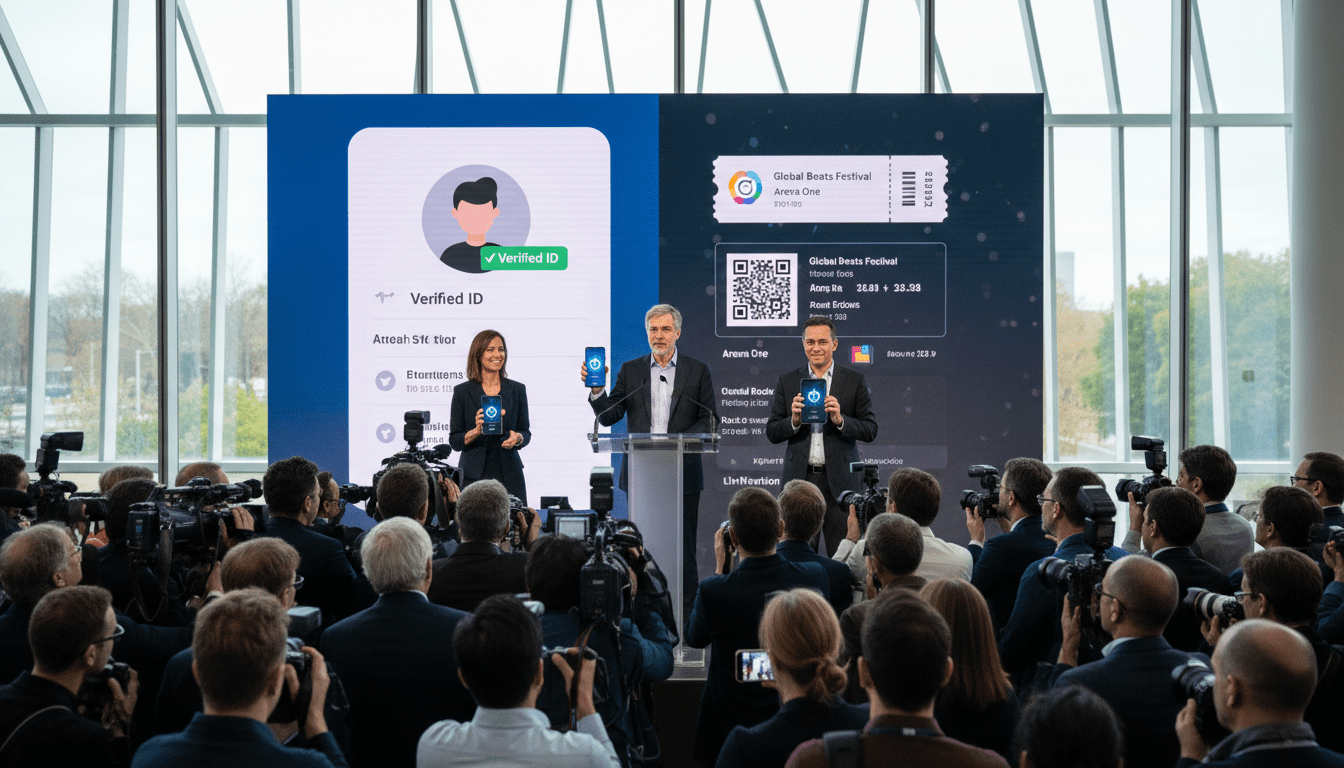
Sam Altman’s World unveiled a broad push on April 17, 2026, to embed World ID verification into consumer and business platforms, with Tinder among the first partners slated for global rollout. The company said the move is aimed at distinguishing human users from AI agents and bots while preserving anonymity through cryptographic proofs. World also announced a suite of product additions — including Concert Kit, enterprise integrations and a three-tier verification model — designed to increase adoption and ease of use.
World announces global Tinder integration
World said the company will expand a Tinder verification pilot first run in Japan into global markets, including the United States. Verified users who complete World’s process will receive a World ID emblem on profiles to signal they are human, the company said. World positioned the Tinder integration as a first consumer-facing deployment of its proof-of-human tools and expects the partnership to accelerate mainstream recognition of World ID.
Orb technology and three-tier verification model
World’s flagship verification device, the Orb, scans a user’s iris and converts the result into an anonymous cryptographic identifier known as a World ID. The company described this as a zero-knowledge proof-based authentication that verifies a real human without revealing personal identity. To address scale and convenience, World outlined three verification tiers: Orb iris scans as the highest level, an NFC-based government ID mid-tier, and a lower-friction Selfie Check that processes images locally on users’ devices.
Concert Kit aims to block scalpers on major platforms
The new Concert Kit product will allow artists and promoters to reserve tickets for World ID–verified humans, a measure intended to reduce sales to automated scalper bots. World said Concert Kit has been built to work with major ticketing platforms such as Ticketmaster and Eventbrite. The company named 30 Seconds to Mars and Bruno Mars as early partners planning to use the system for upcoming tours, highlighting demand from artists seeking to protect fans and ensure fair access.
Enterprise integrations target deepfakes and signature fraud
World announced integrations with enterprise services to address concerns around deepfakes and fraudulent digital signatures. The company said Zoom will offer World ID verification for meetings to authenticate human participants, and a Docusign integration will verify signatories. In addition, a collaboration with Okta has produced a beta system that can verify when an automated agent is legitimately acting on behalf of a human account.
Agent delegation and human-principal verification
Anticipating a web populated by agentic AI, World introduced an “agent delegation” capability that allows users to tie a World ID to a specific agent. The Okta-linked system is intended to signal to sites that activity executed by an agent is authorized by a verified human principal. World framed the feature as a way to preserve accountability and trust when people delegate tasks to AI helpers, while keeping the human’s identity separate from agent activity.
Privacy, fraud limits and scaling challenges
World emphasized privacy design across its options, stressing that Selfie Check performs maximum local processing so images remain on users’ devices. Company executives acknowledged that selfie-based verification has limits and can be spoofed, and they encouraged developers to choose the verification tier that matched their security needs. Scaling the Orb network has been a persistent hurdle, the company said, which is why it is increasing Orb deployments in New York, Los Angeles and San Francisco and offering a mobile verification service to bring Orbs to users.
World framed the broader rollout as a response to a shift in the online ecosystem, where AI-generated content and autonomous agents are rapidly proliferating. Executives argued that a practical proof-of-human framework can help platforms reduce fraud and improve user trust without linking verification to personal identity.
Final paragraph
World’s announcements on April 17 mark a strategic push to move World ID from niche experiments into everyday digital flows, from dating apps to ticket sales and enterprise meetings. The company’s success will hinge on whether its mix of hardware, cryptography and lower-friction options can overcome past scaling problems and user resistance. As the first major consumer and entertainment partners begin live deployments, the coming months will test whether World’s verification model can win broad acceptance without compromising privacy.
