
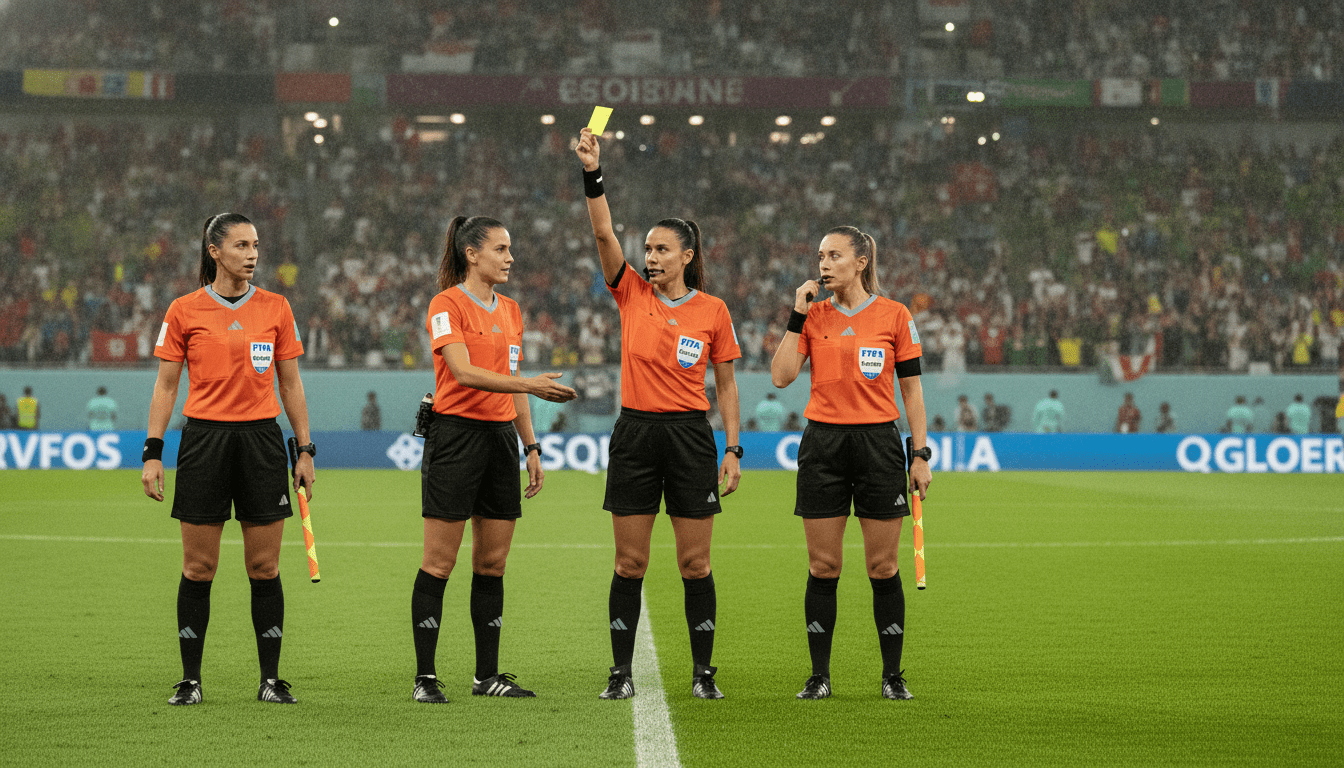
Women referees at the World Cup shine as Tori Penso’s all-female crew earns praise in Czech Republic v South Africa
Tori Penso’s all-female refereeing team drew praise in Czech Republic v South Africa as six women officials make history and advance inclusion at 2026 World Cup.
The presence of women referees at the World Cup was underscored when an exclusively female officiating crew led by American referee Tori Penso oversaw the Czech Republic v South Africa match, drawing widespread commendation for its clarity and control. Six women are serving in officiating roles across the tournament, and the performance in that game was quickly cited as one of the strongest displays of match management seen so far. Observers and senior referees say the appearance of female officials on the sport’s biggest stage marks progress while also exposing areas that still require structural change.
All-female crew praised for calm, clear officiating
The match between Czech Republic and South Africa was notable not only for the result on the field but for the manner in which the game was managed by an all-female refereeing team. Officials handled contentious moments with decisive signaling and consistent application of the laws, drawing positive reaction from commentators and many players.
Match footage and postgame assessments highlighted the crew’s positioning, communication and teamwork, with few game-changing errors recorded during the contest. The performance served as a visible example of how women referees are meeting the demands of elite men’s competition under intense scrutiny.
Six women officials deployed across the tournament
Tournament rosters list six women among the pool of match officials assigned to World Cup duties across various stadiums and matches. Their appointments include on-field roles that place them at the center of decision-making during contested moments of play.
Tournament organisers have described these selections as part of a broader effort to diversify the match-official corps while ensuring appointments are based on merit and performance. For the women involved, the assignments represent both recognition of career achievement and a new level of exposure on a global platform.
Riem Hussein assesses progress and remaining hurdles
Veteran referee Riem Hussein, reflecting on the development, said the performance of the all-female crew demonstrates tangible progress in acceptance and opportunity. She noted that a single successful appearance can shift perceptions but stressed that a wider pipeline and sustained appointments will be required to solidify change.
Hussein and other senior officials pointed to persistent challenges, including limited numbers at the highest competitive tiers and the need for consistent access to marquee matches. Their assessment underlines that symbolic breakthroughs must be paired with long-term investment in training and selection pathways.
Reactions from players, media and refereeing circles
Players who took part in the Czech Republic v South Africa match expressed respect for the officiating standards, with several noting the crew’s decisiveness in managing physical and tactical play. Media coverage ranged from analytical praise of the referees’ control to broader commentary on the significance of an all-female team in a men’s World Cup fixture.
Within refereeing circles, analysts highlighted the importance of follow-up appointments and monitoring the referees’ performance in subsequent rounds. Positive receptions in a single game can translate into trust for higher-profile assignments, but officials caution that consistent excellence will determine longevity.
Implications for appointments and referee development
The visibility of women referees at the World Cup has immediate implications for international appointment policies and development programs run by confederations and national associations. Officials say that merit-based selection supported by targeted development will be crucial to expanding representation further.
Longer-term strategies discussed by refereeing authorities include mentorship schemes, increased exposure in high-stakes matches, and deliberate pathways for female referees to gain the same volume and intensity of match experience as their male counterparts. Such measures aim to make appearances like the recent all-female crew less exceptional and more routine.
The performance of Tori Penso’s team in Czech Republic v South Africa has become a focal point in debates about gender and officiating at the highest level of the sport. It highlights both the progress made and the work that remains to embed equal opportunity in the structures that govern referee appointments.
As the tournament continues, the six women serving as officials will remain under close observation by selectors, colleagues and the public. Their performances over the coming matches will shape the narrative about access, merit and sustained change in international refereeing.
Public attention on women referees at the World Cup has already spurred conversations among federations and fans about what meaningful inclusion should look like in practice. The current moment offers a tangible opportunity for governing bodies to follow the on-field examples with policies that support longer-term growth and fairness in officiating careers.
