
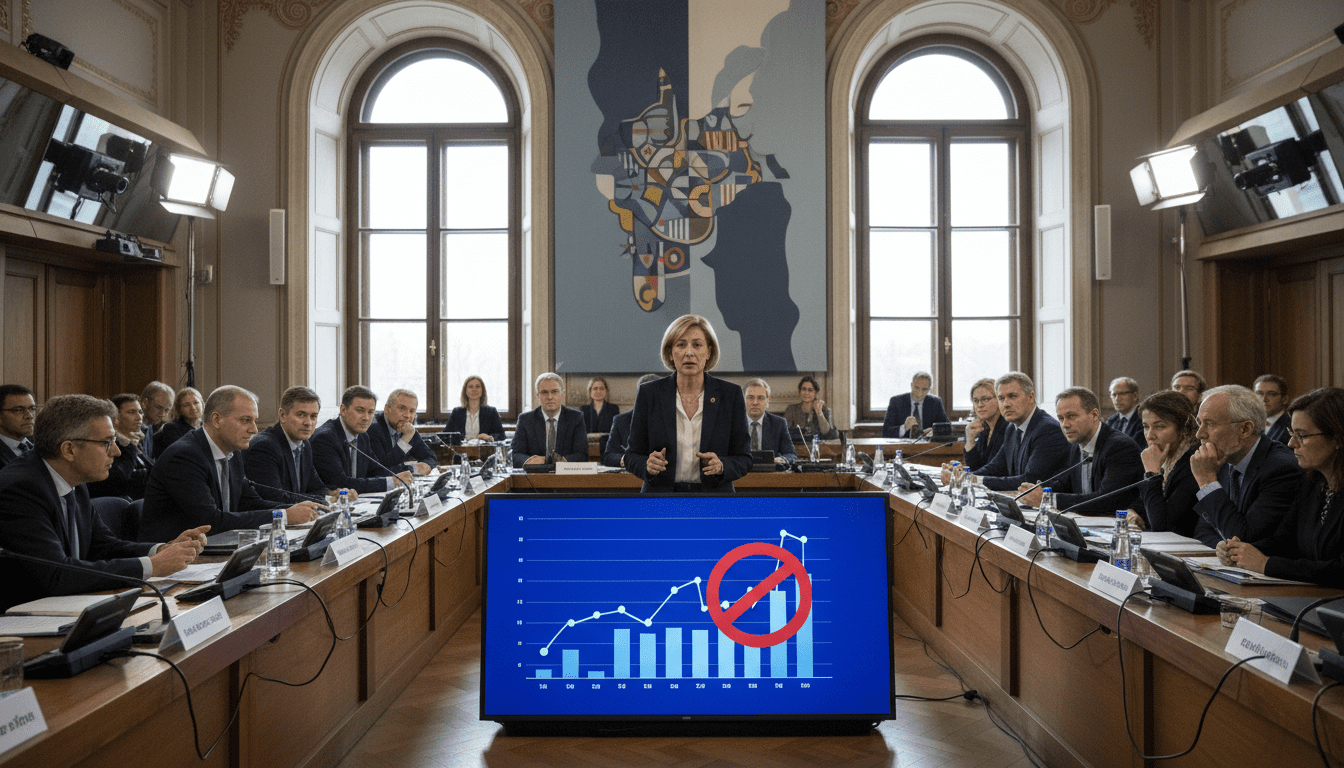
EU Commission rejects overprofit tax, says member states may act nationally
EU Commission says it has no plans for an overprofit tax and will not speculate on future EU-wide measures, urging member states to use national tools.
The European Commission on Wednesday, April 22, 2026, said it has no current plans to introduce an overprofit tax at the EU level, rejecting a proposal backed by several member states and Germany’s finance minister. The commission’s spokeswoman declined to speculate on whether such a measure might be adopted later, while stressing that national fiscal powers remain available for governments wishing to act. The announcement deepens a debate in Brussels and national capitals over how best to address soaring energy-sector profits amid rising fuel prices.
Commission statement and immediate reaction
The commission’s spokeswoman told journalists on April 22 that the executive body will not draw up an EU-wide overprofit tax at this time and will not speculate about potential future measures. That position reflects a preference for consensus-based action at the EU level, where taxes typically require broad agreement among member states. The clarification follows public pressure from some capitals to target what they describe as excessive crisis profits in the energy sector.
SPD presses for national measures despite EU stance
Germany’s Social Democratic Party (SPD) said it will continue to pursue the idea of taxing extraordinary corporate profits domestically, even without an EU-wide agreement. SPD budget and finance spokeswoman Wiebke Esdar emphasized that companies should not exploit crises to enrich themselves at the expense of the wider public and urged federal authorities to examine national options. The party framed a national overprofit tax as a tool to deliver relief to consumers and redistribute unexpected corporate gains.
Energy commissioner: unanimity needed for EU tax
EU Energy Commissioner Dan Jørgensen told officials on April 22 that any EU-level levy of this kind would require unanimous approval from all member states, a threshold the commission does not foresee being met at present. He reiterated that while an EU-wide mechanism is theoretically possible, political reality and legal complexity make it unlikely in the short term. The commissioner also highlighted that member states retain discretion to use their own fiscal instruments to address windfall gains.
Coalition of five countries had backed the idea
Germany’s finance minister, Lars Klingbeil, pushed the proposal in coordination with counterparts from Austria, Italy, Portugal and Spain, calling for an overprofit tax to capture outsized corporate gains arising from recent market disruptions. That informal coalition argued that such a levy could help fund consumer relief measures and mitigate the social impact of sharp energy-price increases. However, the initiative met resistance from more conservative voices both within Germany and across the EU, complicating prospects for a coordinated response.
Domestic political divides and criticism
Germany’s economy minister, Katherina Reiche of the CDU, publicly criticized the Klingbeil-led push, underscoring divisions inside the federal government over the best approach to energy price relief. Critics warn that an overprofit tax could have unintended economic consequences, while proponents stress its redistributive potential during a period of elevated energy costs. The dispute underlines broader political tensions between calls for immediate consumer relief and concerns about market signals and investment incentives.
Context: energy prices and relief proposals
Policy makers have debated a range of relief measures as energy prices, particularly for gasoline and diesel, climbed following disruptions tied to the Iran conflict. The overprofit tax became one of several proposals put forward to ease the burden on consumers, alongside targeted subsidies and temporary tax adjustments. With the EU executive declining to pursue an EU-wide levy, governments will now weigh national fiscal options against legal, administrative and political hurdles.
The commission’s decision to rule out an immediate EU-level overprofit tax shifts the debate back to member states and national parliaments, where parties and ministers must decide whether to pursue unilateral measures. Observers say the outcome will hinge on forthcoming national debates, the durability of high energy prices, and whether a broader coalition emerges to push for coordinated action at either the EU or national level.
