
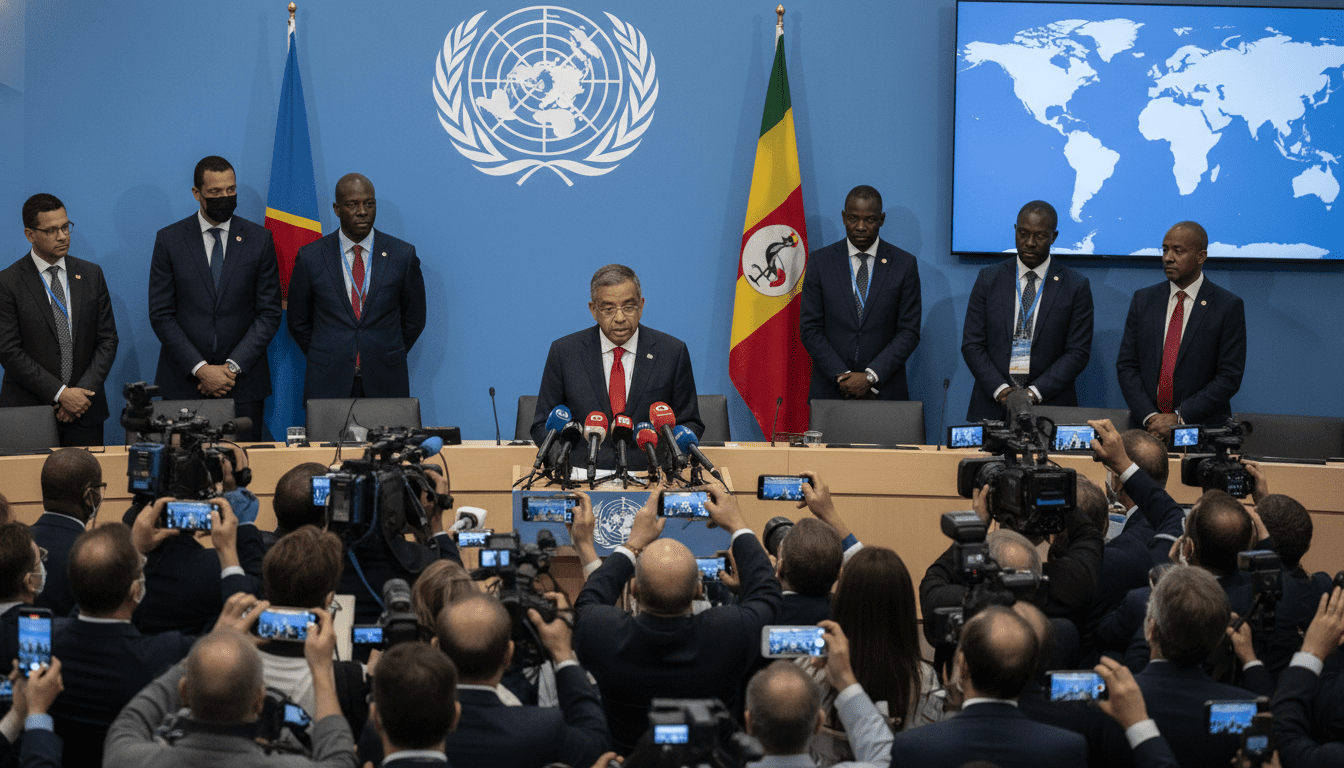
WHO Declares International Health Emergency as Ebola Outbreak Hits DRC and Uganda
WHO declares an international health emergency after Ebola outbreak in the Democratic Republic of Congo’s Ituri province and cases in Uganda, urging neighbours to raise alert.
The World Health Organization declared an international health emergency over the Ebola outbreak in the Democratic Republic of Congo and Uganda, aiming to mobilize international support and place neighbouring countries on heightened alert. The declaration follows a surge of suspected cases and deaths in Ituri province and reports of confirmed infections in multiple locations. Health authorities warned the move is intended to accelerate assistance, surveillance and resource sharing across borders.
Outbreak figures and laboratory confirmations in Ituri
As of Saturday, Congolese authorities reported 80 deaths suspected to be linked to the Ebola outbreak in Ituri province and 246 suspected cases under investigation. Laboratory testing has confirmed the presence of the Ebola virus in eight of the fatalities, the health ministry and WHO said. Officials emphasized that the situation remains fluid while diagnostic work continues and case counts may change as results are finalized.
WHO’s rationale for declaring an international health emergency
WHO officials said the designation is intended to prompt a coordinated international response and raise vigilance in neighbouring states that face cross-border risks. The emergency status unlocks additional global mechanisms for funding, technical support, and deployment of rapid response teams. Public health experts noted the step reflects concern not only about case numbers but also about potential spread in regions with porous borders and limited health infrastructure.
Uganda cases and cross-border concerns
Uganda has reported linked cases and is working with regional partners to trace contacts and strengthen screening at border crossings, health officials indicated. Cross-border movement of people and goods in the Great Lakes region increases the risk of transmission if containment measures lag. Regional health ministries have been urged to expand surveillance, accelerate vaccination where available and coordinate laboratory confirmations to prevent wider spread.
How this compares to the 2014–2016 epidemic
Scientists caution against direct comparisons with the 2014–2016 West Africa epidemic, which killed at least 11,000 people, while acknowledging the serious nature of any Ebola outbreak. A science editor who has followed Ebola outbreaks said it remains unclear whether the current events will follow the same trajectory as the larger epidemic more than a decade ago. Experts stressed that rapid detection, community engagement and vaccine deployment are key variables that can limit escalation.
Domestic political reverberations in Germany over far-right polling
Separately in Germany, several state interior ministers have raised alarms after opinion polls showed unusually high support for the Alternative für Deutschland (AfD) in Saxony-Anhalt. One recent Infratest dimap poll put the AfD at roughly 41 percent in the state, less than four months before regional elections scheduled for September 6. Interior ministers plan to discuss contingency measures at the upcoming June conference to prepare for potential governance scenarios involving a party that some state intelligence services classify as reliably right-wing extremist.
Potential policy shifts in education and science at state level
AfD leaders have signalled intentions to appoint large numbers of personnel to state administration posts if they enter government, with one top candidate saying he would replace between 150 and 200 positions. Analysts warn that education and research portfolios could be particularly vulnerable because states have broad autonomy over schools and universities. Education officials and university administrators in Saxony-Anhalt are reviewing preparedness plans and possible policy changes that could follow a shift in power.
Public health authorities and political leaders alike say they are watching parallel crises with attention: the Ebola outbreak requires immediate international public-health action, while the domestic political developments in Germany prompt administrative and constitutional questions at the state level. Both situations underscore the importance of early coordination and clear lines of authority.
The lighter items circulating alongside these stories included the inaugural German tree-hugging championship, an event organizers described as a community celebration of nature and local identity. Observers said such events provide a civil counterpoint to heavier headlines and can help maintain public morale amid public-health and political uncertainties.
