
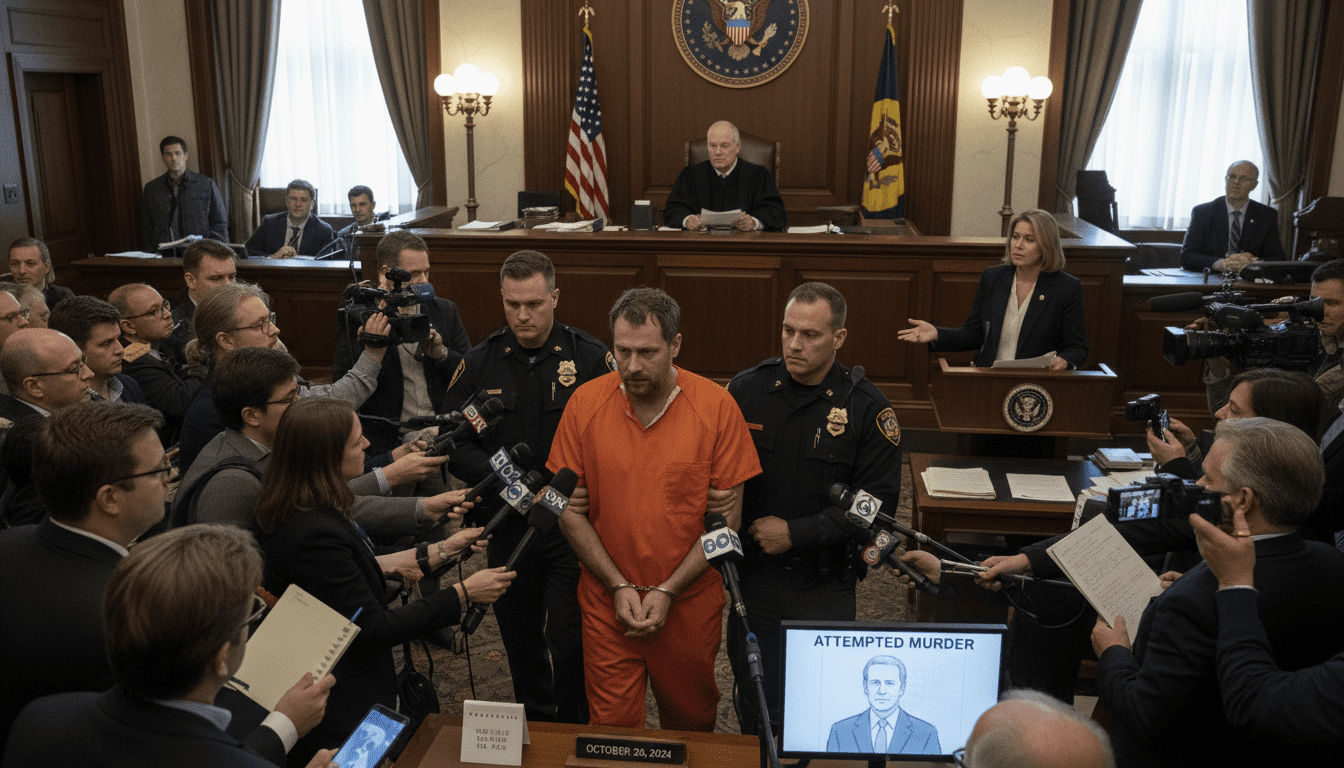
White House Correspondents’ Dinner shooting: Suspect charged with attempted murder of U.S. president
A suspect has been charged following the White House Correspondents’ Dinner shooting in Washington, D.C., after officers say he fired at a security checkpoint outside the ballroom. Investigators allege the attacker targeted government officials; he was taken into custody at the scene and later indicted on attempted murder and weapons counts. Authorities in California and Washington are continuing a joint probe that has already included searches of the suspect’s home and digital devices.
Suspect Identified as 31-Year-Old from Southern California
According to officials and media reports, the man charged in the Correspondents’ Dinner shooting is a 31-year-old resident of Torrance, a suburb of Los Angeles. Law enforcement and court filings describe him as having worked as a teacher and as a developer in the video game industry, details that emerged from public profiles and interviews with acquaintances. Federal agents executed a search warrant at his home the day after the attack and seized electronic devices as they seek evidence of motive and planning.
Charges Include Attempted Murder of U.S. President
Prosecutors announced at an initial hearing that the suspect faces an attempted murder charge relating to the U.S. president, along with multiple violations of federal firearms laws. The Justice Department urged that he be held in custody pending further proceedings, and a judge set a follow-up hearing later in the week. If convicted on the most serious counts, the suspect could face a lengthy prison term, including the possibility of life imprisonment under federal statutes.
Timeline of the Attack at the Washington Hilton
Authorities say the incident unfolded during the evening hours when the annual White House Correspondents’ Dinner was underway at the Washington Hilton. Roughly at 8:35 p.m. local time, several loud blasts were heard in a controlled entry area outside the ballroom, prompting immediate chaos and the evacuation of attendees. The president, first lady and multiple cabinet members were inside the ballroom at the time; all government officials present were uninjured, while a security officer suffered a wound but survived thanks to a ballistic vest.
Manifesto and Messages Suggest Government Officials Were Targets
Investigators report they found written materials and electronic communications that indicate the attacker intended to strike “members of the government,” according to law enforcement statements. Media outlets say the suspect authored a document of roughly one thousand words that discussed prioritizing government figures as targets and contained other ideological passages. Authorities are treating those writings as key evidence while continuing to interview associates and review the suspect’s devices to corroborate the scope of planning and motive.
How the Attacker Gained Access and Security Concerns Raised
Preliminary findings indicate the suspect checked into the hotel days before the event and entered the building as a registered guest, which allowed him to avoid initial perimeter screening that applied to attendees entering the ballroom. Officials acknowledged lapses in the layered security regime, including points where the assailant was able to breach a checkpoint before being confronted by officers. The episode has prompted immediate scrutiny of screening procedures at large events and renewed questions about how private accommodations intersect with presidential security.
President’s Response and Immediate Political Fallout
The president praised the rapid actions of security personnel and portrayed the attack as affirmation of threats tied to his public role, comments that he used to justify expanded security plans for future events. White House officials proposed accelerated work on a new secure ballroom, describing features intended to protect top officials from similar threats. The incident also intensified debate among lawmakers and security experts about resource allocation, emergency protocols and potential legal steps related to ongoing litigation that has affected federal infrastructure projects.
The investigation remains active as federal prosecutors and the FBI review seized materials and coordinate with local authorities, with additional charges not ruled out as new evidence emerges. Court proceedings are scheduled in the coming days and law enforcement has asked the public to provide any relevant information as they continue reconstructing the sequence of events and assessing broader security implications.
