
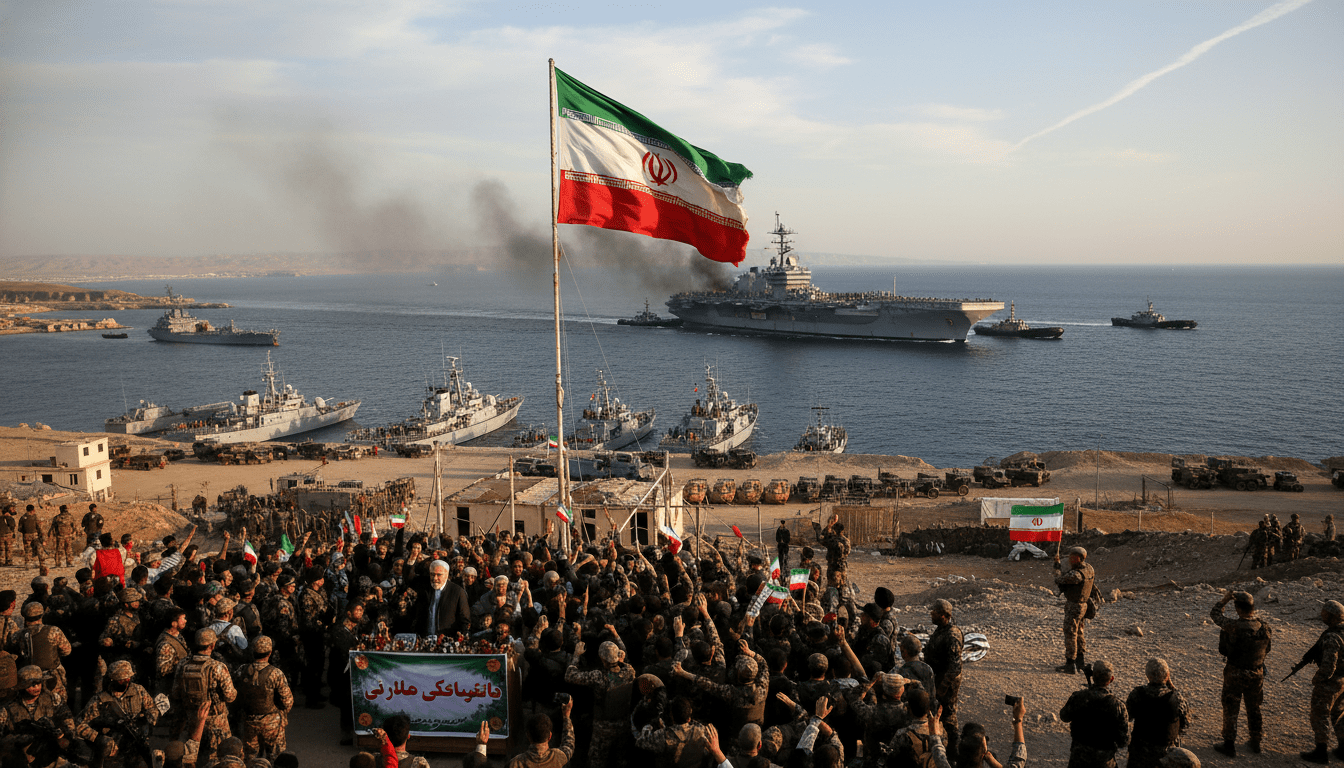
US–Israel war on Iran falters as Tehran tightens control over Strait of Hormuz
The US–Israel war on Iran that began Feb. 28, 2026 appears to be unraveling as Tehran consolidates its defenses, raises its deterrent posture, and places new leverage on global oil routes. What began as a planned decapitation campaign has not produced a pliant successor government in Tehran, and U.S. and Israeli forces face mounting strategic and operational costs. With no clear military path to victory, Washington seems to be shifting toward a withdrawal that will reshape regional balance and long-term U.S. presence in the Gulf.
Planned decapitation strike failed to achieve regime collapse
A joint U.S.–Israeli campaign aimed to degrade Iran’s command-and-control and senior leadership, but the operation did not fracture Tehran’s political core. Rather than producing a successor government willing to accommodate U.S. demands, the attacks appear to have consolidated support for the supreme leader and strengthened Iran’s security institutions. Military strikes produced material damage but failed to create the political rupture planners in Washington and Jerusalem had anticipated.
Iran’s security apparatus emerged more cohesive
In the months following the initial strikes, Iran’s Revolutionary Guard Corps reinforced its role within the national-security architecture and tightened internal command structures. Iran’s clerical and military leadership moved to present a unified front, while public sentiment coalesced around resistance to external attacks. The result is a deterrent posture that many analysts now view as more robust than before the conflict began.
Technological and cost asymmetries shifted the battlefield
Iran’s expanding indigenous weapons and drone industries have altered the economics of conflict in the Gulf, complicating U.S. efforts to sustain a prolonged campaign. Low-cost drones and missiles can be produced and deployed at scales that make interception expensive and technically demanding for U.S. systems. That imbalance has increased the operational risk for U.S. forces and raised the potential for catastrophic damage to regional energy and water infrastructure if the conflict were to escalate.
Strategic miscalculation and policy breakdown in Washington
Decision-making that led to the campaign reflected a narrow circle of advisers rather than a broad interagency process, according to accounts of the planning. Critics point to a weakened National Security Council apparatus and debates sidelined by political loyalty as factors that reduced deliberation and risk assessment. Those institutional failures magnified misjudgments about Iran’s resilience and the likely consequences of sustained military pressure.
Regional consequences point to altered U.S. posture
If current trends hold, three durable changes are likely: Tehran will exercise greater leverage over the Strait of Hormuz, Iran’s deterrent capabilities will be enhanced, and the U.S. forward military footprint in the Gulf will contract. Those shifts would leave core issues—nuclear development, regional proxies, and missile inventories—largely unresolved by force. Gulf states and global markets face a new strategic environment in which American capacity to shape outcomes is diminished.
Why Tehran may refrain from wider aggression
Despite battlefield gains, Iran appears unlikely to pursue sustained offensive operations against its neighbors. Tehran has incentives to seek long-term commercial and diplomatic engagement with Gulf states, and it likely prefers a managed equilibrium to protracted regional war. Major external patrons such as Russia and China also favor stability in the Gulf, which could further discourage an expansive Iranian campaign beyond asserting maritime leverage.
The operational and political costs of renewed escalation would be severe for all parties, experts warn, including the potential destruction of oil, gas and desalination infrastructure that would generate a prolonged global humanitarian and economic shock. For the United States, the battlefield calculus now includes the prospect of sustaining losses that outweigh any realistic political gains, and for regional actors the priority shifts to damage limitation and crisis management.
The coming weeks are likely to feature diplomatic activity as states and international organizations press for a de-escalatory pathway that preserves navigational freedoms and prevents wider infrastructure damage. Washington faces a choice between doubling down on military means at great expense or pivoting to diplomacy that addresses core security concerns without further devastation. Whatever path is chosen, the conflict that began on Feb. 28, 2026 has already reshaped strategic calculations across the Gulf and set new limits on the use of force in the region.
