
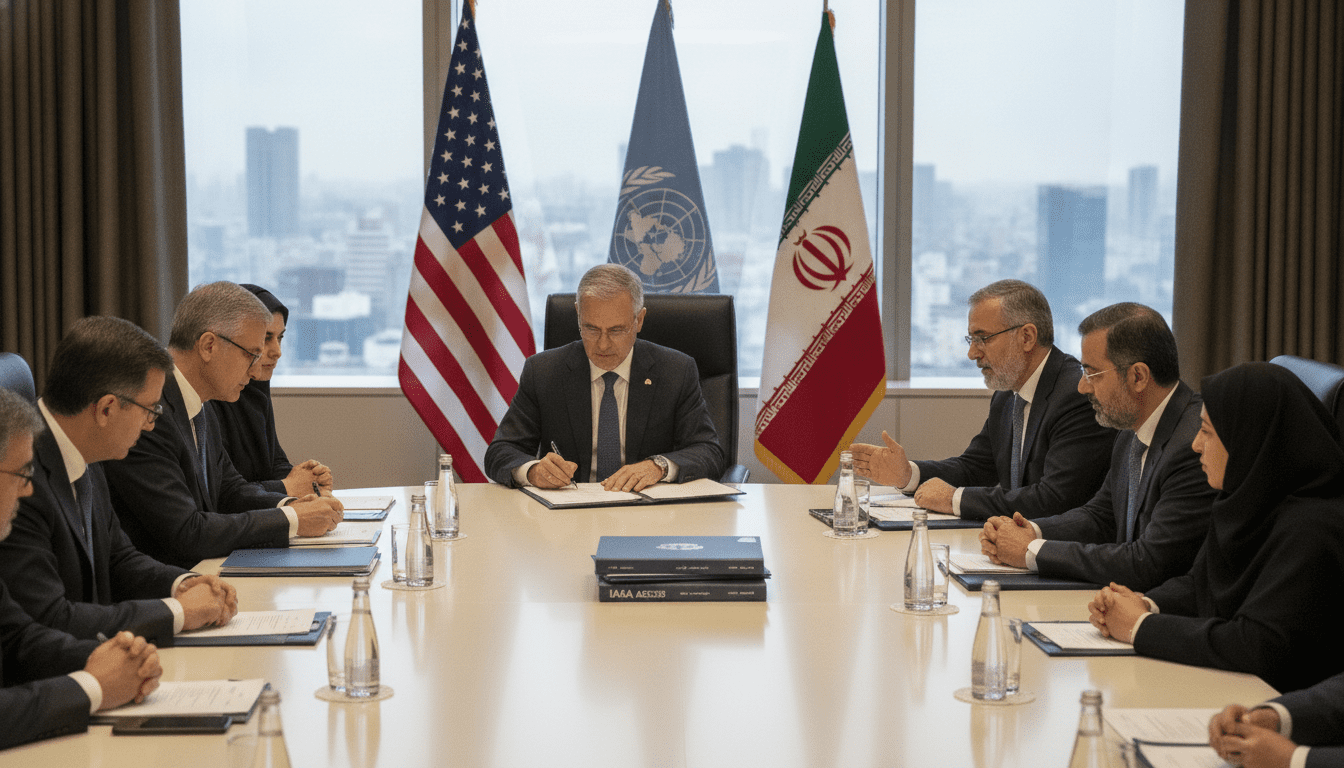
US suspends sanctions on Iran as talks yield “good progress” and temporary oil licence
US suspends sanctions on Iran for 60 days, allowing oil sales in dollars while talks under the Islamabad Memorandum push for inspections and Strait of Hormuz assurances.
The United States suspended sanctions on Iran on Monday, issuing a 60-day general licence that authorises Iranian oil production and sales and permits transactions in US dollars until 21 August. Vice President JD Vance described the talks as making “good progress,” while Treasury Secretary Scott Bessent framed the licence as linked to Tehran’s commitments during negotiations in Switzerland.
The move marks a significant, temporary easing of economic pressure as both sides negotiate nuclear and weapons inspection terms under a ceasefire framework. Tehran’s state media and officials gave a more cautious account, stressing that any inspection commitments require parliamentary and national security council approval.
Sanctions suspended under a 60-day general licence
The US Treasury announced the temporary lifting of sanctions through a general licence that runs for 60 days and explicitly allows oil transactions in US dollars. Officials said the licence is limited in time and subject to conditions tied to ongoing diplomatic talks.
The licence reinstates opportunities for Iran to scale up crude production and exports after prolonged disruption, but it stops short of a permanent rollback. Washington framed the measure as facilitative: a concession to sustain momentum in technical negotiations rather than a full policy shift.
Washington links relief to Hormuz transit and inspections
US officials said the suspension followed commitments from Tehran to ensure free passage through the Strait of Hormuz and to permit International Atomic Energy Agency inspectors into the country. Treasury Secretary Scott Bessent posted the conditions on social media as evidence of tangible progress in the Swiss meetings.
Vice President JD Vance described the exchanges as productive and aimed at stabilising maritime routes and bolstering verification measures. The US has emphasised that any further relief would hinge on continued compliance and demonstrable access for inspectors.
Tehran stresses parliamentary and council oversight
Iranian state media quoted foreign ministry spokesperson Esmail Baghaei denying that new nuclear commitments were struck during the talks and insisting that no negotiations on the nuclear issue had produced “new commitments.” Baghaei said any engagement with the IAEA would follow procedures mandated by Parliament and the Supreme National Security Council.
Tehran’s posture reflects a domestic legal and political constraint on negotiators, signalling that international pledges could require formal approval at home. Iranian chief negotiator Mohammad Bagher Ghalibaf reiterated those caveats while preparing for further regional discussions.
Nuclear inspections and the legacy of the 2015 deal
The debate over inspections evokes provisions of the 2015 nuclear accord, under which the IAEA obtained extensive monitoring access to Iran’s nuclear sites and related facilities. Washington and other capitals say robust verification is essential to any durable agreement, pointing to past arrangements as a model for intrusive oversight.
Iranian officials, however, underline that any reinstatement of broad access must align with domestic legal processes and national security considerations. The tension between international verification demands and Tehran’s insistence on sovereignty and parliamentary oversight remains a central sticking point.
Islamabad Memorandum sets timetable and framework
The talks in Switzerland are being conducted under the Islamabad Memorandum of Understanding, a truce-focused arrangement that paused hostilities for 60 days to permit technical negotiations. Monday’s session concluded the first High-Level Committee Meeting under that framework, and Pakistan’s Prime Minister Shehbaz Sharif hailed the outcome as a roadmap toward a final deal within the memorandum’s timeframe.
Pakistan and Qatar are mediating the discussions, with JD Vance and Iran’s Mohammad Bagher Ghalibaf leading their respective delegations. Officials say the memorandum’s structure is intended to convert a temporary halt in hostilities into a sequence of verifiable steps toward de-escalation and longer-term agreements.
Regional diplomacy intensifies around the talks
The first round of meetings has triggered a diplomatic surge across the Gulf and neighbouring states, with senior envoys and foreign ministers scheduling trips to capitalise on momentum. The US confirmed that Secretary of State Marco Rubio will attend the Gulf Cooperation Summit in Bahrain and make stops in the UAE and Kuwait, signalling an attempt to shore up regional support for negotiations and security arrangements.
Iran announced planned visits by senior officials, including a trip by Ghalibaf to Oman with Foreign Minister Abbas Araqchi to discuss joint management of the Strait of Hormuz. Pakistan also said Iran’s President Masoud Pezeshkian would visit Islamabad to continue talks, reflecting the regional character of the mediation effort.
The diplomatic activity comes amid lingering tensions over recent attacks and strikes in the Gulf, which have damaged military and industrial infrastructure in several countries. Gulf states have taken varying lines in the conflict, with some pressing for tougher measures and others favouring mediation and negotiation.
Despite differences in tone, mediators and participants describe the current round as a cautious step toward stabilisation, with an explicit 60-day timetable to flesh out technical details and possible follow-up agreements.
The temporary sanctions suspension and the promise of inspection access have provided a narrow political opening, but both sides still face domestic constraints and verification demands that will shape whether the Swiss talks evolve into a lasting settlement.
