
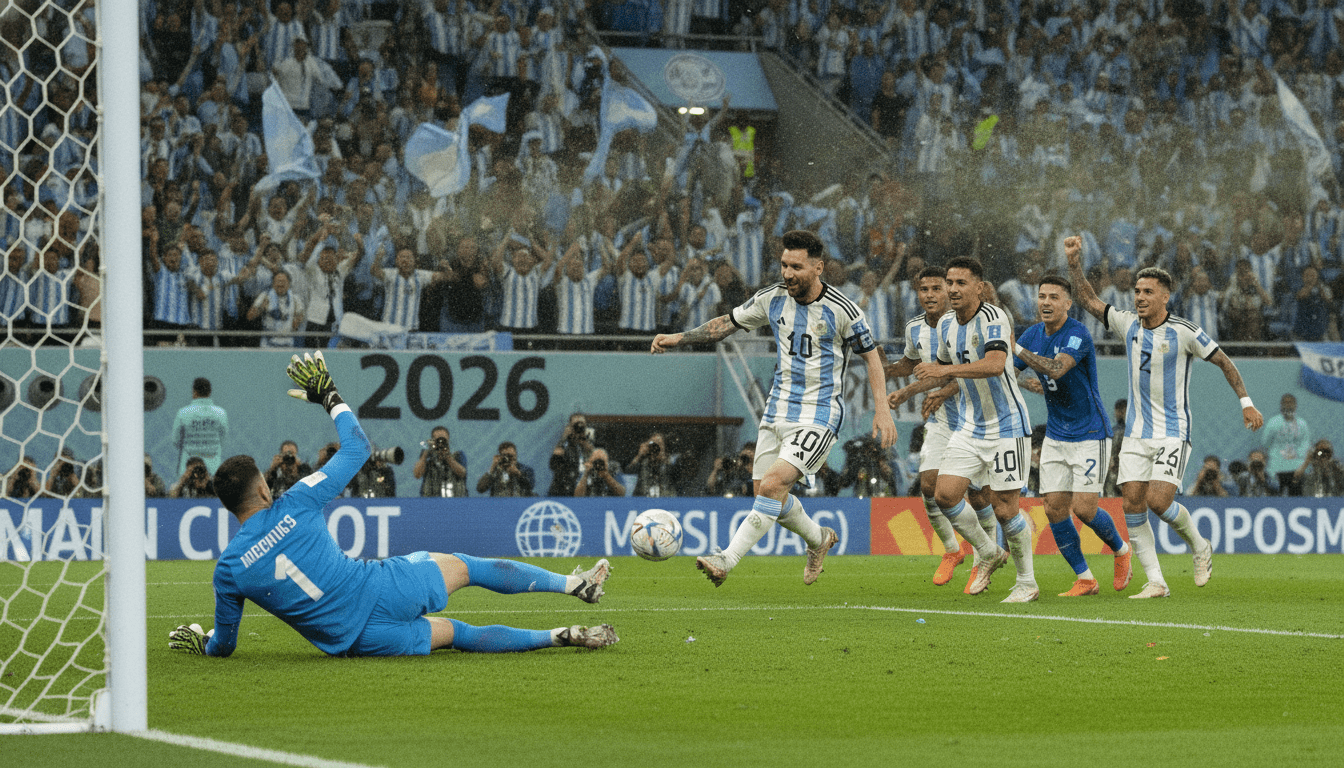
Lionel Messi Breaks World Cup Scoring Record with 18th Goal as Argentina Defeat Austria in Dallas
Lionel Messi broke the World Cup scoring record in Dallas, scoring his 17th and 18th tournament goals as Argentina beat Austria 2-0 and secured knockout qualification.
Messi breaks World Cup scoring record in Dallas
Lionel Messi, 38, claimed the World Cup goal record in a Group J match played in Dallas, moving past the previous mark held by former Germany striker Miroslav Klose. The Argentine forward opened the scoring and added a second in stoppage time to finish with two goals in the game. That pair of strikes lifted Messi’s World Cup tally to 18 goals since his tournament debut in 2006.
The milestone came in a match that doubled as both a personal landmark and a clear team victory. Argentina’s win over Austria ensured the reigning world champions advanced to the knockout rounds with games to spare. The match added another prominent chapter to Messi’s long World Cup career.
First-half opener and stoppage-time finish
The opener arrived earlier in the contest when Messi put Argentina 1-0 ahead, converting a chance that ultimately altered the historical scoring charts. The goal gave Argentina the lead that they maintained through a largely disciplined team performance. In stoppage time Messi added a second, sealing the 2-0 final score and sending Argentina off the pitch with a comfortable result.
Austria pressed at intervals but were unable to find a way through Argentina’s defense or unsettle the visitors’ veteran attack. The late second goal removed any lingering uncertainty and underscored Messi’s presence in decisive moments. Match tempo and tactical choices from both sides shaped a tight contest until the final stages.
Klose’s mark eclipsed: context and numbers
Miroslav Klose concluded his World Cup career with 16 goals, a figure long regarded as the gold standard for tournament scoring. By netting twice in Dallas, Messi increased his total to 18 World Cup goals across multiple tournaments, according to match reports from the game. The new tally reflects scoring across World Cups dating back to Messi’s debut in 2006.
Those numbers place Messi at the summit of World Cup scorers and prompt comparisons with previous all-time leaders. The record is a milestone in a career that has been measured in club and international accolades. It also refocuses conversation on tournament longevity and consistency at the highest level.
Argentina’s route to the knockout stage
The victory over Austria confirmed Argentina’s early progression to the tournament’s knockout phase. The team had already opened the group with a 3-0 win over Algeria in their first match, a game in which Messi produced a three-goal performance. Those results combined to deliver Argentina an unassailable position in Group J ahead of the remaining fixtures.
Argentina’s roster depth and experience have been cited as factors in the side’s ability to secure qualification early. The coaching staff’s rotation and tactical adjustments have maintained momentum while managing player workloads. With the knockout berth secured, focus now shifts to optimizing form ahead of the tournament’s high-stakes rounds.
Immediate reactions and tournament implications
The milestone sparked immediate reaction across the football world, with commentators noting both the statistical significance and the symbolic weight for Messi’s legacy. For many observers, the record highlights Messi’s prolonged impact on World Cup stages over two decades. The achievement also reframes media and fan expectations for the remainder of the competition.
From a tournament perspective, Argentina’s early qualification reshuffles Group J dynamics and affects the strategies of remaining teams. Opponents now know Argentina can plan longer-term for the knockout phase, potentially prioritizing player recovery and tactical experimentation. The result will reverberate in group standings and in preparations for the elimination rounds.
What this means for Messi and the team
Messi’s new record arrives amid a broader narrative about the twilight years of a storied career and the athlete’s enduring influence on game outcomes. The goals in Dallas reaffirm his ability to deliver in crucial moments and to affect tournament history. For teammates, having a record-breaking scorer in form offers psychological and tactical advantages heading into the knockouts.
Coaches and analysts will study how best to deploy Messi while balancing minutes and safeguarding fitness for the decisive matches ahead. Argentina’s supporting cast will be tasked with sustaining defensive stability and creating opportunities for their captain. The coming rounds will test whether the team can convert individual milestones into collective success.
Lionel Messi’s record-setting performance in Dallas combined personal history with team progress, leaving Argentina positioned for a deep tournament run and adding a new statistical footnote to one of football’s longest-running careers.
