
AI loops poised to transform software development, says Claude Code creator
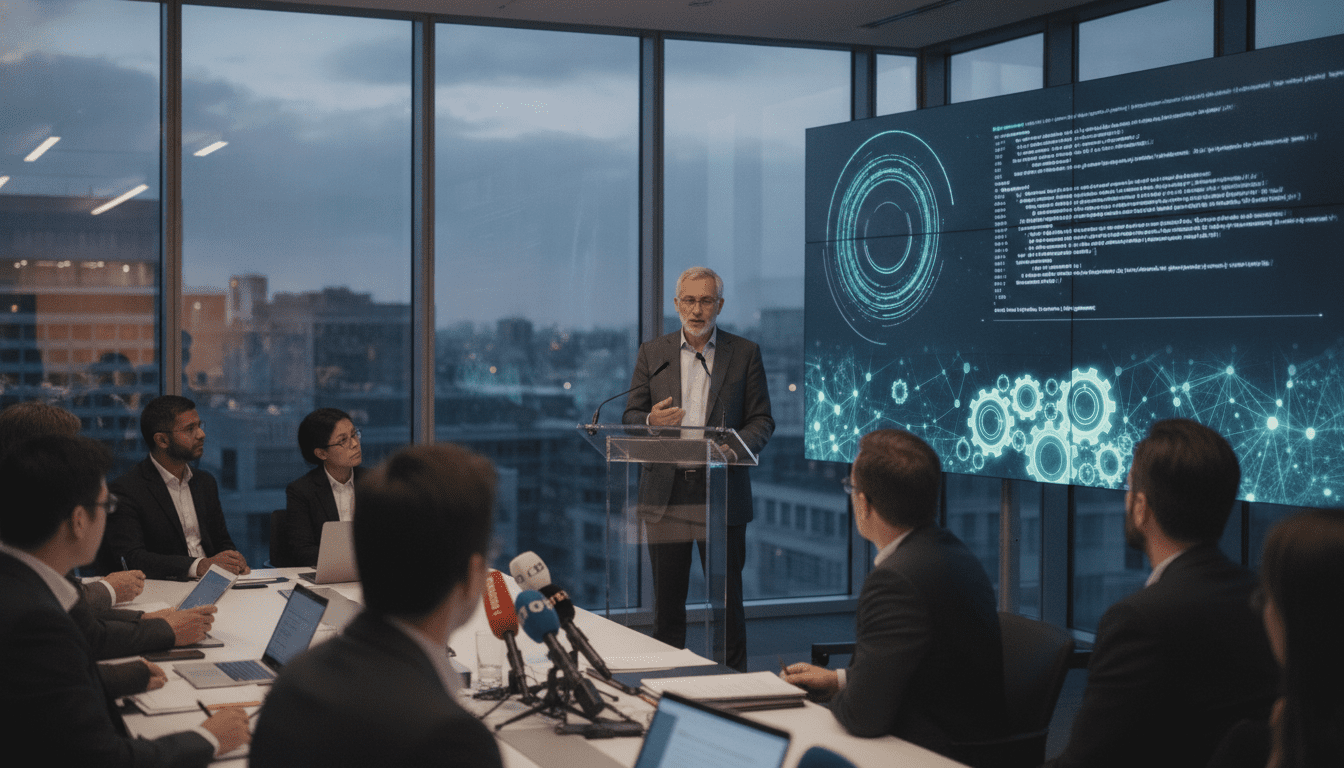
At Meta’s @Scale, Boris Cherny said AI loops are “for real,” describing agents that continuously prompt other agents to maintain and improve live codebases.
Cherny’s claim at Meta’s @Scale
Boris Cherny, the creator of Claude Code, told attendees at Meta’s @Scale conference that AI loops represent a pivotal advance in how software will be built and maintained. He framed the development path as a sequence: humans wrote source code, agents began writing code, and now agents are prompting and supervising other agents in persistent loops. Cherny argued that this next step is as consequential as the earlier move from human-authored code to agentic generation.
Agents prompting agents: the new development paradigm
Cherny described a working setup where dedicated sub-agents run continually, searching for architectural improvements and code deduplication. Those agents generate changes, submit pull requests, and iterate on outcomes much like human developers do. The model shifts the locus of labor from episodic human interventions to background processes that never fully stop.
Continuous improvement applied to real codebases
In practice, loops can be configured to focus on discrete engineering tasks such as unifying duplicated abstractions, refactoring modules, or proposing interface changes. Because agents can run frequently and at scale, they can surface many small improvements that accumulate into substantial architectural gains. Teams that adopt such loops will need to treat agent outputs as living artifacts that require review, testing, and integration workflows tuned to higher churn.
Roots in recursion, but with non‑deterministic stopping
The technical idea behind AI loops echoes classical recursion and loop constructs in programming, where a function repeats until a condition is met. What distinguishes agentic loops is the non‑deterministic stopping criterion: a sub‑agent judges whether its objective is complete rather than a fixed boolean check. Practitioners have also developed heuristic patterns, like summarizing work and asking the agent whether the goal has been accomplished, to keep long-running processes from drifting aimlessly.
Compute intensity and economic trade-offs
Running agents in persistent loops consumes far more compute and tokens than one‑off chat or code generation sessions, which raises immediate economic questions. Cloud compute, API token charges, and engineering oversight add recurring costs that can scale rapidly if loops run continuously across many projects. For organizations that sell tokens or compute access, such as some API providers, persistent loops can be a revenue driver; for most companies, the finance case must weigh ongoing expense against measurable productivity or quality gains.
When continuous compute yields results
Despite the cost, certain problem classes lend themselves well to looped approaches. Hill‑climbing tasks—gradual, incremental improvements to code quality, performance tuning, or test coverage—benefit from repeated passes and small adjustments. Contemporary research and practitioner commentary have emphasized that throwing more compute at some tasks raises the likelihood of success, and loops automate exactly that iterative effort. In engineering teams focused on long‑tail maintenance and continual optimization, the benefits can outweigh the resource draw.
Oversight, drift mitigation and governance needs
Persistent agentic activity requires new governance practices to manage drift, runaway costs, and unintended changes to production systems. Teams must instrument loops with monitoring for token spend, change frequency, test pass rates, and human approval gates for risky modifications. Clear ownership, audit trails, and rollback mechanisms are essential to ensure that continuous agents remain tools rather than autonomous determinants of system behavior.
Business and workforce implications
Adopting AI loops could alter how engineering organizations allocate human effort, shifting skilled engineers toward higher‑level design, review, and integration tasks while agents handle routine refactorings and minor improvements. That rebalancing raises questions about talent strategy, legal responsibility for code changes, and the skills needed to supervise and validate agentic work. Companies that get the governance model right stand to accelerate development cycles and reduce technical debt; those that treat loops as a cost‑free automation may face operational surprises.
AI loops are emerging as a concrete operational pattern rather than a speculative trend, and Cherny’s public endorsement at Meta’s @Scale has amplified industry interest. For teams considering the approach, success will hinge on careful configuration, cost controls, and human oversight to ensure continuous agents deliver value without compromising reliability or budgets.
