
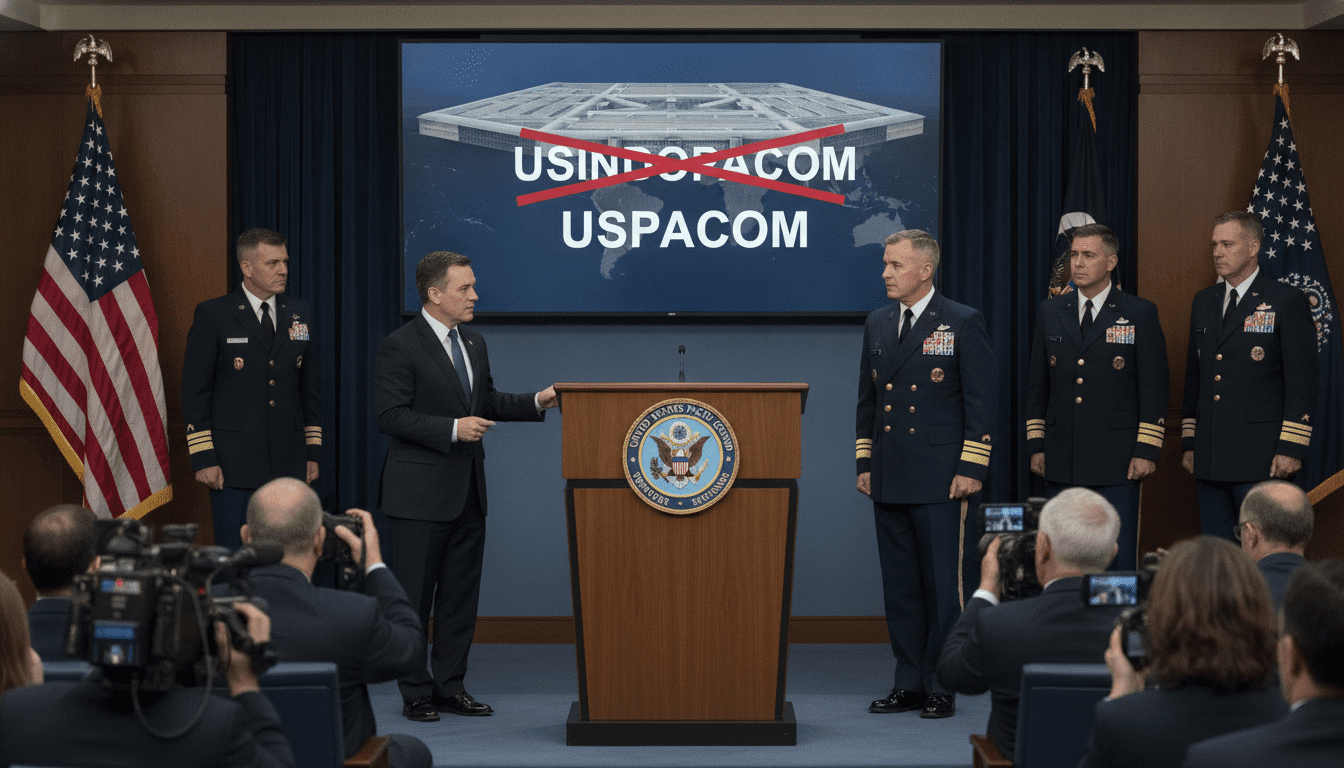
Pentagon Restores U.S. Pacific Command Name, Signaling Strategic Pivot from ‘Indo‑Pacific’
Pentagon restores the U.S. Pacific Command name, dropping ‘Indo‑Pacific’ — a strategic move that could reshape ties with India, the Quad and regional partners.
The Pentagon has announced that the U.S. Indo‑Pacific Command has been renamed the U.S. Pacific Command, a change the department says honors the command’s historical identity while leaving its operational boundaries intact. The restoration of the U.S. Pacific Command label marks a clear terminological shift away from the “Indo‑Pacific” concept that shaped U.S. and allied strategy earlier this decade. Pentagon officials emphasized the move does not alter the command’s area of responsibility, which extends from the U.S. West Coast to the western approaches of the Indian subcontinent.
Pentagon restores ‘U.S. Pacific Command’ name
The Defence Department framed the change as a recognition of the command’s long history, reversing the 2017 renaming that elevated the “Indo‑Pacific” term in U.S. strategy. Officials insisted the reversion is symbolic and that forces and missions under the command will continue to operate across the same maritime expanse. The announcement was made publicly by the Pentagon, which said the decision reflects institutional priorities rather than a redrawing of operational lines.
Policy shift reflects new national security priorities
Analysts link the renaming to a broader U.S. national security reorientation that gives greater emphasis to the Western Hemisphere and homeland defense. The change dovetails with an administration strategy that, according to observers, prioritizes regions geographically closer to the United States. Senior officials who had already begun avoiding the “Indo‑Pacific” label in public remarks are seen as signaling a recalibration of strategic language and focus.
India and the Quad face strategic recalibration
The terminological retreat carries immediate diplomatic consequences for India, which had been a focal point of U.S. efforts to deepen security ties in the Indian Ocean. New Delhi’s expectation of a central role in a U.S.-led Indo‑Pacific architecture will now be tested, diplomats say, especially after recent transactional tensions over trade and incidents at sea that heightened bilateral sensitivities. Regional security groupings such as the Quad — comprising the United States, India, Japan and Australia — may see their perceived centrality reduced if Washington shifts emphasis away from Indian Ocean engagements.
European and Southeast Asian Indo‑Pacific strategies tested
Countries and blocs that adopted Indo‑Pacific strategies after the term gained currency could face pressure to reassess their own policy frameworks. Several Southeast Asian states and the European Union developed Indo‑Pacific approaches that tied security, economic and diplomatic initiatives to the concept. Germany’s 2020 Indo‑Pacific guidelines, for example, remain a reference point for Berlin’s Asia policy, and Europeans will now weigh whether Washington’s change in terminology requires adjustments in coordination and messaging.
Beijing frames renaming as U.S. retreat, analysts highlight Taiwan risk
Chinese officials and state media are likely to portray the name reversal as evidence that U.S. attention is pulling back from the wider Indian Ocean theater, a narrative that Beijing can use to assert that pressure on China is easing. Yet analysts warn of another interpretation: that the United States is concentrating its strategic competition with China in East Asia and the Pacific basin, where Taiwan remains the most sensitive flashpoint. Experts at regional think tanks have suggested the linguistic shift could correspond with a narrower geographic focus in a potential future crisis.
Operational scope unchanged, but diplomatic ripples expected
The Pentagon has stressed that the command’s responsibilities and geographic remit remain the same, underscoring continuity in military posture despite the naming change. Nevertheless, diplomats and defense officials in Asia and Europe say the symbolic departure from “Indo‑Pacific” will reverberate beyond military desks, affecting alliance messaging and partnership initiatives. How partner governments interpret Washington’s intentions will shape cooperation on exercises, maritime security and economic engagement in the months ahead.
The renaming of the command closes one chapter in the evolution of U.S. strategic language and opens another in regional diplomacy, with allies and competitors alike watching for concrete policy moves that confirm or contradict the symbolic shift. For now, the military footprint remains, but the political framing has changed — leaving uncertainty about how partnerships and deterrence postures will adapt.
