
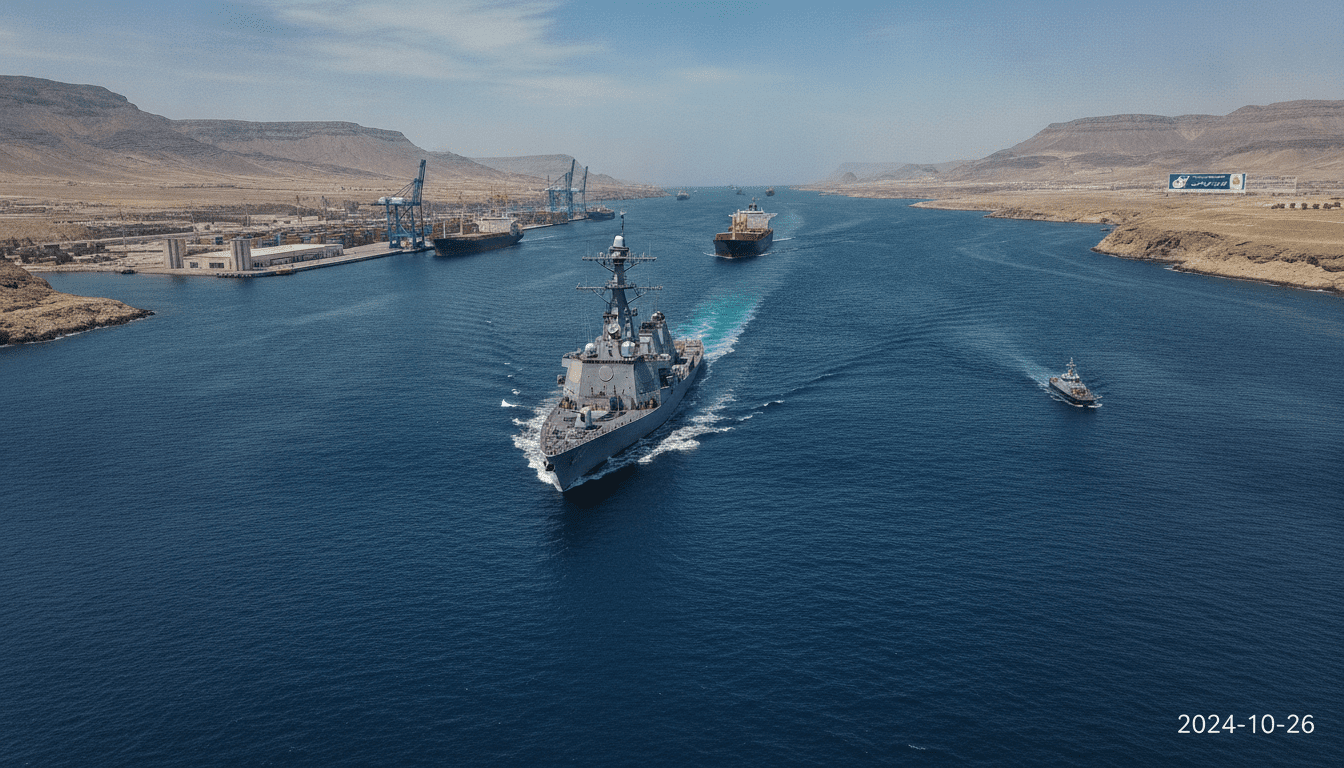
Navy‑backed maritime centre expands route through Strait of Hormuz after Iran warns of transit fees
US Navy‑overseen Joint Maritime Information Center said it expanded a shipping route through the Strait of Hormuz to ease navigation after Iran warned vessels must obey its orders and stated it could charge fees for passage.
Opening summary
The Joint Maritime Information Center, operating under the oversight of the US Navy, announced an expansion of a navigational corridor through the Strait of Hormuz near Oman’s coast to improve traffic flow and safety for commercial vessels. The move follows public statements by Iranian authorities insisting ships transiting the waterway follow Iran’s commands and warning that Tehran may begin charging transit fees. The announcement adds a fresh dimension to long-standing tensions over navigation through this strategic chokepoint.
Joint Maritime Information Center expands route
The maritime centre said the expanded corridor aims to relieve congestion and allow ships to pass through the narrowest sections of the strait with clearer routing instructions. Officials described the change as an operational adjustment to existing maritime information broadcasts and safe‑navigation advisories for merchant shipping. The centre emphasized coordination with regional partners and commercial maritime operators to disseminate updated route guidance.
Iran asserts control and signals possible fees
Iran has reiterated that ships transiting waters under its claim must follow Iranian directives and has publicly flagged the prospect of imposing transit charges. Tehran’s statements framed the measures as exercises of national sovereignty and control over its territorial waters and adjacent maritime approaches. Iranian officials said compliance would be mandatory for vessels operating in areas they consider under their jurisdiction, raising questions about legal scope and enforcement.
Implications for commercial shipping and oil flows
The Strait of Hormuz is a critical global artery, carrying a substantial share of seaborne oil and liquefied natural gas bound for international markets. Any change in routing, additional fees, or enforcement actions could increase transit costs, insurance premiums and delay shipments. Shipping companies and charterers are likely to reassess routing plans and risk calculations, particularly for tankers and bulk carriers that rely on timely passage through the strait.
Regional safety and navigational concerns
Maritime authorities cited safety as a primary reason for the route expansion, noting the strait’s narrow channels and heavy vessel density create collision and grounding risks. Updated corridors and clearer communication protocols are intended to reduce close‑quarter situations and improve situational awareness for bridge teams. Maritime pilots, shipping firms and insurers will monitor how the changes are implemented and whether commercial traffic experiences tangible safety benefits.
International and legal ramifications
The dispute touches on competing interpretations of maritime law, including rights of transit passage through international straits versus coastal state jurisdiction in adjacent waters. Legal experts say any unilateral imposition of fees for foreign‑flagged vessels could prompt diplomatic protests and legal challenges under the United Nations Convention on the Law of the Sea. Countries reliant on Gulf energy exports and distant‑water customers may weigh coordinated policy responses if Tehran moves forward with a fee scheme.
Responses from industry and governments
Shipping industry groups and flag states typically urge clarity and predictability in routing instructions and fee structures to avoid disruptions to commerce. Governments with strategic and commercial stakes in Gulf transit have previously emphasized the importance of maintaining freedom of navigation and unimpeded commerce. Analysts expect statements from regional capitals and maritime organizations clarifying their positions in the coming days as the practical effects of the route change and Iran’s warnings become clearer.
Commercial operators are likely to consult maritime advisories and adjust voyage plans where necessary, while insurers reassess premiums in light of any increased political or operational risk. Ports and charterers may also seek contractual protections to address potential delays or additional costs resulting from new transit measures.
The Joint Maritime Information Center said the route expansion would be communicated through standard navigational warnings and broadcasts to ensure vessel masters and operators receive timely guidance. Tehran’s declarations and any subsequent enforcement measures will be watched closely by shippers and diplomats, as actions in the Strait of Hormuz can have outsized effects on global energy markets and maritime insurance.
Global markets and maritime stakeholders will monitor developments to determine whether the expanded corridor eases traffic as intended or whether Iran’s warnings and proposed fees introduce new frictions for vessels transiting the Strait of Hormuz.
